
File your ITR-2 with Legal Startup. A dedicated expert confirms that ITR-2 is the right form, works out your capital gains, reviews house property and foreign asset details, compares the old and new tax regimes, files your return and helps you e-verify it.
Free call & custom quote · Tax payable to government + professional fee, shown separately
ITR-2 is the income tax return form for individuals and HUFs who have no business or professional income but have income that does not fit ITR-1, such as capital gains, more than one house property or foreign assets.
Last updated: October 2026. Tax rates, exemptions, due dates and forms are set by the government and can change, so we confirm the current position before you proceed.
ITR-2 filing means submitting your income tax return on Form ITR-2. It is a longer form than ITR-1, with separate schedules for capital gains, house property, foreign assets, assets and liabilities in higher-income cases, and losses to carry forward. Its purpose is to let taxpayers with a more varied income profile report everything accurately.
Capital gains are the most common reason to file ITR-2. Selling shares, mutual funds, property or unlisted securities requires a correct split between short-term and long-term gains, proper cost and holding period details, and any exemption claimed on reinvestment. Errors here can lead to a wrong tax computation or a notice.
If your income is only salary, one house property and interest, ITR-1 may be enough, so see our ITR-1 filing page. For other taxpayer types, see income tax return filing. To file, visit the Income Tax e-filing portal (incometax.gov.in).
ITR-2 suits taxpayers whose income is more varied than ITR-1 allows, but who have no business income.
Sale of shares, funds, property or other assets.
More than one house property.
Residential status or overseas holdings.
Situations outside ITR-1.
Not sure whether ITR-2 applies to you? Share your income and asset details and our experts will advise free of charge.
Why accuracy matters more when income is complex.
Report all income and assets correctly and avoid late fees, interest and notices.
Proper classification and cost workings help you pay only what is due.
Certain capital and other losses can be carried forward only if the return is filed on time.
Reporting overseas holdings correctly reduces the risk of heavy penalties.
Banks and embassies usually ask for filed returns as proof of income.
If tax deducted exceeds your liability, filing is how you claim the excess back.
From eligibility check to a verified return.
Refund and processing timelines depend on the department. Not to scale.
We check residential status, income heads and assets to confirm ITR-2, and not ITR-1, ITR-3 or ITR-4.
You share Form 16, capital gains statements, property papers and foreign asset details, and we gather Form 26AS and AIS.
We split gains into short-term and long-term, apply cost and holding period details, and compute house property income.
Where applicable, we review overseas accounts, holdings and foreign tax paid so they are reported correctly.
We calculate tax under the old and new regimes, you review the summary and pay any balance tax, and we file the return.
Verify within the permitted time using Aadhaar OTP, net banking or EVC, then track any refund.
Keep these ready to avoid delays. Our expert will confirm the exact list for your case.
The total has separate parts, and we show them separately so there are no surprises:
Any balance tax, interest or late fee is paid directly to the government. It depends on your income, gains, regime and filing date.
Our fee depends on the number of transactions, properties and foreign assets and the support needed. Call free for a custom quote before you pay anything.
Revised returns, foreign tax credit support, mismatch resolution and notice replies are quoted only if you need them.
We share a clear, itemised quote before you begin. Get your free quote →
Choose the situation that matches you, or call free for a custom quote.
Shares, funds, property sale and multiple houses.
NRIs, foreign income and overseas holdings.
Missed due date, errors and department communication.
Our professional fee is quoted after a free call. Tax payable is separate. We do not guarantee refunds or any particular tax outcome. Not sure which option fits? Ask for a free consultation.
A quick view of the forms most individuals choose between.
| Form | Best for | Income covered | Not suitable for | Complexity |
|---|---|---|---|---|
| ITR-1 (Sahaj) | Eligible resident individuals with simple income | Salary or pension, one house property, other sources | Business income, NRIs, foreign assets, multiple properties | Low |
| ITR-2 | Investors, property owners, NRIs, directors | Salary, capital gains, multiple properties, foreign income | Business or professional income | Medium to high |
| ITR-3 | Proprietors, freelancers, traders | Business or professional income plus other heads | Not applicable | High |
| ITR-4 (Sugam) | Small businesses and professionals on presumptive scheme | Presumptive business income, salary, other sources | Cases outside the presumptive limits or scheme | Low to medium |
Most notices come from capital gains errors, missed income or undisclosed assets.
Filing is only part of the process. Verification and follow-up matter too.
Complete verification within the permitted time, or the return may be treated as not filed.
Keep the acknowledgement, computation, capital gains statements and property papers for future queries.
Review the processing intimation for differences between your computation and the department's.
Refunds are credited to your pre-validated bank account, and you can track the status on the portal.
If you find an error or receive a notice, act within the stated time and get the reply drafted carefully.
Quick answers on ITR-2 filing in India.
ITR-2 is an income tax return form for individuals and Hindu Undivided Families who do not have income from business or profession. It covers salary or pension, capital gains, more than one house property, foreign income or assets and other sources, and is used by taxpayers who are not eligible for ITR-1.
Residents, non-residents and not ordinarily resident individuals and HUFs can file ITR-2 if they have no business or professional income. It is commonly used by people with capital gains from shares, mutual funds or property, those with more than one house property, NRIs, company directors, holders of unlisted shares, taxpayers with foreign assets, and those with higher income.
ITR-1 is a shorter form for eligible resident individuals with simple income within a prescribed limit. ITR-2 is longer and covers more complex cases such as capital gains beyond the ITR-1 limit, multiple properties, foreign assets, NRI status and carry-forward losses. Neither form can be used for business or professional income.
For individuals who do not need an audit, the due date is generally 31 July after the financial year ends. The government can extend the date, so we confirm the current due date on the income tax portal before you file.
Common documents are PAN, Aadhaar, Form 16, Form 26AS and AIS, bank statements, and investment proofs. For capital gains you also need broker or mutual fund capital gains statements, and sale and purchase deeds for property. For foreign income or assets, you need details of overseas accounts, holdings and tax paid abroad. We confirm the exact list for your case.
Capital gains are reported in a dedicated schedule, split into short-term and long-term gains based on the asset and holding period. You report sale value, cost of acquisition, improvement cost and any exemption claimed on reinvestment, and set off or carry forward losses as the law allows. Rates and rules depend on the asset and the date of transfer, so we compute them carefully.
Resident taxpayers who hold foreign bank accounts, shares, property or other foreign assets must generally disclose them in the foreign assets schedule, even if the assets produced no income. Non-disclosure can attract serious penalties, so we review your holdings and any foreign tax paid before filing.
You can e-verify using Aadhaar OTP, net banking, a bank or demat account EVC, or a digital signature. A return is generally treated as filed only after verification, and the time limit is currently 30 days from filing.
Yes. You can usually file a belated return before the cut-off date, but a late fee and interest may apply, and some losses may not be carried forward. A revised return can often be filed within the allowed time to correct errors. We confirm the options and costs for your case.
Our professional fee depends on the number of capital gains transactions, properties, foreign assets and any notices or corrections involved. Any tax due is paid directly to the government and is separate from our fee. We share an itemised quote after a free call.
Need help with ITR-2 filing? Speak to our expert today – the consultation and the quote are free.
Tell us what you need and our team will get back to you with the right guidance.
Legalstartup ke certificates, registrations aur recognitions jo hamari credibility dikhate hain.

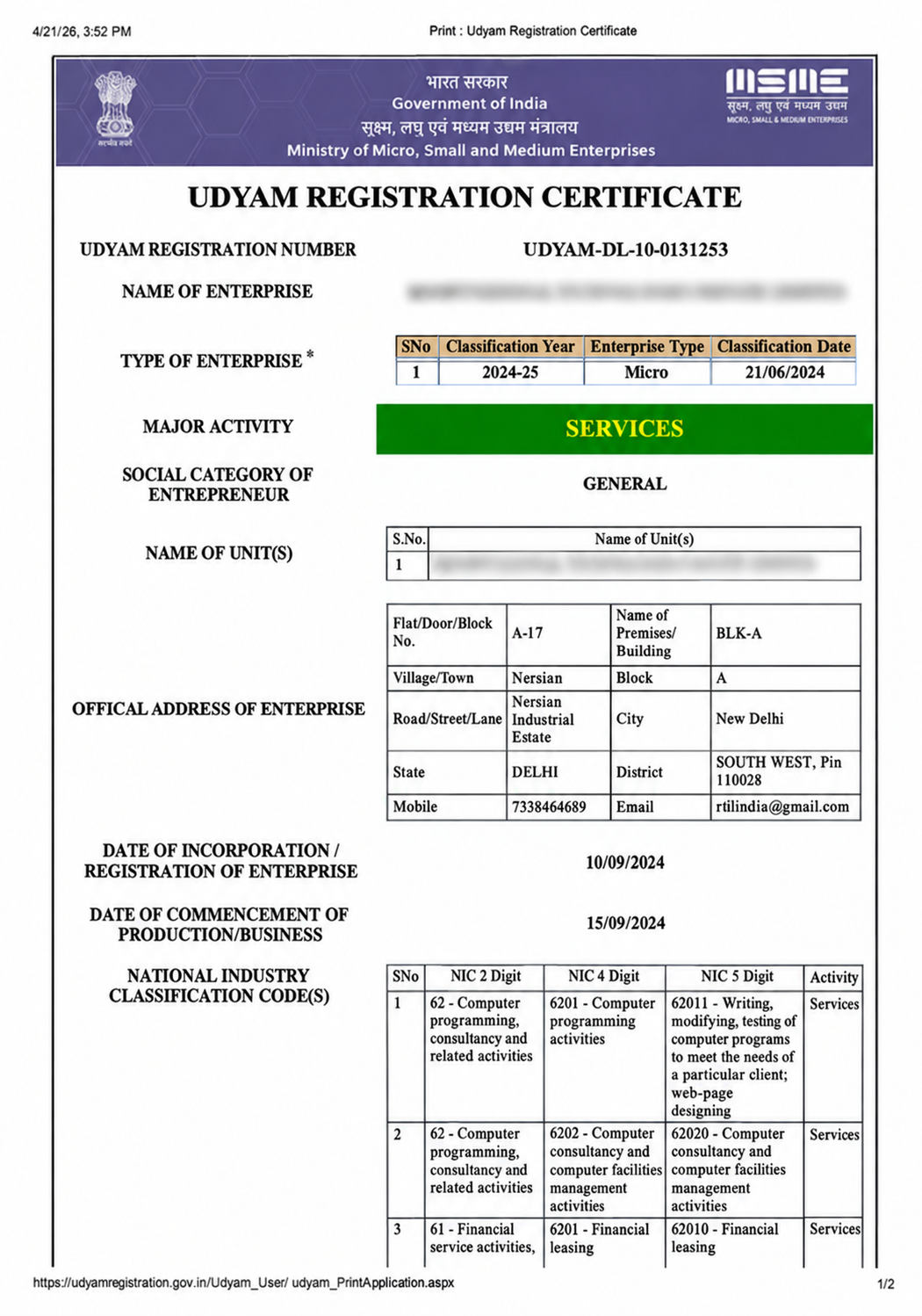



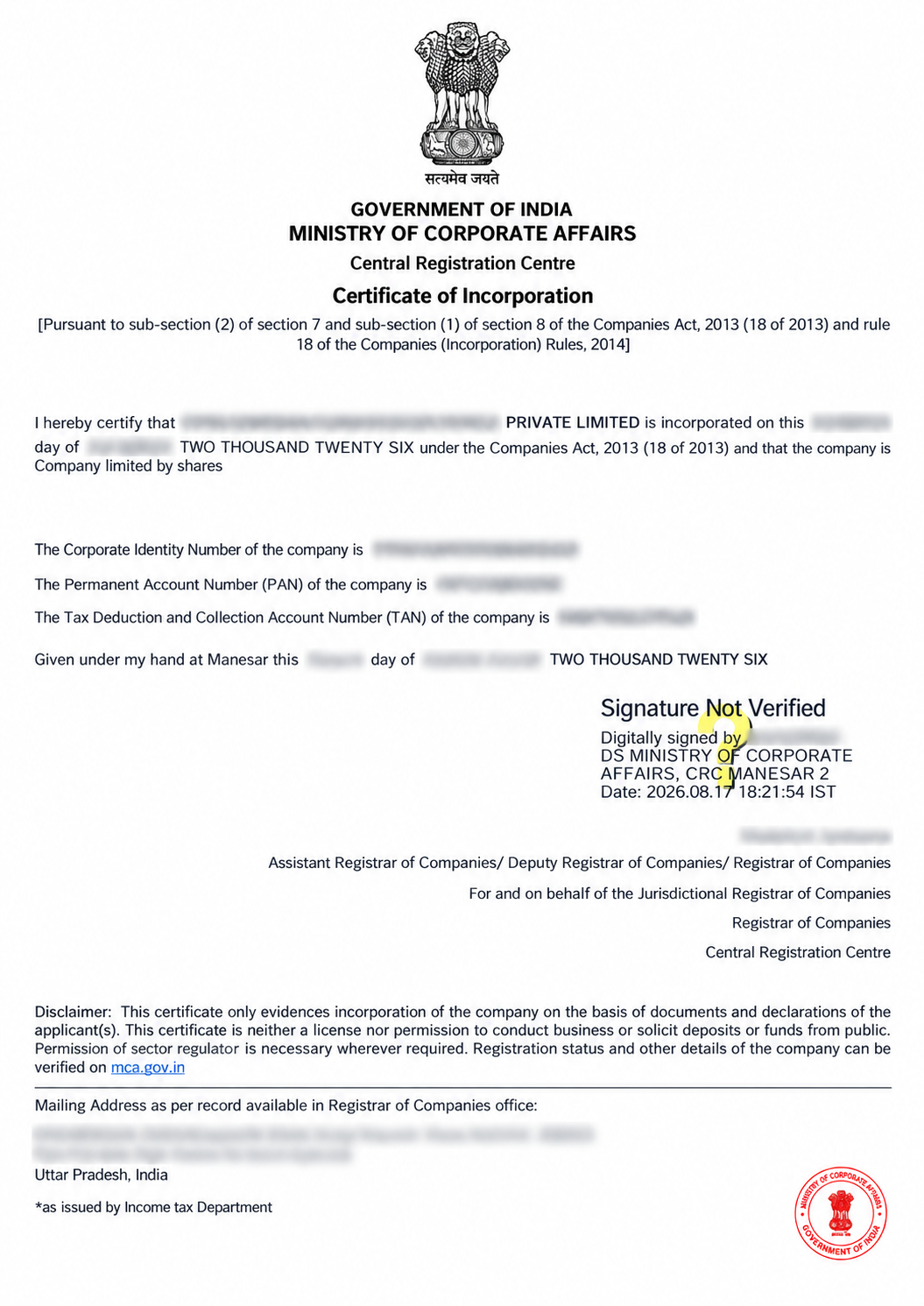
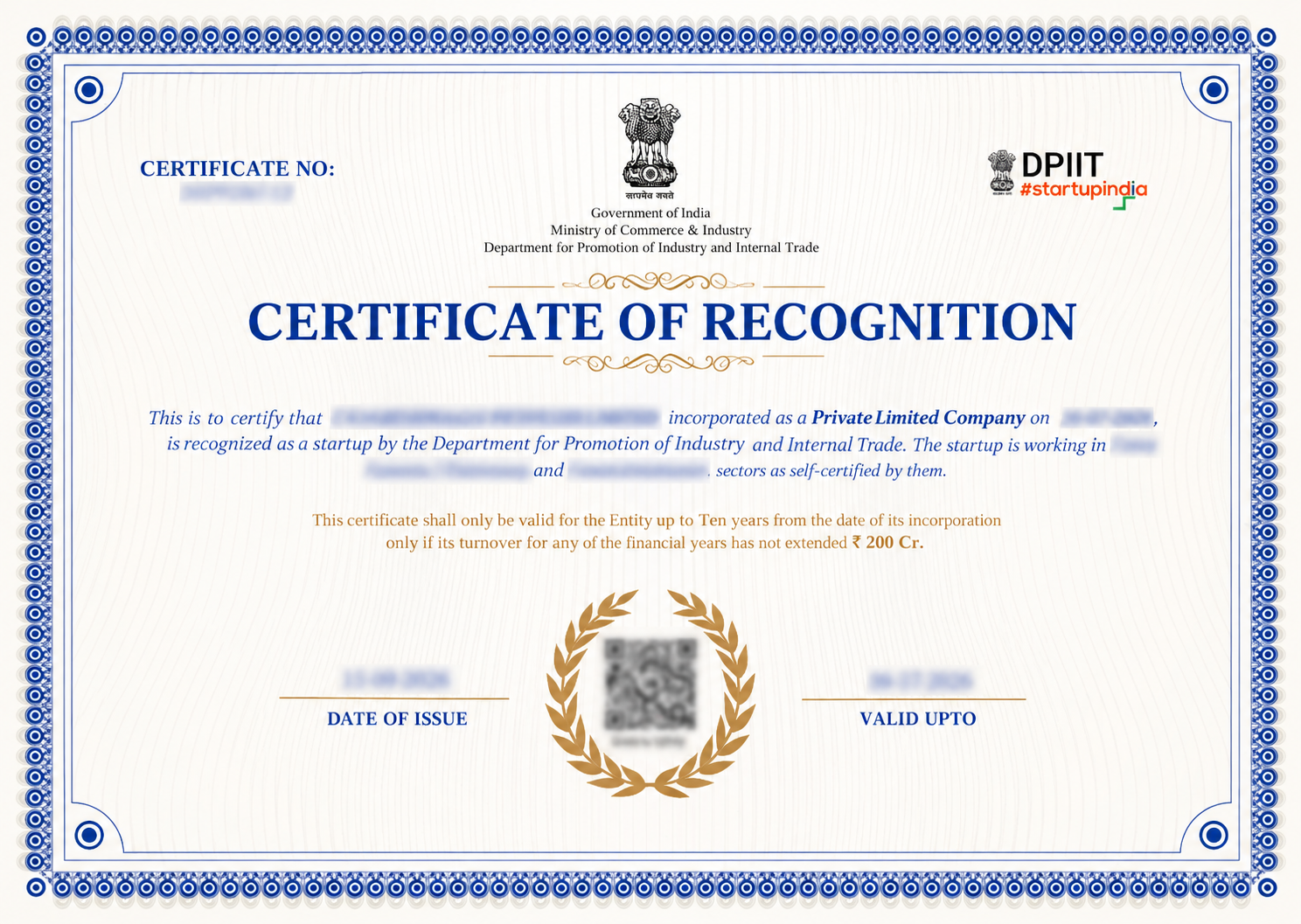
"Explore how Legalstartup has helped businesses reach new heights as their trusted partner."

Thousands of businesses and founders trust LegalStartup.