
Transfer property to a family member or loved one with a properly drafted gift deed. Legal Startup checks the title, drafts the deed, guides you on stamp duty and walks you through registration, so the gift stands on firm legal ground.
Free call & custom quote · Professional fee quoted before you start
A gift deed is a legal document by which an owner (the donor) voluntarily transfers property to another person (the donee) without receiving money or other consideration. Under the Transfer of Property Act, 1882, a gift of immovable property must be made by a registered deed signed by the donor and attested by at least two witnesses, and the donee must accept it.
Last updated: October 2026. This page is general information, not legal or tax advice for your specific case. Stamp duty, registration charges and tax rules vary and can change, so we confirm the current position before drafting. Personal laws can differ for some communities.
Section 122 of the Transfer of Property Act, 1882 defines a gift as the voluntary transfer of existing movable or immovable property by one person to another, without consideration, which the receiver accepts. A gift deed is the written and registered record of that transfer.
A gift deed is commonly used to pass a house, flat, plot or land to a spouse, child, parent or sibling during the owner's lifetime. It can also be used for movable assets such as shares or vehicles, although the form required differs. Once a valid gift is complete, ownership passes to the donee, and the donor cannot simply take it back.
Because a gift is hard to undo, getting the details right matters: clear title, the correct property description, proper stamp duty, valid witnesses and registration. If the donor wants some control or protection, such as a life interest or a maintenance condition, those terms must be written into the deed. For a transfer that should only take effect after death, a will is usually the right document instead.
Key legal points every donor and donee should know.
The right deed depends on the property, the people and any conditions.
House, flat, plot or land gifted to another person.
Property gifted to a spouse, child, parent or sibling.
A child receives property through a guardian.
Gift with a life interest or maintenance condition.
Shares, vehicles, jewellery or other movable assets.
Gifts involving an NRI or a jointly owned property.
Not sure which deed applies? Share the property details and our experts will advise free of charge.
Clear terms protect both the donor and the donee.
Names, addresses and the relationship between the donor and donee.
Accurate address, area, boundaries and title details of the property.
States that the gift is voluntary and made without payment.
Records that the donee has accepted the gift, which is essential for validity.
Donor confirms ownership and that the property is free of undisclosed liabilities.
Any right to stay, maintenance condition or limit on later transfer.
Clearly states whether and when the gift may be revoked, as allowed by law.
Signature of the donor and attestation by at least two witnesses.
From title check to registered gift deed and mutation.
Registration is completed at the sub-registrar's office and timelines vary by state and office. Not to scale.
We learn who is giving what to whom, and whether any conditions or family issues apply.
We review ownership papers, past deeds and encumbrances to confirm the donor can transfer the property.
We draft the deed with a precise property description and the terms you want.
We confirm the stamp duty for your state, property value and relationship, and guide the payment.
Donor, donee and two witnesses attend the sub-registrar's office with their IDs to register the deed.
The donee applies to update the property tax and revenue records in their name.
Keep these ready to avoid delays. Our expert will confirm the exact list for your case and state.
The total cost depends on the state, the property value, the relationship between donor and donee, and the complexity of the case. It generally has three parts:
Set by each state, often based on property value and the relationship. We confirm the current rate before you pay.
Paid at the sub-registrar's office and also set by state rules.
Our fee depends on the property and the work involved. Call free for a custom quote before you pay anything.
We share a clear, itemised quote before you begin – no hidden charges. Get your free quote →
Choose the option that matches your situation, or call free for a custom quote.
You want a correctly drafted deed for a straightforward gift.
You want help through to the registered deed.
Minors, conditions, joint property, NRI parties or an existing deed to check.
Our professional fee is quoted after a free call. Stamp duty and registration charges are separate and set by the state. Not sure which option fits? Ask for a free consultation.
Anyone who wants to transfer property to another person during their lifetime.
Passing a home or plot to a son or daughter.
Transferring ownership between husband and wife.
Settling family property in an orderly way.
Gifting with life interest or a maintenance condition for protection.
Gifting Indian property to relatives, with extra checks.
Making sure the gift they receive is valid and properly recorded.
A quick view of how these documents differ. Ask us which one suits your plan.
| Document | When ownership passes | Payment involved | Registration | Can it be undone |
|---|---|---|---|---|
| Gift deed | During the donor's lifetime | No | Mandatory for immovable property | Only in limited cases |
| Will | After death | No | Optional | Yes, any time before death |
| Sale deed | On sale | Yes | Mandatory for immovable property | No, by cancellation only |
| Release deed | When a co-owner releases a share | Usually no | Mandatory for immovable property | Hard to undo |
Most gift deed disputes come from missing registration or unclear title.
Registration is the main step, but records should also be updated.
Keep the original registered deed and receipts safely with the donee.
Update municipal, revenue or society records so the donee is shown as the owner.
Transfer property tax, electricity, water and similar accounts into the donee's name.
Record the gift for income tax purposes and speak to a chartered accountant if needed.
Quick answers on gift deeds in India.
A gift deed is a legal document by which a donor voluntarily transfers ownership of property to a donee without receiving money or other consideration. In India, gifts are governed mainly by the Transfer of Property Act, 1882.
For immovable property, yes. Section 123 of the Transfer of Property Act, 1882 requires a registered instrument signed by the donor and attested by at least two witnesses, and the Registration Act, 1908 also requires registration.
A competent donor, a willing donee who accepts the gift, existing property, a transfer made voluntarily without consideration, and compliance with the prescribed form, including a registered deed for immovable property.
Stamp duty is set by each state and depends on the state, the property value and often the relationship between donor and donee. Many states charge lower duty for gifts among close family. We confirm the current rate before execution.
Generally not by the donor alone. Section 126 of the Transfer of Property Act allows revocation only if the deed contains an agreed revocation condition or on grounds that would allow rescinding a contract, such as fraud or coercion. A court can also set a gift aside.
At least two witnesses must attest a gift deed of immovable property. They sign the deed, and their identity details are recorded at the time of registration.
Under the Income-tax Act, gifts received from specified relatives are generally not taxable, while gifts from others above the prescribed limit can be taxed in the donee's hands. Tax rules change, so confirm your case with a chartered accountant.
A gift deed transfers ownership immediately during the donor's lifetime and is hard to undo. A will takes effect only after death, can be changed or revoked at any time before, and registration is optional.
Under Section 23 of the Maintenance and Welfare of Parents and Senior Citizens Act, 2007, a transfer made on the condition that the donee will provide maintenance can be declared void if the donee fails to do so. The condition should be recorded in the deed.
There are limits. A person can usually gift only what they own and are entitled to transfer, and co-owners or coparceners may have rights. The title and family position should be checked before a deed is drafted.
The cost has three parts: our professional fee, the state stamp duty, and registration charges. Fees vary with the property and the case. Call us free for a custom quote before you pay anything.
Planning to gift property? Speak to our legal expert today – the first consultation and the quote are free.
Tell us what you need and our team will get back to you with the right guidance.
Legalstartup ke certificates, registrations aur recognitions jo hamari credibility dikhate hain.
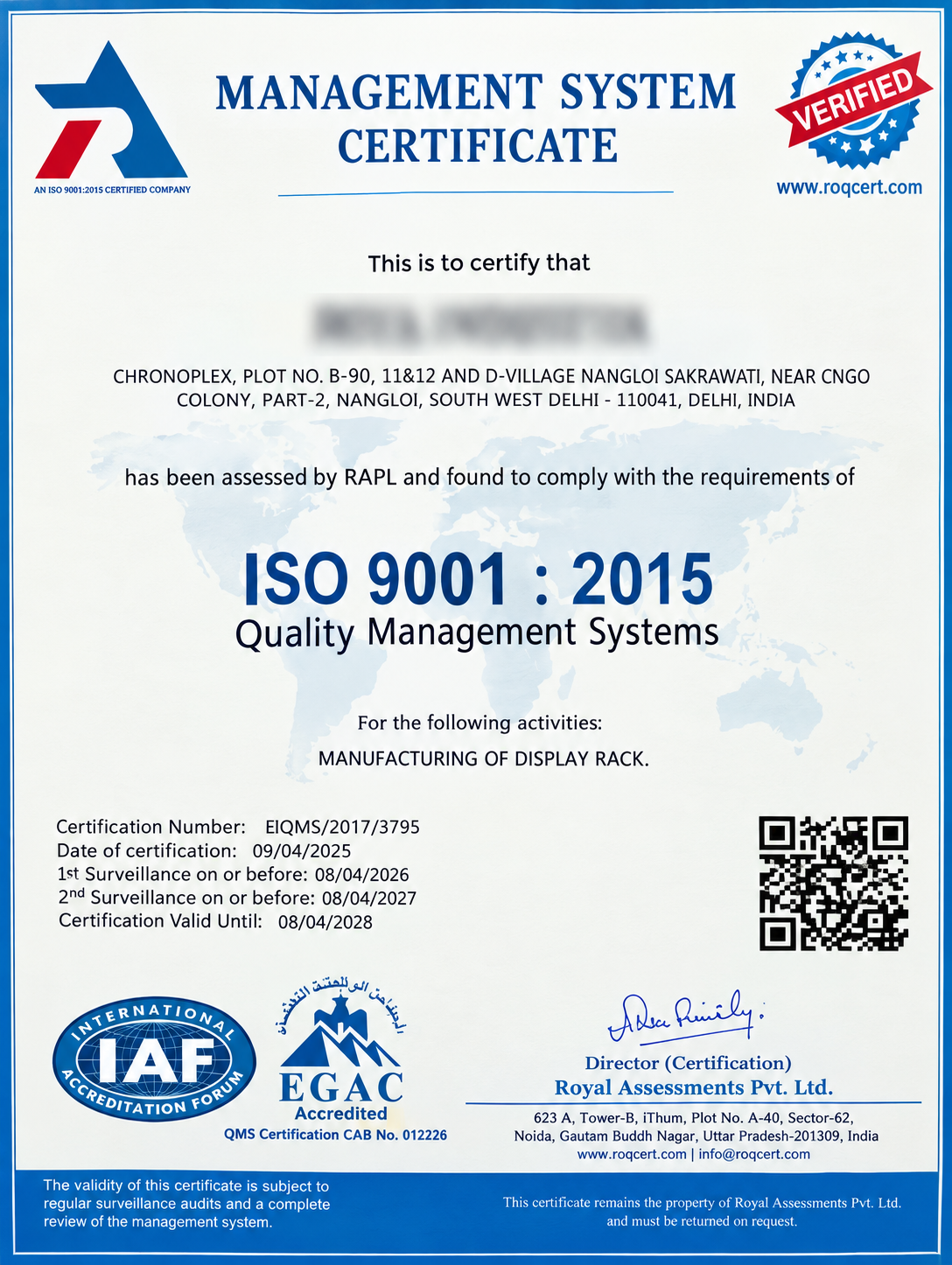
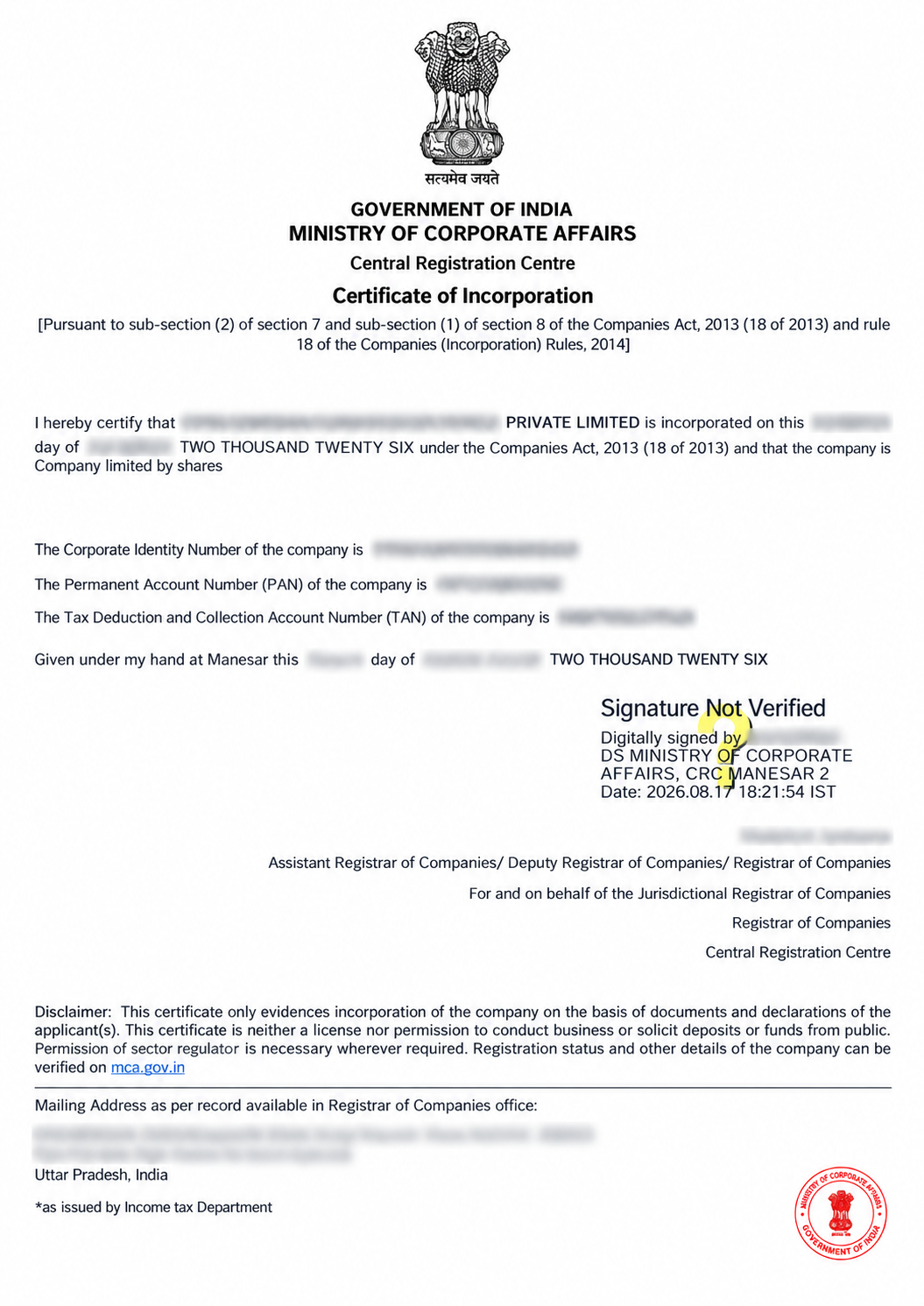
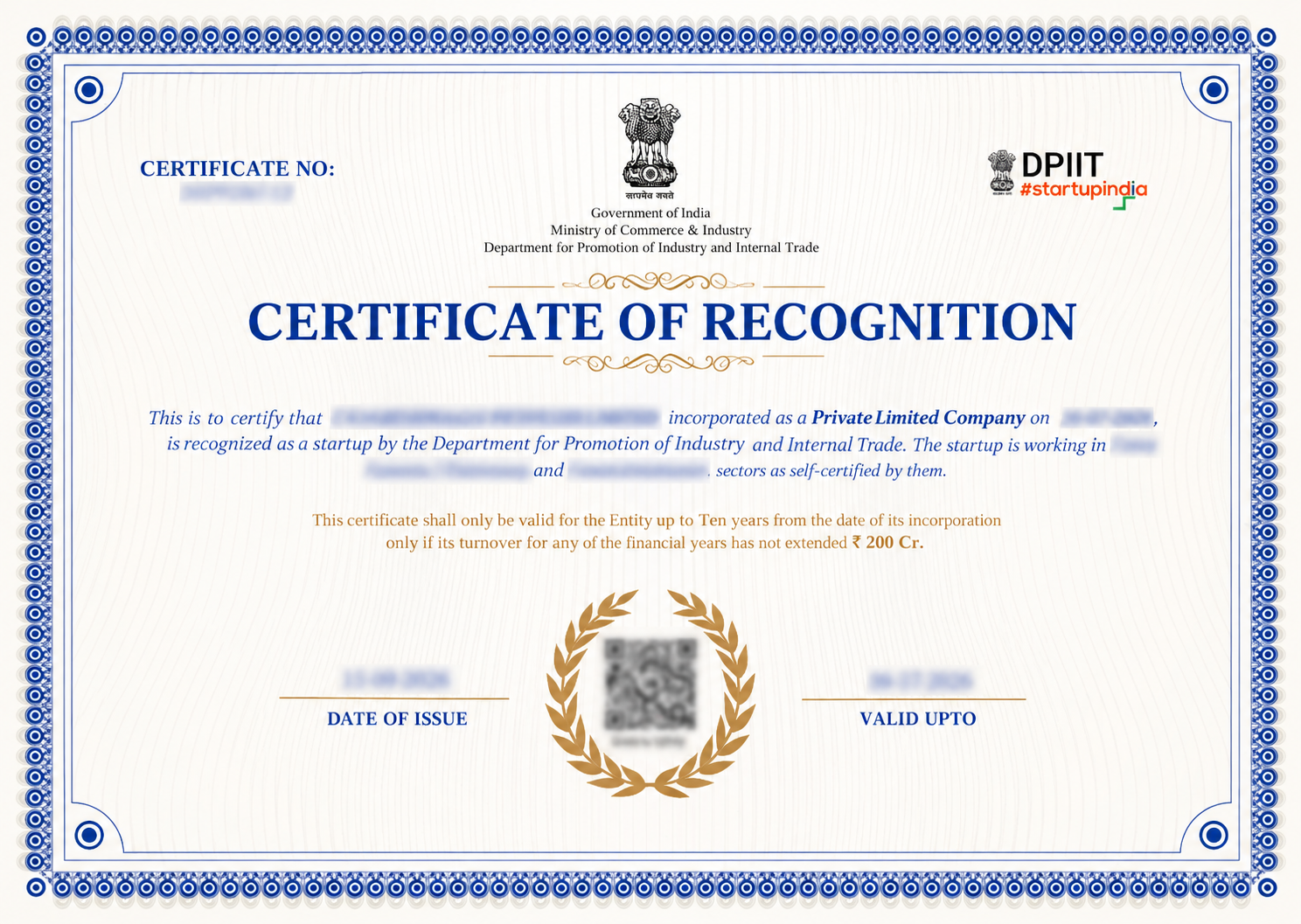
"Explore how Legalstartup has helped businesses reach new heights as their trusted partner."

Thousands of businesses and founders trust LegalStartup.