
File your GST return on time with Legal Startup. A dedicated expert prepares your GSTR-1 and GSTR-3B, reconciles input tax credit, reminds you of due dates and helps you with annual returns, nil returns, pending filings and notices.
Free call & custom quote · No government fee for filing on the GST portal
A GST return is a statement filed on the GST portal that reports your sales, purchases, tax collected and input tax credit for a period, and is used to pay the net GST due.
Last updated: October 2026. Return forms, due dates and late fees are set by the GST authorities and can change, so we confirm the current position before you proceed.
Once a business has GST registration, it must report its activity to the tax authorities at regular intervals. This report is the GST return. It lists the sales you made, the purchases you claimed credit on, the tax you collected and the tax you paid.
A regular taxpayer usually files details of outward supplies in one return and a summary with tax payment in another. A composition taxpayer files simpler returns. Some taxpayers can file quarterly under the scheme for eligible small taxpayers. The amount of GST you pay depends on the tax you collected minus the input tax credit you are eligible to claim.
Returns and payments are made on the GST portal (gst.gov.in), where you can also view your return status, auto-drafted credit statements and notices.
The returns you file depend on your registration type and scheme.
Details of outward supplies.
Summary return and tax payment.
Yearly filing.
Special taxpayer types.
Not sure which GST returns apply to you? Tell us your registration type and turnover and our experts will advise free of charge.
Why filing correctly and on time matters for your business.
Filing by the due date prevents the daily late fee and interest that apply to delays.
Correct filing and reconciliation help you claim the credit you are eligible for.
Timely GSTR-1 filing lets your customers see your invoices and claim their credit.
Matching figures across returns reduces mismatch queries from the department.
A regular GST filing record supports bank loans, tenders and vendor onboarding.
Organised GST data makes accounting, audit and year-end filing easier.
From collecting invoices to filing and payment.
Timing depends on when your data reaches us and the due date for your return. Not to scale.
You send invoices, credit and debit notes and any e-invoice or e-way bill data for the period, in the format that suits you.
We compare your purchase records with the credit statement on the portal and flag mismatches or missing invoices.
We prepare GSTR-1 and GSTR-3B, or the returns that apply to you, and calculate the tax payable.
You review the summary of sales, credit and tax payable before anything is filed.
The returns are filed and the tax is paid through the portal, using your credit ledger and cash ledger as applicable.
You get the filed returns and acknowledgements, plus reminders for the next due dates.
Keep these ready to avoid delays. Our expert will confirm the exact list for your case.
Filing a GST return on the GST portal has no government fee. You pay the GST due, and any support fee you choose:
None for filing the return itself. The GST payable, and any late fee or interest for delay, must be paid.
Our fee depends on the number of invoices, the returns involved and whether you file monthly or quarterly. Call free for a custom quote before you pay anything.
Pending return filing, annual return, reconciliation clean-up and notice replies are quoted only if you need them.
We share a clear, itemised quote before you begin. Get your free quote →
Choose the situation that matches your business, or call free for a custom quote.
Businesses with few or no invoices each period.
Regular filing with input tax credit checks.
Late filing, annual return or a department notice.
Our professional fee is quoted after a free call. GST payable, late fee and interest are separate. Outcomes of department review are never guaranteed. Not sure which option fits? Ask for a free consultation.
A quick view of the common GST returns and what each one does.
| Return | Who files | What it reports | Frequency | Key point |
|---|---|---|---|---|
| GSTR-1 | Regular taxpayers | Outward supplies, invoice-wise | Monthly or quarterly | Feeds your buyers' credit |
| GSTR-3B | Regular taxpayers | Summary of sales, credit and tax paid | Monthly or quarterly with payment rules | Tax is paid with this return |
| GSTR-9 | Eligible regular taxpayers | Annual summary of the year | Yearly | Needs reconciliation with books |
| CMP-08 / GSTR-4 | Composition taxpayers | Tax payment and annual statement | Quarterly payment, yearly return | Simpler, no credit claim |
Most problems come from mismatches and late filing.
Filing is regular work. Keep records and watch for follow-ups.
Save the filed returns, acknowledgements, payment challans and supporting invoices for the period required by law.
A filed return is generally not revised, so errors are corrected in a later return within the time allowed.
Monitor your input tax credit and cash balance so that tax payment is ready each period.
Reply to any notice from the department within the stated time with clear figures and documents.
File the annual return and reconciliation, where applicable, after matching your books with the year's returns.
Quick answers on GST return filing in India.
A GST return is a statement filed on the GST portal that reports your sales, purchases, tax collected and input tax credit for a period. It is also how you pay the net GST due. Each registered taxpayer files the returns that match their registration type.
Every person with a GST registration must file returns for the period, even if there was no business activity. Which returns you file depends on whether you are a regular taxpayer, a composition taxpayer or another special category, and whether you file monthly or quarterly.
The main ones are GSTR-1 for outward supplies, GSTR-3B for the summary of tax and payment, GSTR-9 for the annual return, CMP-08 and GSTR-4 for composition taxpayers, and separate returns for non-resident taxpayers, input service distributors and tax deductors or collectors.
GSTR-1 reports the details of your outward sales invoice by invoice, which flow to your buyers. GSTR-3B is a summary return in which you declare total sales, claim input tax credit and pay the tax. Both need to be filed for the period, and the figures should reconcile.
Yes. If there was no sale or purchase in the period you still have to file a nil return, because the registration remains active. Not filing, even a nil return, can lead to a late fee and notices.
Late filing generally attracts a late fee for each day of delay, within limits set by the GST authorities, and interest applies on tax paid late. Repeated non-filing can lead to notices and even suspension of the registration. The current late fee amounts are on the GST portal.
You need your GSTIN and portal access, sales invoices, purchase invoices, details of credit and debit notes, the input tax credit statement from the portal, e-invoice or e-way bill data where applicable, and the bank details for tax payment. We confirm the exact list for your case.
There is no government fee for filing a GST return on the portal, but the GST payable, and any late fee or interest, must be paid. Our professional fee depends on the number of invoices, the returns involved and the frequency, and is shared in an itemised quote after a free call.
A filed GST return cannot normally be revised. Errors are generally corrected in a later period's return through amendments or adjustments, within the time the law allows. This is why checking the figures before filing matters, and we review them with you first.
Late fees and interest build up, the officer may send a notice, and your registration can be suspended or cancelled in serious cases. Pending returns should be filed as soon as possible, and we help you catch up and respond to any notice.
Need help with your GST return? Speak to our expert today – the consultation and the quote are free.
Tell us what you need and our team will get back to you with the right guidance.
Legalstartup ke certificates, registrations aur recognitions jo hamari credibility dikhate hain.

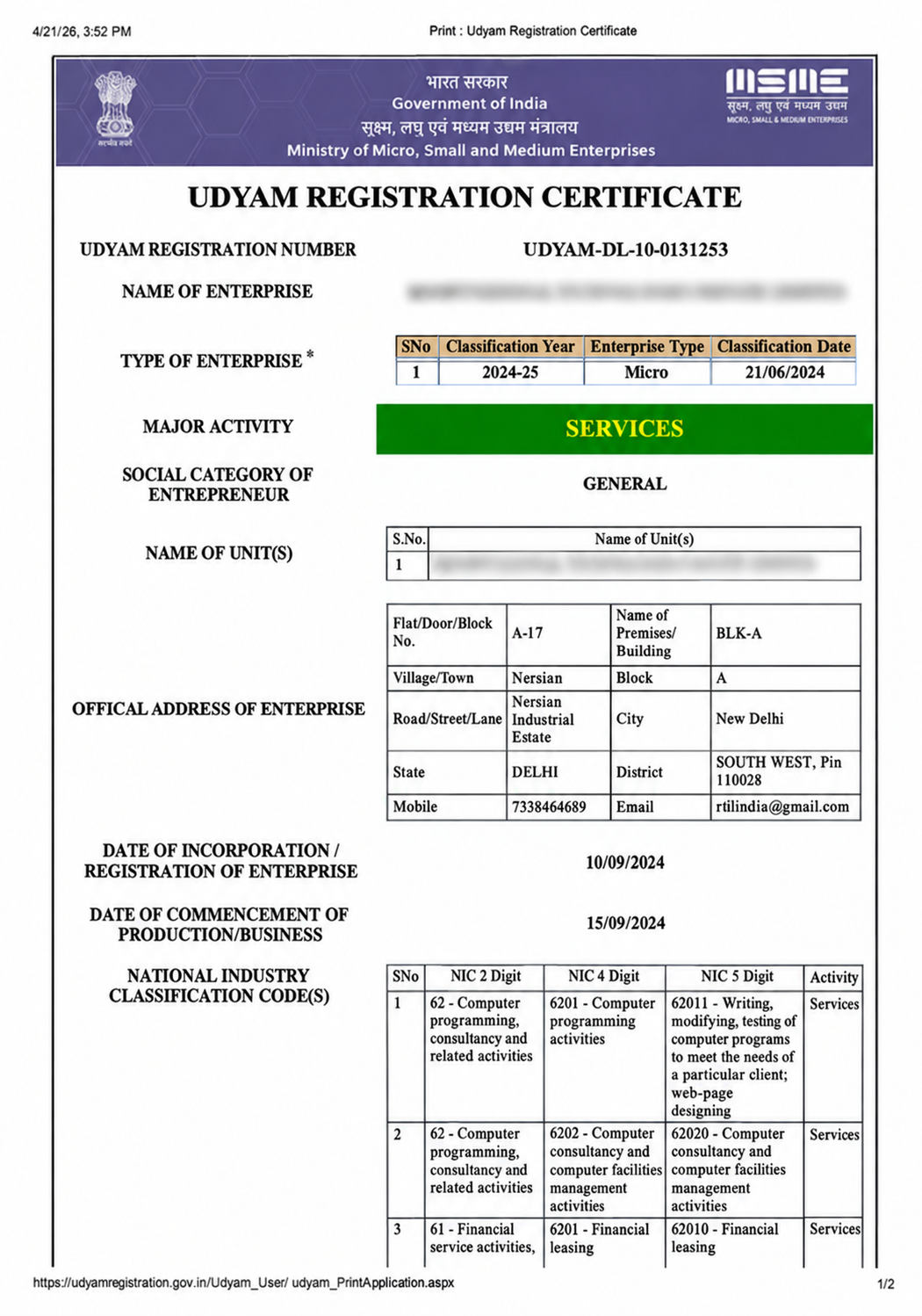




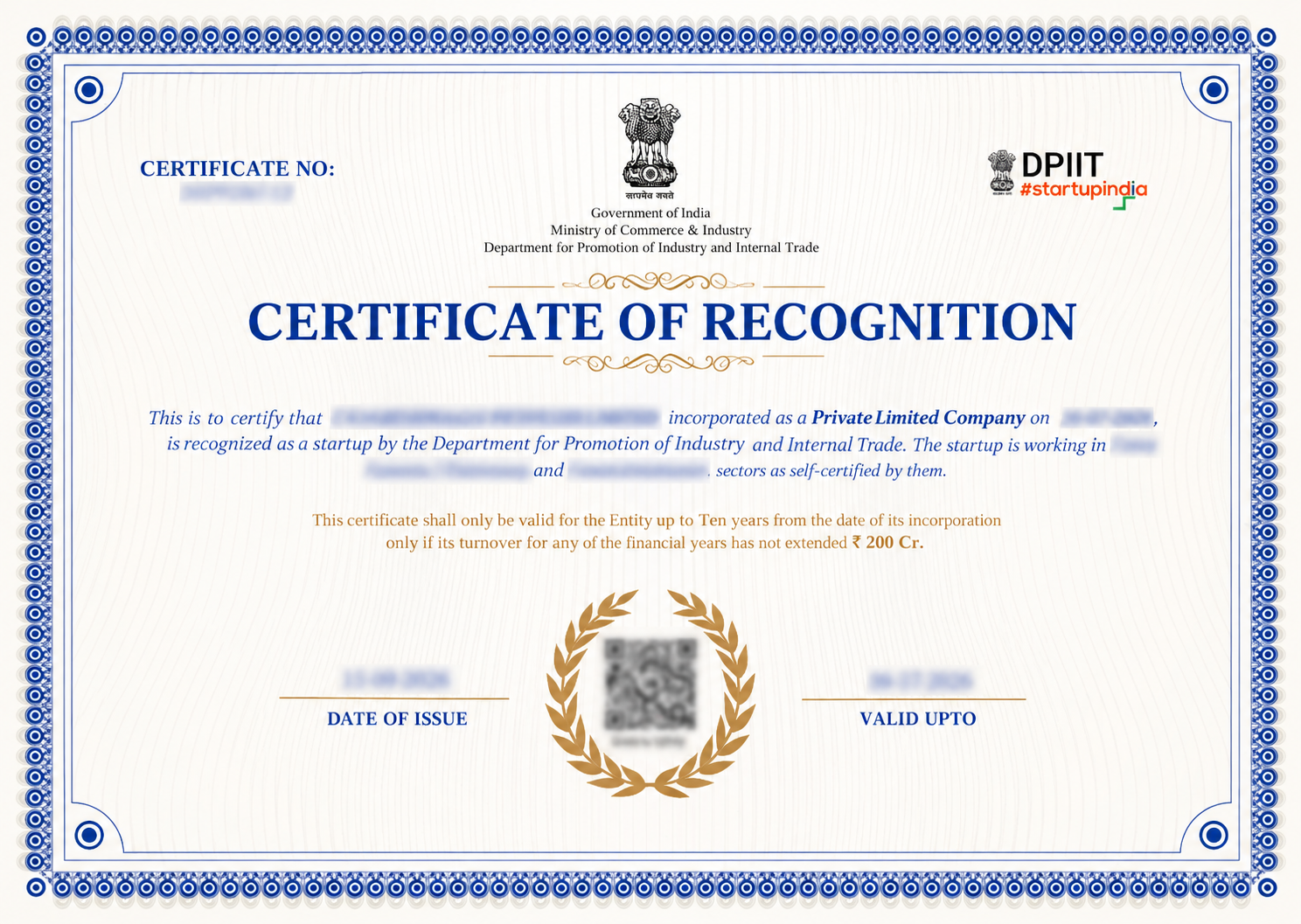
"Explore how Legalstartup has helped businesses reach new heights as their trusted partner."

Thousands of businesses and founders trust LegalStartup.