
Get your manufacturing unit GMP-ready with Legal Startup. A dedicated quality and regulatory expert identifies the standard that applies to your products, assesses gaps, prepares SOPs and records, trains your team and supports you through the inspection or certification audit.
Free call & custom quote · Professional fee + inspection or audit charges
GMP certification confirms that a manufacturing facility follows Good Manufacturing Practice, meaning controlled processes, hygiene, trained staff and complete records, so that products are made consistently to quality standards. In India, GMP is a legal requirement for pharmaceutical manufacturers under Schedule M, and similar GMP or hygiene rules apply to food, cosmetics, medical devices and Ayush products.
Last updated: October 2026. GMP rules and timelines are revised from time to time, so we confirm the current requirement for your product before starting.
GMP, or Good Manufacturing Practice, is a set of requirements for premises, equipment, personnel, documentation, hygiene and quality control. Following it reduces the risk of contamination, mix-ups and errors. GMP certification is the evidence, issued after inspection or audit, that a facility meets the standard that applies to it.
There are two broad kinds. The first is regulatory GMP, which is part of the licensing framework: pharmaceutical units follow Schedule M of the Drugs and Cosmetics Rules, food businesses follow the FSSAI hygiene and manufacturing requirements, and cosmetics, medical devices and Ayush products have their own rules. The second is voluntary third-party GMP certification, which buyers and export markets often ask for. A WHO-GMP certificate is commonly requested for pharmaceutical exports.
Because the standard differs by product, the first step is always to identify which one applies to you. For regulator information, visit cdsco.gov.in for drugs and devices and fssai.gov.in for food. If you sell under your own brand, see our trademark registration online service.
What every manufacturer should know before starting.
The right route depends on your product category and your market.
For drug manufacturers who must comply as part of their licence.
For pharma exporters whose buyers ask for a WHO-GMP certificate.
For food processors and packers under FSSAI rules.
For cosmetic, nutraceutical and supplement manufacturers.
For device makers and Ayush product manufacturers.
You want an independent view before committing to certification.
Not sure which GMP standard applies to you? Share your product category and market and our experts will check it free of charge.
Why manufacturers invest in GMP compliance.
Meet licence conditions and avoid action by the regulator.
Many importers and tenders ask for WHO-GMP or GMP certificates.
Controlled processes reduce batch failures, recalls and complaints.
Certified facilities find it easier to win contracts and brand partners.
Clear SOPs and records make regulator and buyer audits smoother.
Proven quality practices support investment and long-term growth.
From gap assessment to certificate, here is how GMP certification works.
Timelines depend on facility size, the gaps found and the inspection schedule. Not to scale.
We confirm whether Schedule M, WHO-GMP, FSSAI requirements or another standard applies to your products and market.
We review premises, layout, equipment, utilities, personnel and records and list the gaps with priorities.
SOPs, batch records, quality control procedures and a quality manual are prepared for your operations.
Staff are trained on the procedures, hygiene and documentation practices, and training records are kept.
We run a mock audit, close findings and support the application for inspection by the authority or certification body.
We help prepare corrective and preventive actions for any observations until the certificate is issued.
Keep these ready to avoid delays. The exact list depends on the standard, and our expert will confirm it for your case.
The total cost depends on the standard, the size of the facility and the work needed to close gaps. It generally has three parts:
Charged by the regulator or the certification body, and they vary by standard and site. We confirm the current charges before you apply.
Our fee depends on the facility size and the support needed. Call free for a custom quote before you pay anything.
Equipment upgrades, validation studies, testing and facility changes are outside our fee and depend on your gaps.
We share a clear, itemised quote before you begin – no hidden charges. Get your free quote →
Choose the situation that matches your unit, or call free for a custom quote.
You want to know where your unit stands before certification.
You are ready to build the system and go through inspection.
Exports, several sites or product lines under different standards.
Our professional fee is quoted after a free call. Inspection or audit charges are separate. The certificate is issued by the authority or certification body, and a pass cannot be guaranteed. Not sure which option fits? Ask for a free standard check.
If you manufacture a regulated or quality-sensitive product, check your GMP status.
Formulation and API units working under drug licences.
Units that must meet hygiene and manufacturing requirements.
Manufacturers of health supplements and functional foods.
Makers of skincare, haircare and personal care products.
Units covered by their own quality and manufacturing rules.
Third-party units and exporters whose buyers audit their facilities.
A quick view of the common GMP routes. Ask us which one applies to you.
| Type | Applies to | Assessed by | Mandatory? | Purpose |
|---|---|---|---|---|
| Schedule M GMP | Pharmaceutical manufacturers | State or central drug authorities | Yes, for the licence | Licence compliance |
| WHO-GMP certificate | Pharma exporters | Drug authority inspection | Often required by buyers or tenders | Export and procurement |
| FSSAI GMP and hygiene | Food businesses | FSSAI or its designated officers | Yes, under licence conditions | Food safety compliance |
| Third-party GMP certificate | Any manufacturer | Certification body | Voluntary | Buyer assurance and branding |
Most inspection failures come from weak documentation and untrained staff.
The certificate is the start. Here is how to keep your unit audit-ready.
Record what the certificate covers, its validity and any conditions attached.
Keep records current and train new staff, as inspectors check practice, not just paper.
Changes in layout, equipment or products may need review, validation or intimation to the authority.
Run internal audits and plan for surveillance audits and renewal before the validity ends.
Quick answers on GMP certification in India.
GMP (Good Manufacturing Practice) certification confirms that a manufacturing facility follows the quality, hygiene and documentation practices required for its product category. It shows that products are made and controlled consistently to quality standards.
GMP compliance is mandatory for licensed pharmaceutical manufacturers under Schedule M of the Drugs and Cosmetics Rules, and similar GMP or hygiene requirements apply to food, cosmetics, medical devices and Ayush products. Separate third-party GMP certificates are voluntary but often requested by buyers.
GMP is the general principle of controlled, hygienic manufacturing. WHO-GMP refers to the World Health Organization's GMP guidelines, and a WHO-GMP certificate is commonly asked for by importers and tenders when pharmaceutical products are exported.
Pharmaceutical and API manufacturers, food and beverage processors, dietary supplement and nutraceutical makers, cosmetics manufacturers, medical device makers and Ayush product manufacturers, among others. The applicable standard differs by industry.
Identify the applicable GMP standard, do a gap assessment of your facility and records, fix the gaps, prepare SOPs and quality documents, train staff, conduct an internal audit, and then apply for inspection by the regulator or a certification body. Findings must be closed with corrective actions.
Typically a site master file or facility description, layout plans, licences, SOPs, batch manufacturing records, equipment and validation records, quality control procedures, training records and details of qualified personnel. The list depends on the standard.
It depends on the size of the facility, the gaps found, the time needed for corrections and the regulator's or certification body's inspection schedule. We give a realistic estimate after a gap assessment.
The cost depends on the standard, the facility size and the work needed to close gaps. Government or certification body charges are separate. Our professional fee is quoted after a free call, and we share an itemised quote before you pay.
Validity depends on the issuing authority or certification body, and many require periodic inspections or surveillance audits. We note the validity of your certificate and remind you before renewal.
No. The outcome depends on the inspecting authority and the actual state of your facility and records. We help you prepare thoroughly so that gaps are found and fixed before the inspection.
Planning GMP certification for your unit? Speak to our quality expert today – the standard check and the quote are free.
Tell us what you need and our team will get back to you with the right guidance.
Legalstartup ke certificates, registrations aur recognitions jo hamari credibility dikhate hain.
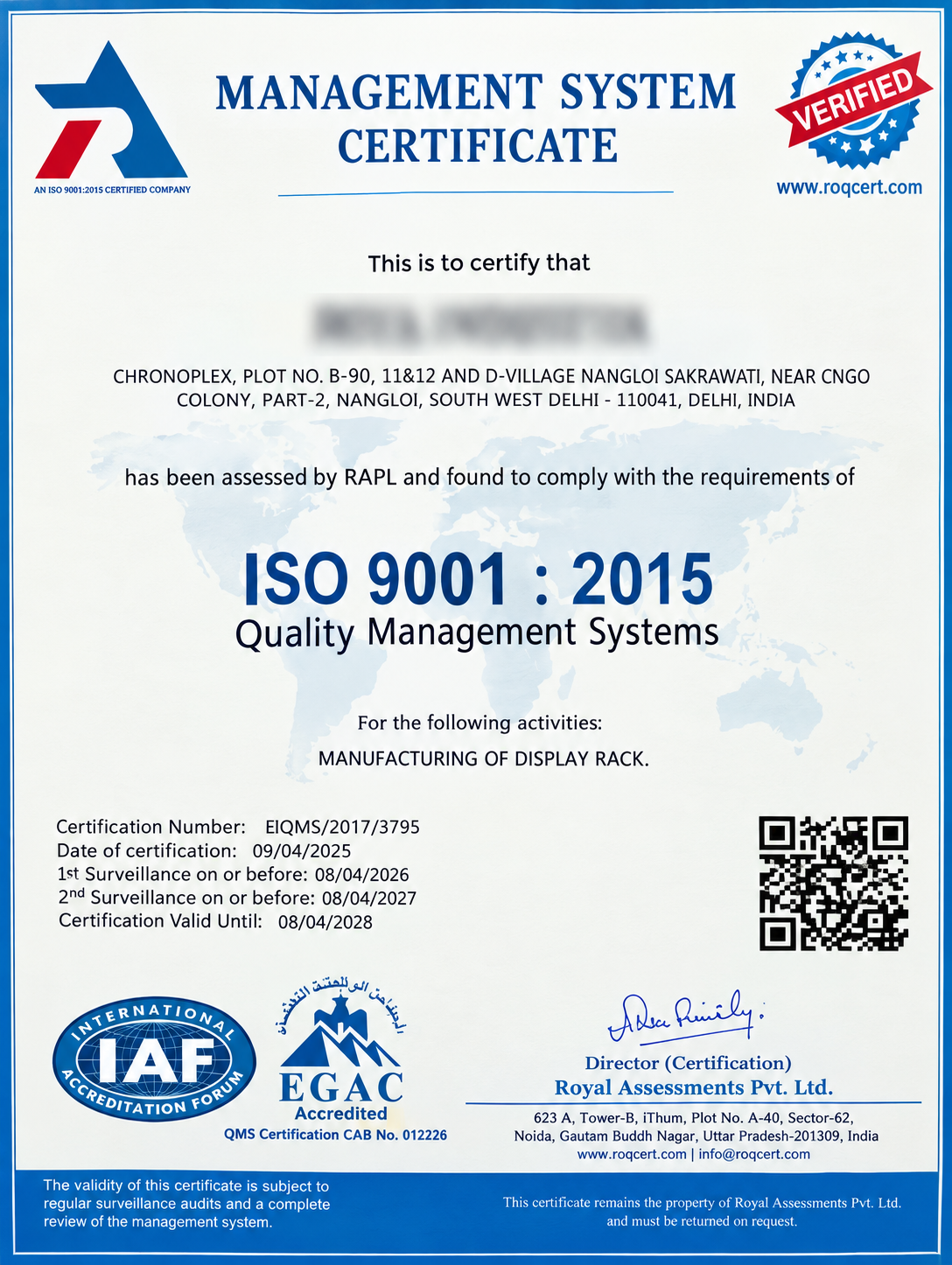
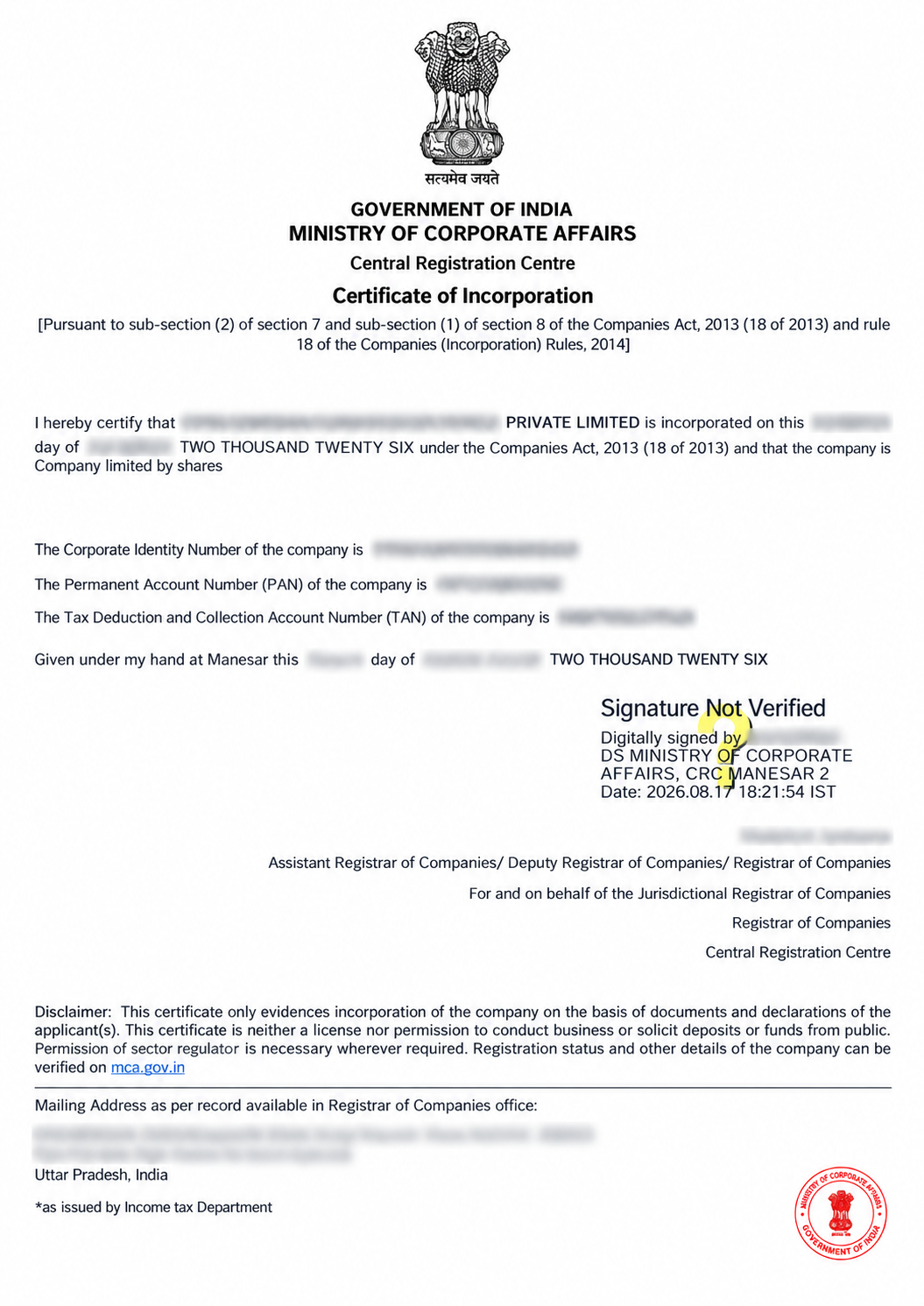
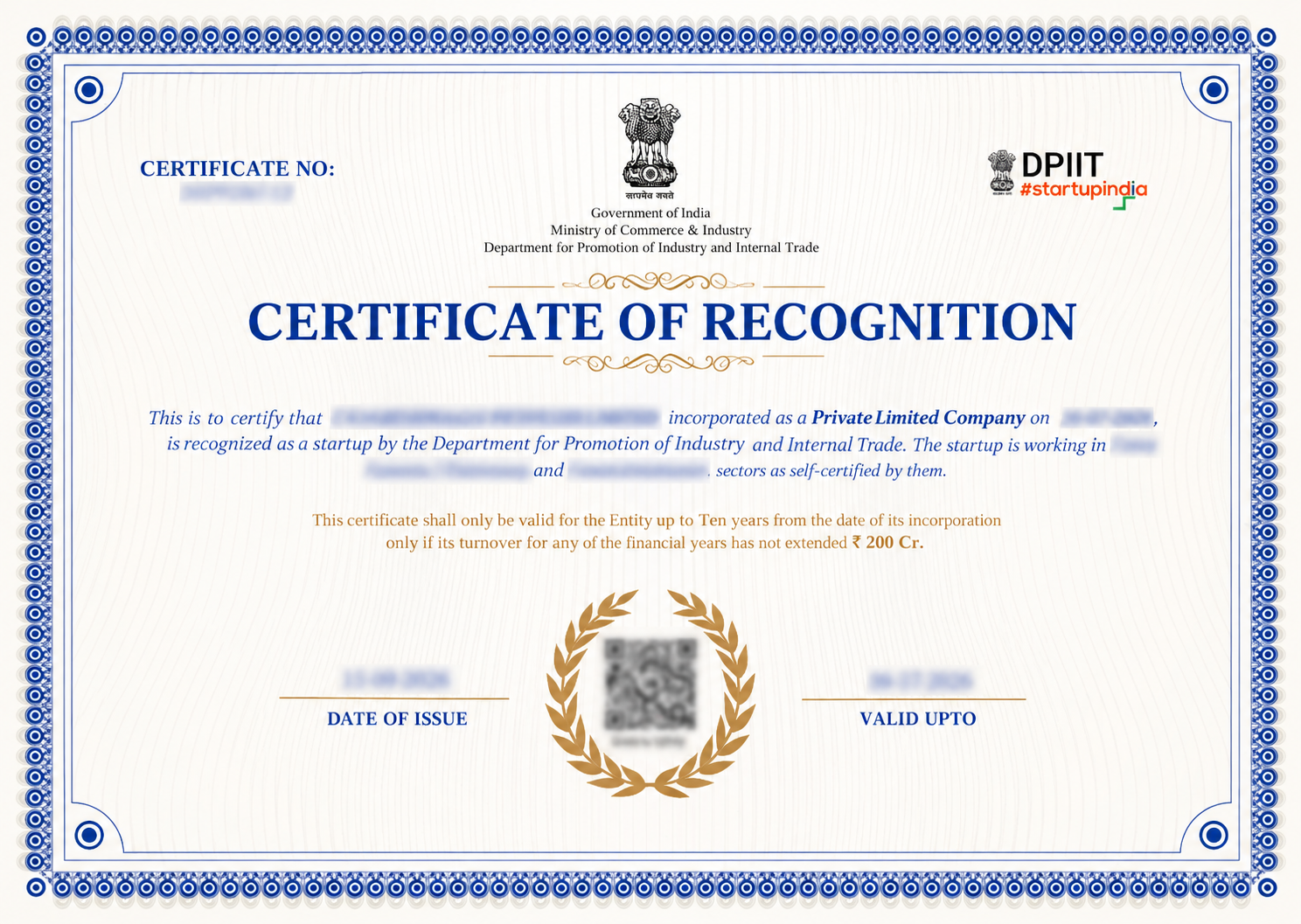
"Explore how Legalstartup has helped businesses reach new heights as their trusted partner."

Thousands of businesses and founders trust LegalStartup.