
Get FSSAI registration or licence for your food business with Legal Startup. A dedicated expert checks which type applies to you, prepares your documents, files the application and guides you on renewal and compliance after approval.
Free call & custom quote · Government fee + professional fee, shown separately
FSSAI registration is the registration or licence that a food business operator must obtain from the Food Safety and Standards Authority of India under the Food Safety and Standards Act, 2006, and it gives the business a 14-digit FSSAI number.
Last updated: October 2026. Turnover limits, fees and forms are set by FSSAI and can change, so we confirm the current position before you proceed.
FSSAI stands for the Food Safety and Standards Authority of India. Any person or company that makes, processes, packs, stores, transports, distributes, sells or imports food needs to be registered or licensed, so that food reaching consumers meets the prescribed safety and hygiene standards.
Small businesses usually apply for basic registration. Larger operations, and certain categories such as importers, need a state or central licence. The category depends on annual turnover, the kind of food activity, production capacity and whether you operate in one state or several. Choosing the wrong category can delay approval, so it is worth checking before you file.
For official information and applications, visit the FSSAI FoSCoS portal (foscos.fssai.gov.in) and the FSSAI website (fssai.gov.in).
The right type depends on your turnover, activity and where you operate.
For small food businesses.
For medium food businesses.
For large or specified operations.
For existing holders.
Not sure whether you need basic registration or a licence? Tell us your turnover and activity and our experts will advise free of charge.
Why every food business should be registered before it starts.
Operate within the Food Safety and Standards Act and avoid penalties for running without approval.
A displayed FSSAI number shows buyers that your business follows food safety requirements.
Food delivery apps, e-commerce marketplaces and retailers commonly ask for an FSSAI number.
Banks and lenders often want licences on record when you apply for current accounts or business loans.
The right licence supports growth, new locations, higher turnover and wider distribution.
Packaged food needs the FSSAI number and logo, and registration lets you label correctly.
From checking eligibility to receiving your FSSAI number.
Timelines depend on the type of application, document accuracy and the authority's processing. Not to scale.
We review your turnover, food activity, capacity and locations to decide between basic registration, a state licence or a central licence.
You share the required papers and we check them for clarity and consistency before filing.
We complete the application on the FSSAI portal with the right product list and business details, and the government fee is paid online.
If the authority raises a query or schedules an inspection, we guide you on the reply and what to keep ready.
Once approved, you get your registration or licence with a 14-digit number to display and use on invoices and packaging.
We note the expiry date and the filings that apply to your category so you can renew in time.
Keep these ready to avoid delays. Our expert will confirm the exact list for your case.
The total cost has two separate parts, and we show them separately so there are no surprises:
Paid to FSSAI. It depends on the type of registration or licence, the category of business and the validity period you choose.
Our fee depends on the case, the type of application and the support needed. Call free for a custom quote before you pay anything.
Food safety plan drafting, labelling guidance, renewal and modification are quoted only if you need them.
We share a clear, itemised quote before you begin. Get your free quote →
Choose the situation that matches your business, or call free for a custom quote.
Small food businesses, home kitchens and petty retailers.
Manufacturers, restaurants, caterers, importers and larger operators.
Renewal, modification, upgrade or an expired registration.
Our professional fee is quoted after a free call. Government fee is separate. Approval by the authority is never guaranteed. Not sure which option fits? Ask for a free consultation.
A quick view of the three FSSAI categories.
| Category | Best for | Scale | Issued by | Documents |
|---|---|---|---|---|
| Basic registration | Small food sellers, home kitchens, petty retailers | Small turnover and capacity | State or local food safety authority | Fewer |
| State licence | Restaurants, caterers, manufacturers, storage | Medium turnover and capacity | State food safety authority | More |
| Central licence | Importers, large manufacturers, multi-state operators | Large turnover or specified categories | Central licensing authority | Most |
Most delays come from choosing the wrong category or submitting mismatched papers.
Getting the number is only the start. It must stay valid and be used correctly.
Keep the certificate at your premises and show the FSSAI number on invoices, as required for your category.
Packaged products must carry the FSSAI number and logo along with the other mandatory label details.
Follow the hygiene and safety requirements for your category and keep records ready for inspection.
Some licence holders must file periodic returns, and we confirm what applies to your category.
Apply for renewal before the validity ends, because late renewal can attract a late fee.
Quick answers on FSSAI registration in India.
FSSAI registration is the approval a food business operator in India obtains from the Food Safety and Standards Authority of India under the Food Safety and Standards Act, 2006. Depending on size and activity, it is a basic registration, a state licence or a central licence, and it results in a 14-digit FSSAI number.
Anyone who manufactures, processes, stores, distributes, sells or imports food in India generally needs registration or a licence. This includes restaurants, cloud kitchens, bakeries, grocers, e-commerce food sellers, caterers, manufacturers, importers and exporters, subject to the rules for each category.
Basic registration is for small food businesses below the prescribed turnover and capacity limits. A state licence covers medium businesses, and a central licence covers larger operations and certain categories such as importers. Which one applies depends on turnover, activity, capacity and location, and we confirm it before filing.
Common documents are a photo ID, address proof, passport-size photograph, business address proof such as a rent agreement or ownership paper with NOC, and entity documents for a company or LLP. A licence usually needs more, such as a food safety management plan and a product list. We confirm the exact list for your case.
Timelines depend on the type of application, document accuracy and the authority's processing, and a licence can take longer than basic registration because it may involve scrutiny or inspection. We prepare documents carefully to reduce queries, but we cannot promise a fixed date.
The total has two parts: the government fee, which depends on the type of registration or licence and the validity period, and our professional fee. We share both separately in an itemised quote after a free call.
A registration or licence is issued for a fixed period chosen at application, up to the maximum permitted. It must be renewed before it expires, and renewing late can attract a late fee, so we track the expiry date and remind you.
Generally yes. Online sellers, cloud kitchens and home-based food businesses are food businesses and usually need at least basic registration, and marketplaces commonly ask for the FSSAI number. The correct category depends on turnover and activity.
Operating without the required registration or licence can lead to penalties, closure and legal action under the Food Safety and Standards Act. It can also block marketplace listings and bank or vendor onboarding, so it is better to apply before you start.
Yes. You can apply to modify details such as address, business name or products, and to move from basic registration to a licence when your turnover or activity grows. Changes are filed through the FSSAI portal with supporting documents.
Need FSSAI registration for your food business? Speak to our expert today – the consultation and the quote are free.
Tell us what you need and our team will get back to you with the right guidance.
Legalstartup ke certificates, registrations aur recognitions jo hamari credibility dikhate hain.
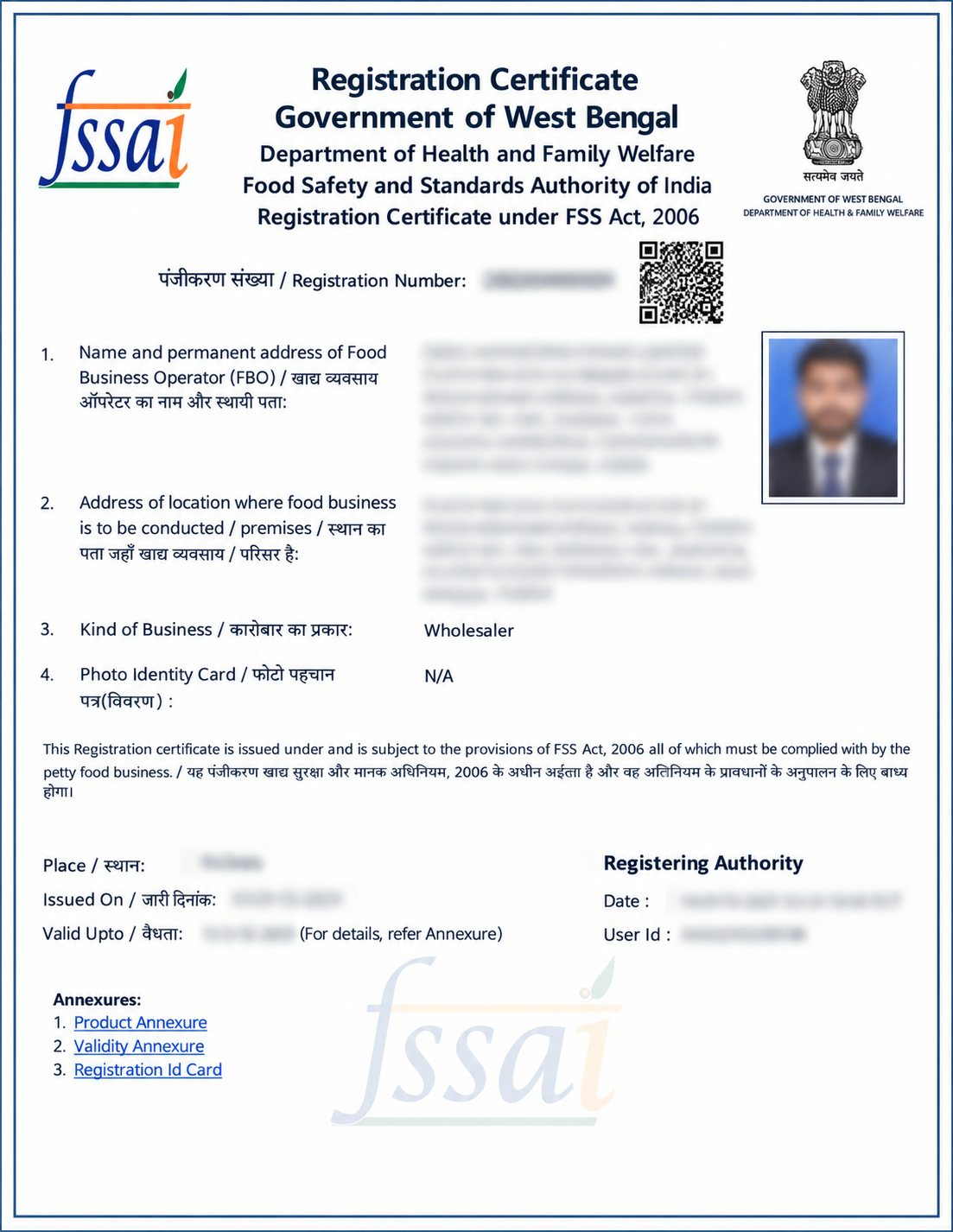
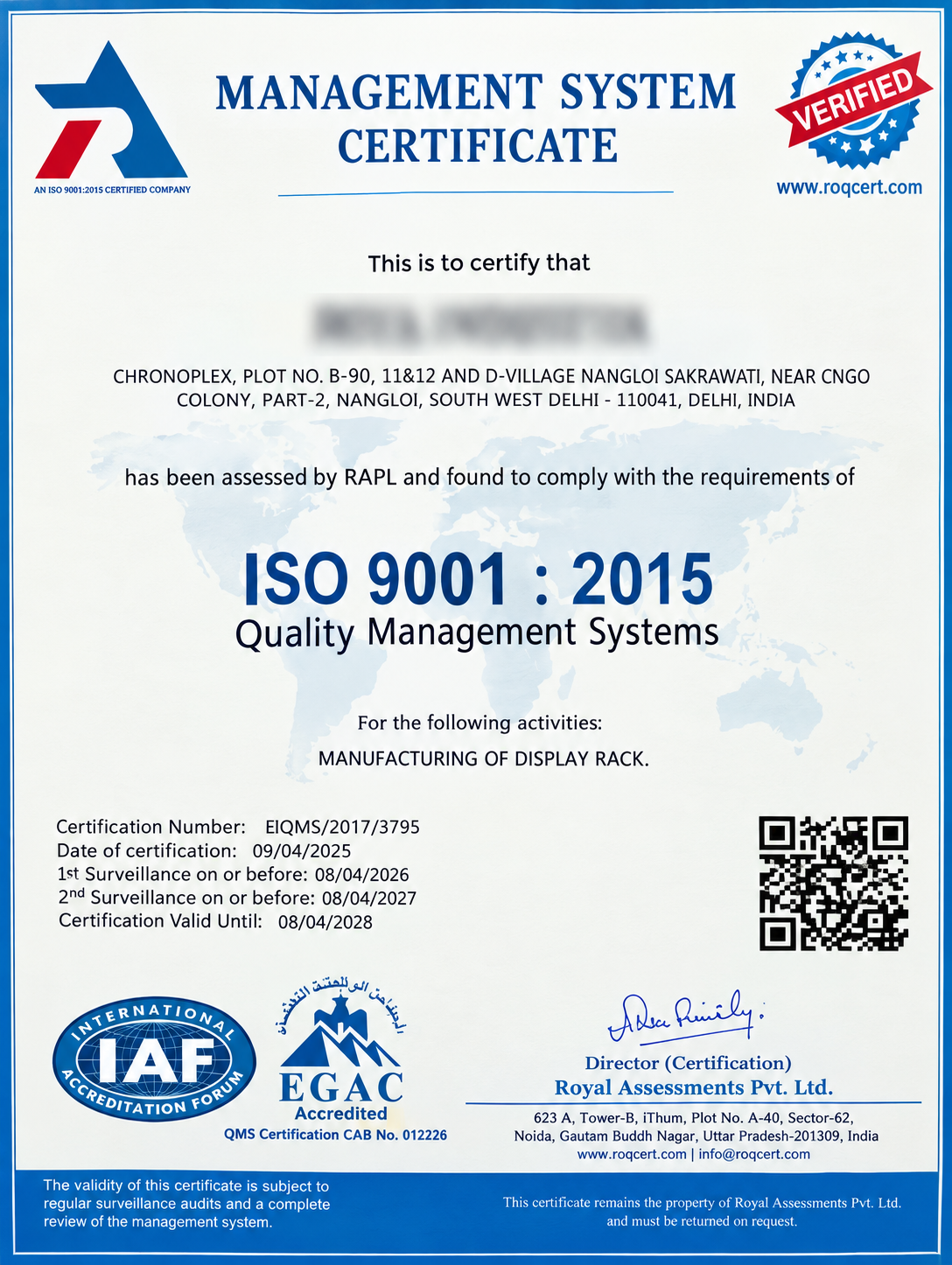
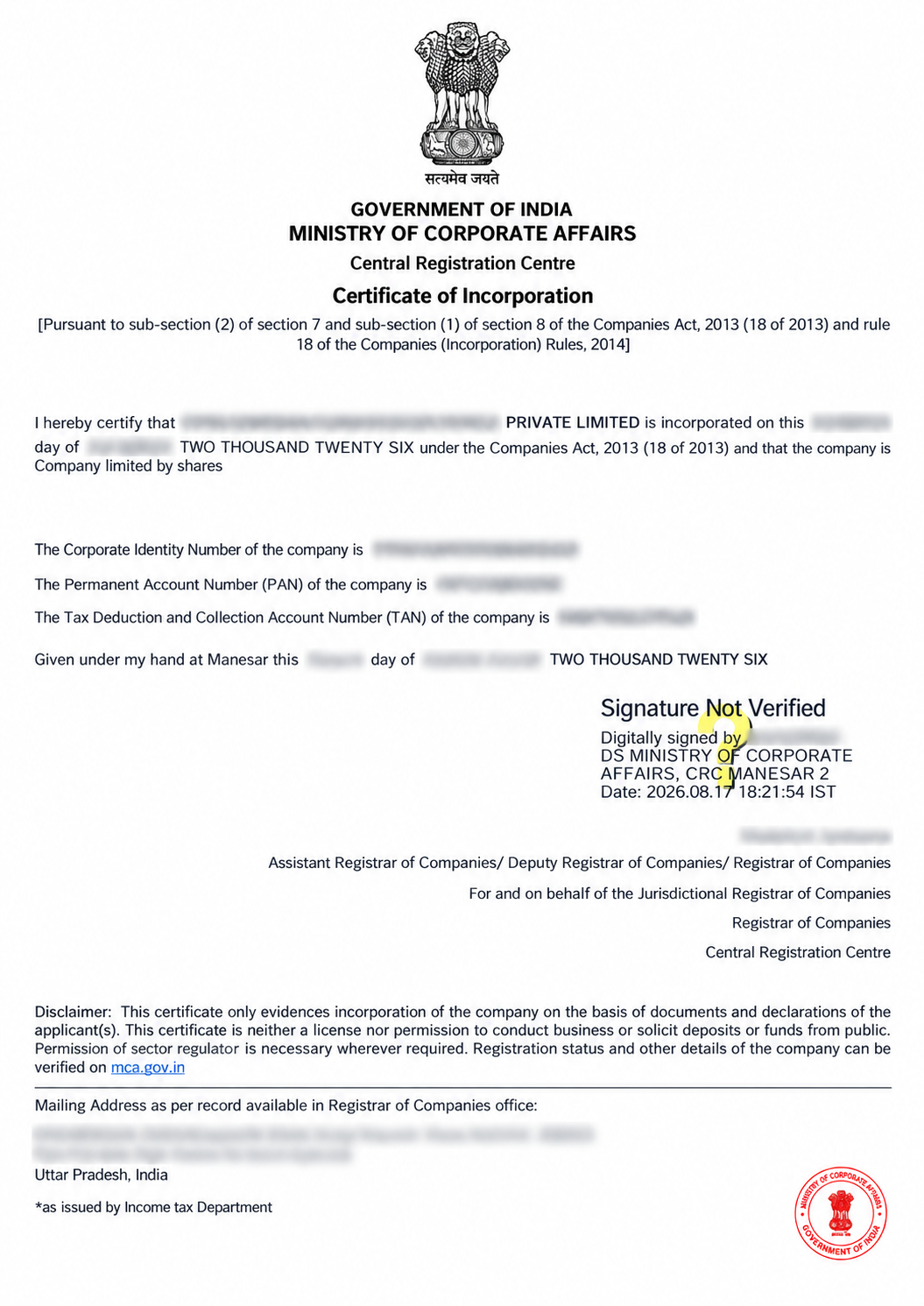
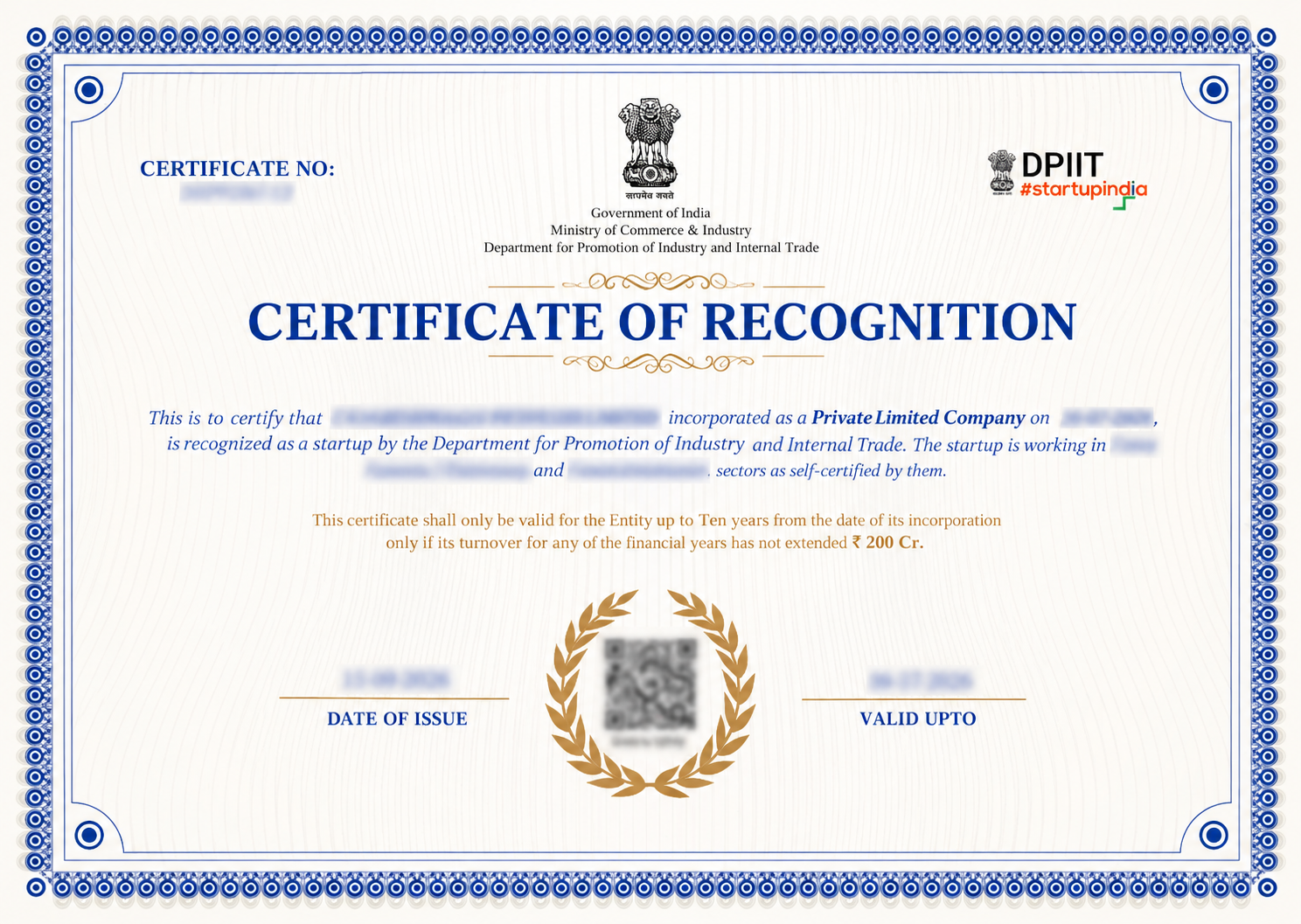
"Explore how Legalstartup has helped businesses reach new heights as their trusted partner."

Thousands of businesses and founders trust LegalStartup.