
File your income tax return with Legal Startup. A dedicated expert picks the right ITR form, reviews your documents and AIS, compares the old and new tax regimes, files your return and helps you e-verify it on time.
Free call & custom quote · Tax payable to government + professional fee, shown separately
Income tax return filing is the yearly process of reporting your income, deductions and taxes paid to the Income Tax Department of India through the applicable ITR form, so that any balance tax is paid or any excess tax is refunded.
Last updated: October 2026. Due dates, tax slabs, forms and limits are set by the government and can change, so we confirm the current position before you proceed.
An income tax return (ITR) is a form in which you declare your income from salary, house property, business or profession, capital gains and other sources, claim eligible deductions, and show the tax already paid through TDS, TCS or advance tax. Filing it correctly and on time keeps you compliant and creates an official record of your income.
An ITR is also the document banks, visa offices and lenders usually ask for as income proof. Even where your income is below the taxable limit, filing can help you claim a refund, carry forward certain losses and build a clean financial history.
Taxpayers can choose between the old and the new tax regime, and the better option depends on your deductions and exemptions. For official information and to file, visit the Income Tax e-filing portal (incometax.gov.in).
The right form depends on who you are and where your income comes from.
For simple income of eligible residents.
For individuals and HUFs without business income.
For business or professional income.
For presumptive taxation.
Firms and LLPs use ITR-5, companies use ITR-6, and trusts and similar institutions use ITR-7. Not sure which applies? Share your income details and our experts will advise free of charge.
Why filing on time is worth it, even when little or no tax is due.
Meet your filing obligation under the Income-tax law and avoid late fees, interest and notices.
If TDS or advance tax exceeds your liability, filing a return is how you claim the excess back.
Banks and lenders usually ask for recent ITRs as proof of income for loans and cards.
Embassies often ask for income tax returns when you apply for a visa.
Certain losses can be carried forward only if the return is filed on time.
Filed returns support tenders, vendor onboarding and business credit applications.
From collecting your documents to a verified return.
Refund and processing timelines depend on the department. Not to scale.
We review your income sources, residential status and assets to pick the correct ITR form.
You share Form 16, bank statements, investment proofs and other papers, and we match them with Form 26AS and AIS.
We calculate your tax under the old and new regimes and explain which works out better for you.
You check the summary, pay any balance tax, and we file the return on the income tax e-filing portal.
Verify using Aadhaar OTP, net banking, EVC or a digital signature within the permitted time, as filing is generally complete only after verification.
We guide you on refund status, the processing intimation and any mismatch the department points out.
Keep these ready to avoid delays. Our expert will confirm the exact list for your case.
The total has separate parts, and we show them separately so there are no surprises:
Any balance tax, interest or late fee is paid directly to the government. It depends on your income, regime and filing date.
Our fee depends on the ITR form, number of income sources and the support needed. Call free for a custom quote before you pay anything.
Capital gains workings, books of account, revised returns and notice replies are quoted only if you need them.
We share a clear, itemised quote before you begin. Get your free quote →
Choose the situation that matches you, or call free for a custom quote.
Salary, pension, interest and rental income.
Business income, freelancers, capital gains and NRIs.
Corrections, missed due dates and department notices.
Our professional fee is quoted after a free call. Tax payable is separate. We do not guarantee refunds or any particular tax outcome. Not sure which option fits? Ask for a free consultation.
A quick view of the forms most individuals use.
| Form | Best for | Income covered | Not suitable for | Complexity |
|---|---|---|---|---|
| ITR-1 (Sahaj) | Eligible resident individuals with simple income | Salary, one house property, other sources | Business income, multiple properties, foreign assets | Low |
| ITR-2 | Investors, NRIs, those with several properties | Salary, capital gains, house property, foreign income | Business or professional income | Medium |
| ITR-3 | Proprietors, freelancers, traders | Business or professional income plus all other heads | Not applicable | High |
| ITR-4 (Sugam) | Small businesses and professionals on presumptive scheme | Presumptive business income, salary, other sources | Those outside the presumptive limits or scheme | Low to medium |
Most notices come from wrong forms, missed income or unmatched figures.
Filing is only part of the process. Verification and follow-up matter too.
Complete verification within the permitted time, or the return may be treated as not filed.
Keep the ITR-V or acknowledgement, computation and supporting proofs for future reference and queries.
The department sends a processing intimation. Review it for differences between your computation and theirs.
Refunds are credited to your pre-validated bank account, and you can track the status on the portal.
If you find an error, or receive a notice, act within the stated time and get the reply drafted carefully.
Quick answers on filing your ITR in India.
Income tax return filing is the process of reporting your income, deductions, taxes paid and tax payable or refundable for a financial year to the Income Tax Department of India, using the applicable ITR form on the income tax e-filing portal.
You generally must file if your total income before deductions exceeds the basic exemption limit for your regime and age. Filing can also be required for specific reasons, such as holding foreign assets, high-value transactions, TDS above prescribed limits, or running a business or profession. Companies and LLPs must file every year.
It depends on your residential status, sources of income and income level. ITR-1 is for simple salary, one house property and other-source income for eligible residents. ITR-2 is for capital gains, multiple properties or foreign assets without business income. ITR-3 is for business or professional income, and ITR-4 is for presumptive taxation. We confirm the correct form before filing.
Common documents are PAN, Aadhaar, Form 16 or salary slips, Form 26AS, Annual Information Statement (AIS), bank statements and interest certificates, and investment or deduction proofs. Capital gains statements, rent details, home loan certificates, and business books apply where relevant.
For individuals who do not need an audit, the due date is generally 31 July after the financial year ends. Audit cases and other categories have later dates. The government can extend these dates, so we confirm the current due date on the income tax portal before you file.
You can usually still file a belated return before the cut-off date, but a late fee and interest on unpaid tax may apply, and some losses may not be carried forward. Filing as early as possible reduces these costs.
E-verification confirms that the return was filed by you. It can be done using Aadhaar OTP, net banking, a bank or demat account EVC, or a digital signature. A return is generally treated as filed only after verification, and the time limit is currently 30 days from filing.
A refund is processed after your return is verified and checked by the department, and the time varies by case. The refund is credited to a pre-validated bank account, so we help you check that your bank details are correct before filing.
Yes. If you notice an error or omission, you can usually file a revised return within the time allowed by the law. Different rules apply to updated returns filed later, so check the options with an expert before acting.
Our professional fee depends on the ITR form, the number of income sources, capital gains or business accounts, and the support needed. Any tax due is paid directly to the government and is separate from our fee. We share an itemised quote after a free call.
Need help with income tax return filing? Speak to our expert today – the consultation and the quote are free.
Tell us what you need and our team will get back to you with the right guidance.
Legalstartup ke certificates, registrations aur recognitions jo hamari credibility dikhate hain.

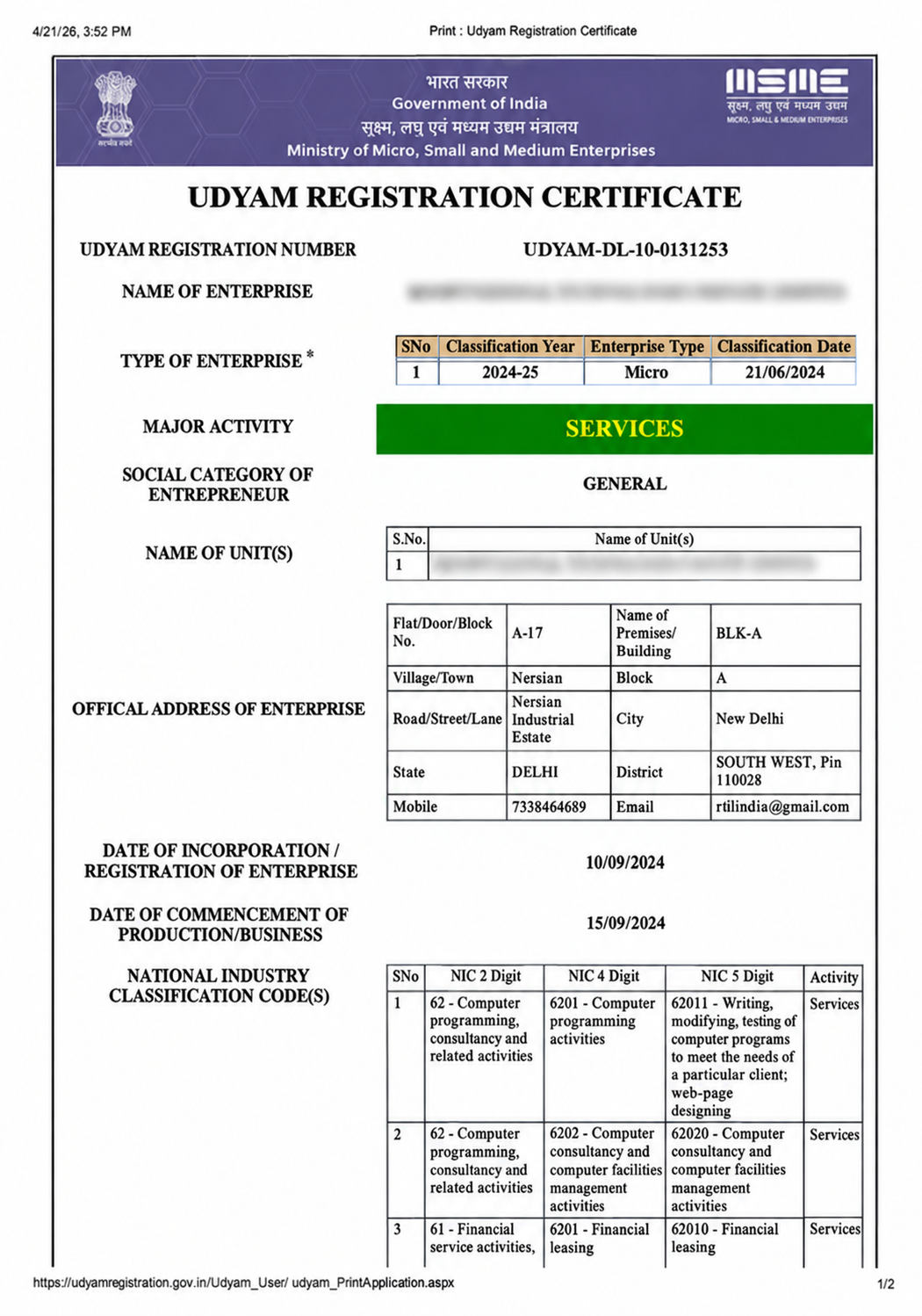

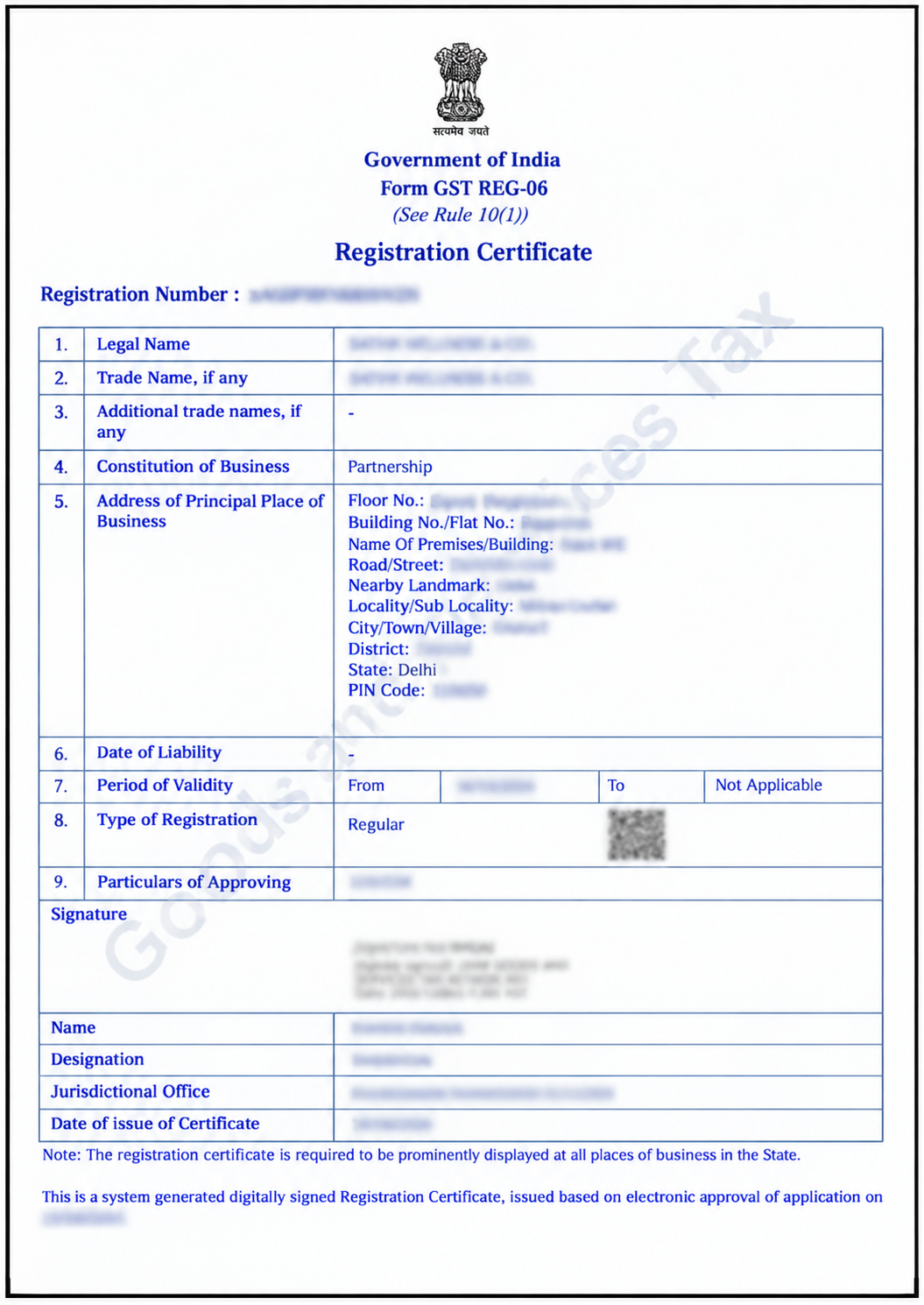

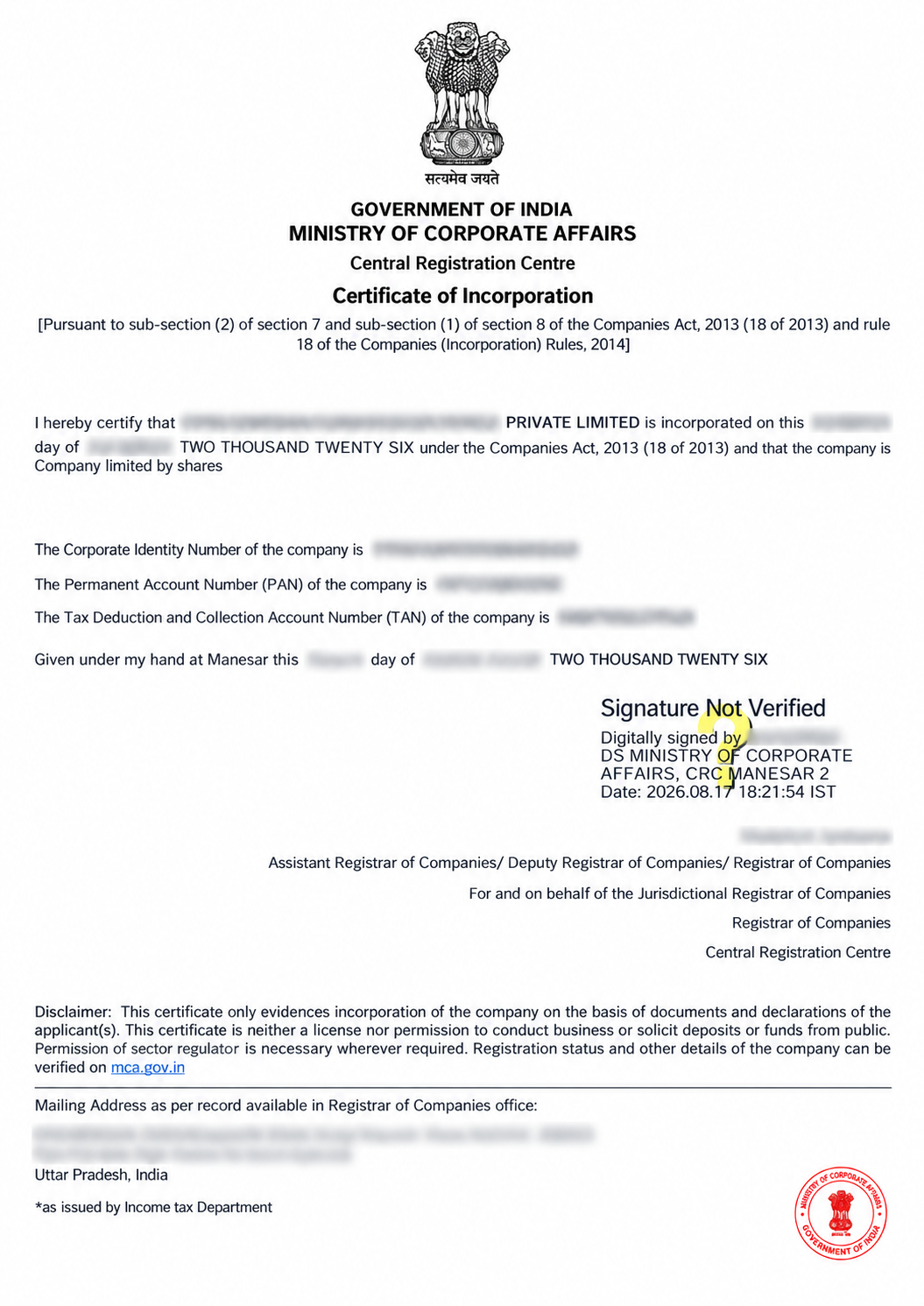
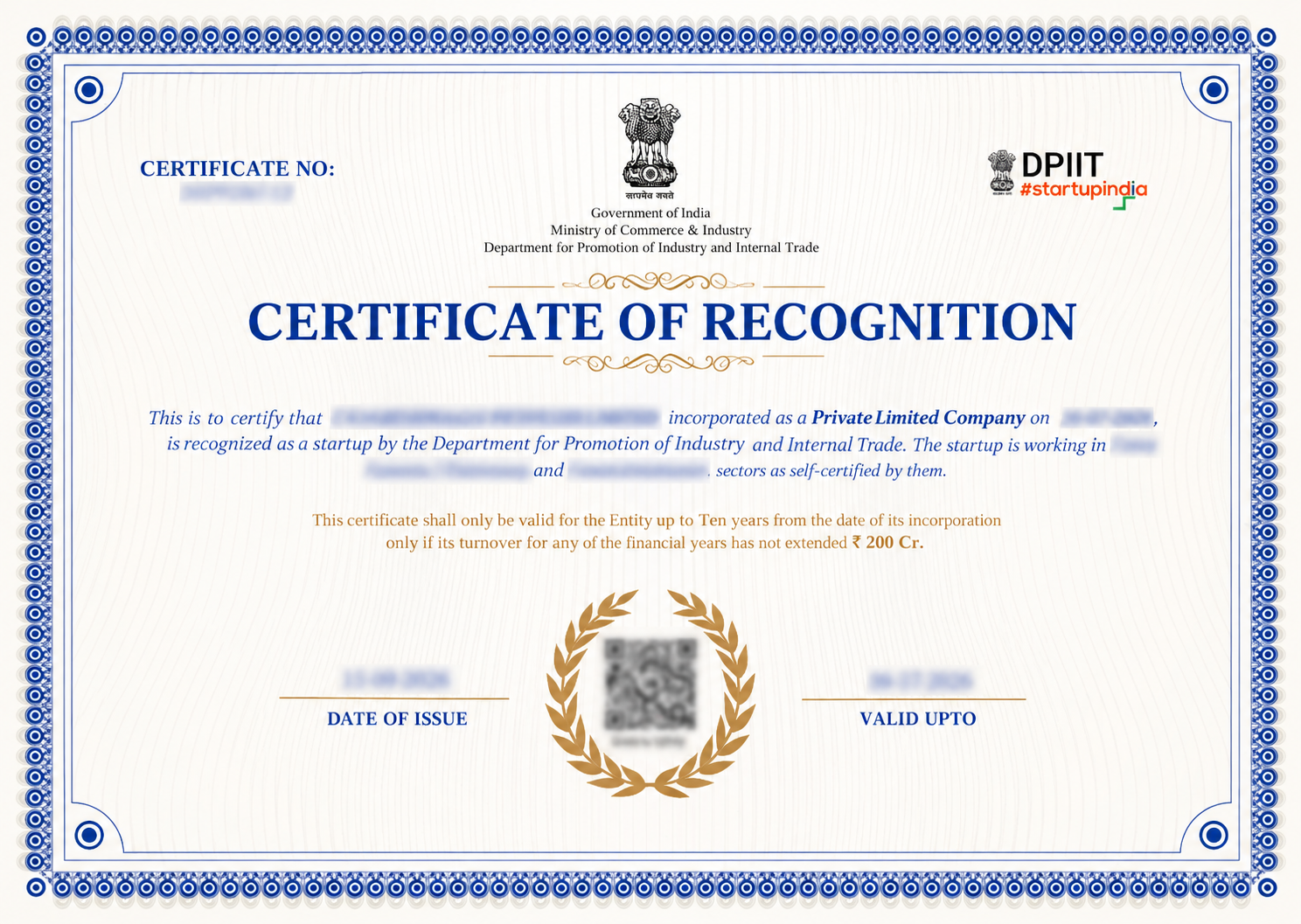
"Explore how Legalstartup has helped businesses reach new heights as their trusted partner."

Thousands of businesses and founders trust LegalStartup.