
Sell your product in the European Economic Area with CE marking done right. A dedicated compliance expert at Legal Startup identifies the EU rules that apply to your product, coordinates testing and Notified Body assessment, prepares the technical file and Declaration of Conformity, and helps arrange an EU representative.
Free call & custom quote · Professional fee + testing and Notified Body charges
CE certification is the process by which a manufacturer shows that a product meets the EU health, safety and environmental requirements that apply to it, and then affixes the CE mark. The mark allows the product to be sold in the European Economic Area. It is mandatory only for products covered by EU legislation that requires it.
Last updated: October 2026. EU rules and standards are revised from time to time, so we confirm the current requirements for your product before starting.
The CE mark on a product tells customers and market authorities that the manufacturer declares the product to meet the EU legislation that applies to it. There is no single "CE certificate" for every product. Instead, the manufacturer follows a conformity assessment route set out in the relevant directive or regulation, and keeps the evidence in a technical file.
For many lower-risk products, the manufacturer can self-declare after testing and documentation. For higher-risk products, such as many medical devices and certain machinery or pressure equipment, a Notified Body, an organisation designated by an EU country, has to assess conformity and issue a certificate. Which route applies depends on the product and the legislation.
CE marking is not a mark of origin and it does not mean the product was made in Europe. It is also separate from ISO certification and from Indian standards such as BIS. For official guidance, visit the European Commission's page on CE marking. If you sell under your own brand, see our trademark registration online service.
What every exporter should know before starting CE marking.
The right route depends on your product and its risk level.
You are not sure whether your product needs CE marking.
Lower-risk products where the manufacturer declares conformity.
Higher-risk products that need third-party assessment.
You have a product but incomplete documents or test reports.
You are outside the EU and need a local contact for authorities.
A range of products under one or several directives.
Not sure whether your product needs CE marking? Send us the product details and target market and our experts will review it free of charge.
Why exporters complete CE marking before shipping to Europe.
Sell in the EU and EEA countries without separate national approvals for covered products.
Avoid product withdrawal, customs holds and penalties for non-conforming goods.
EU importers and retailers generally require CE marking before they stock a product.
The assessment process helps identify design and safety risks early.
Correct marking and documents reduce checks and delays at EU borders.
The technical file supports tenders, audits and future product updates.
From product review to CE mark, here is how CE marking works.
Timelines depend on the product, testing needs and whether a Notified Body is involved. Not to scale.
We review your product and find the EU directives or regulations that apply, such as machinery, low voltage, EMC or medical devices rules.
We list the harmonised standards and confirm whether self-declaration or a Notified Body is needed.
We assess your product against the requirements and coordinate testing with accredited laboratories.
Drawings, risk assessment, test reports, instructions and labels are compiled in the required format.
We prepare the EU Declaration of Conformity for the manufacturer's signature.
The manufacturer affixes the CE mark with the correct form and labelling, and sets up the EU representative or importer details.
Keep these ready to avoid delays. The exact list depends on the legislation that applies, and our expert will confirm it for your product.
The total cost depends on the product, the applicable legislation, the number of models and whether a Notified Body is needed. It generally has three parts:
Paid to accredited laboratories and Notified Bodies. These vary widely by product, so we help you compare quotes.
Our fee depends on the number of products and the complexity. Call free for a custom quote before you pay anything.
EU authorised representative, translations, design changes and periodic updates are charged separately.
We share a clear, itemised quote before you begin – no hidden charges. Get your free quote →
Choose the situation that matches your product, or call free for a custom quote.
You want to know whether CE applies and what is missing.
You are ready to complete CE marking for a product.
Higher-risk products, several models or an EU contact needed.
Our professional fee is quoted after a free call. Testing and Notified Body charges are paid to those third parties. We support your compliance; the manufacturer remains responsible for the CE mark. Not sure which option fits? Ask for a free product review.
If you sell a regulated product in Europe, check its CE status before you ship.
Manufacturers of industrial and commercial machines.
Appliances, lighting, chargers and connected devices.
Devices that fall under the EU medical devices rules.
Products covered by toy safety or general product rules.
Helmets, gloves, footwear and protective clothing.
Brands selling to EU buyers through marketplaces or distributors.
A quick view of the common routes. Ask us which one applies to your product.
| Route | When it applies | Who assesses | Result | Effort |
|---|---|---|---|---|
| Self-declaration | Lower-risk products | The manufacturer, with testing | Declaration of Conformity and CE mark | Lower |
| Notified Body route | Higher-risk products | An EU Notified Body | Certificate, Declaration and CE mark with body number | Higher |
| ISO certification | Voluntary management system | Certification body | ISO certificate, not a CE mark | Different purpose |
| UKCA marking | Products sold in Great Britain | Manufacturer or approved body | UKCA mark, separate from CE | Separate process |
Most problems come from assuming one rule fits every product.
CE marking is not a one-time task. Here is how to keep your product compliant.
Store the technical file and Declaration safely, as authorities can ask for them for years.
Keep the CE mark, model identification and importer details on each product as required.
Design changes or new standards may require testing or documents to be updated.
EU rules and standards are revised, so review your compliance on a regular basis.
Quick answers on CE certification and CE marking.
CE certification is the process of showing that a product meets the EU health, safety and environmental requirements that apply to it, so that the CE mark can be affixed. The mark allows the product to be sold in the European Economic Area.
CE marking is mandatory for products covered by EU legislation that requires it, such as machinery, electrical equipment, toys, medical devices and personal protective equipment. Many other products, such as food and cosmetics, are not CE marked.
The CE mark applies in the European Economic Area, which includes the EU member states, Iceland, Liechtenstein and Norway. Some other countries also accept it. Great Britain has its own UKCA marking, so check the market you are selling to.
Identify the EU directives or regulations that apply, find the harmonised standards, decide whether a Notified Body is needed, test the product, prepare the technical file, draw up the EU Declaration of Conformity and then affix the CE mark. Your obligations continue after the product is placed on the market.
No. Many products can be self-declared by the manufacturer after testing and documentation. Higher-risk products, such as many medical devices and certain machinery or pressure equipment, need a Notified Body to assess conformity.
The manufacturer affixes the CE mark and takes responsibility for conformity. There is no single authority that issues it. Where a Notified Body is involved, it issues a certificate that supports the mark, and its identification number appears next to the CE mark.
Typically product specifications, design and manufacturing drawings, a risk assessment, test reports, user instructions and labels, component details and the EU Declaration of Conformity. Together these form the technical file. The exact list depends on the legislation that applies.
For many product categories, a manufacturer outside the EU needs an authorised representative or an EU importer who takes on specific responsibilities. The requirement depends on the product legislation, so we check it for your product.
Time and cost depend on the product, the applicable legislation, testing needs and whether a Notified Body is required. Our professional fee is quoted after a free call, and testing and Notified Body charges are separate and paid to the third party.
No. ISO certification relates to management systems or standards and is voluntary. CE marking shows that a product meets EU legal requirements and is mandatory for covered products. Some CE routes may rely on a quality system, but the two are different.
Planning to sell in Europe? Speak to our compliance expert today – the product review and the quote are free.
Tell us what you need and our team will get back to you with the right guidance.
Legalstartup ke certificates, registrations aur recognitions jo hamari credibility dikhate hain.
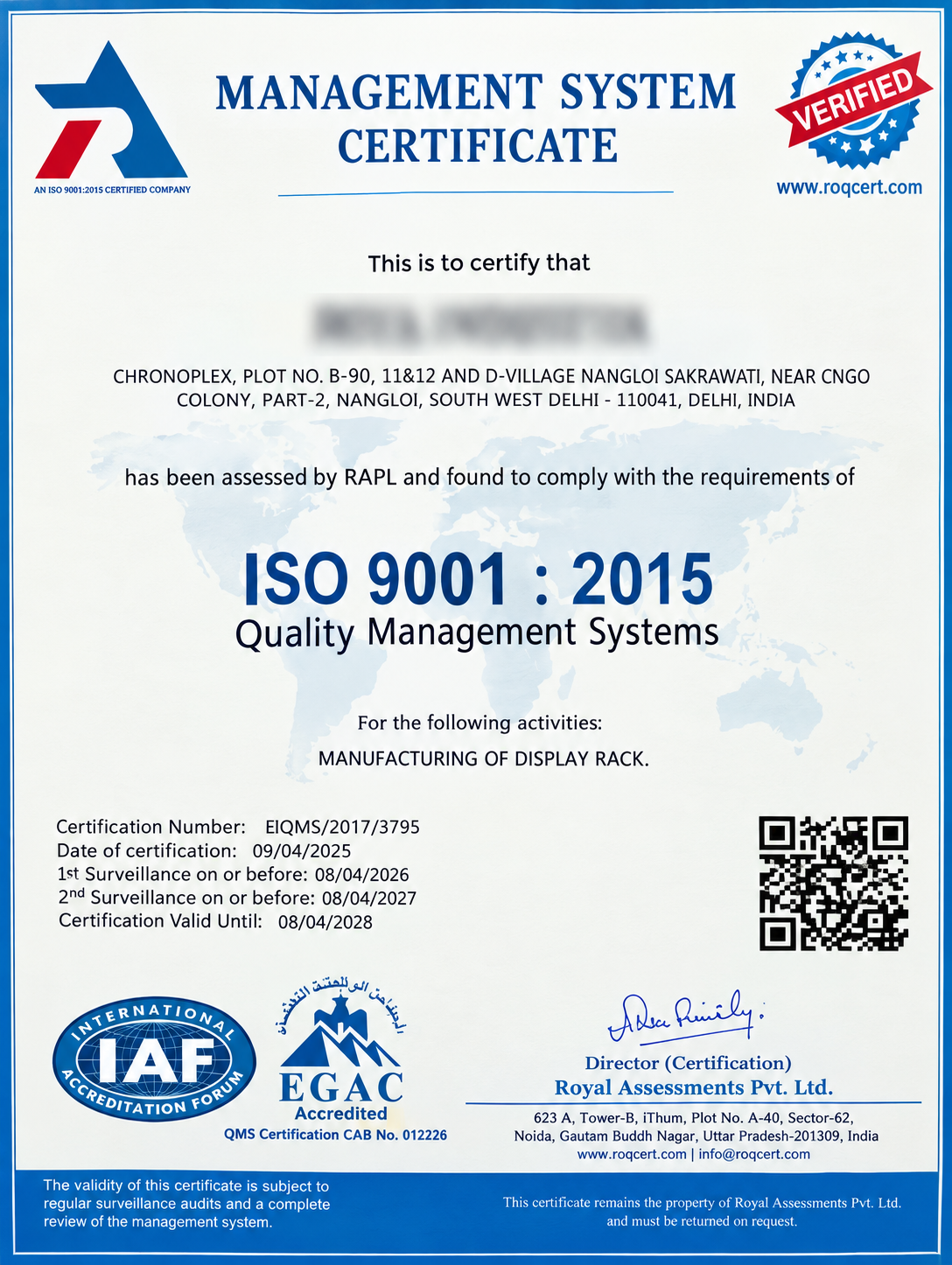
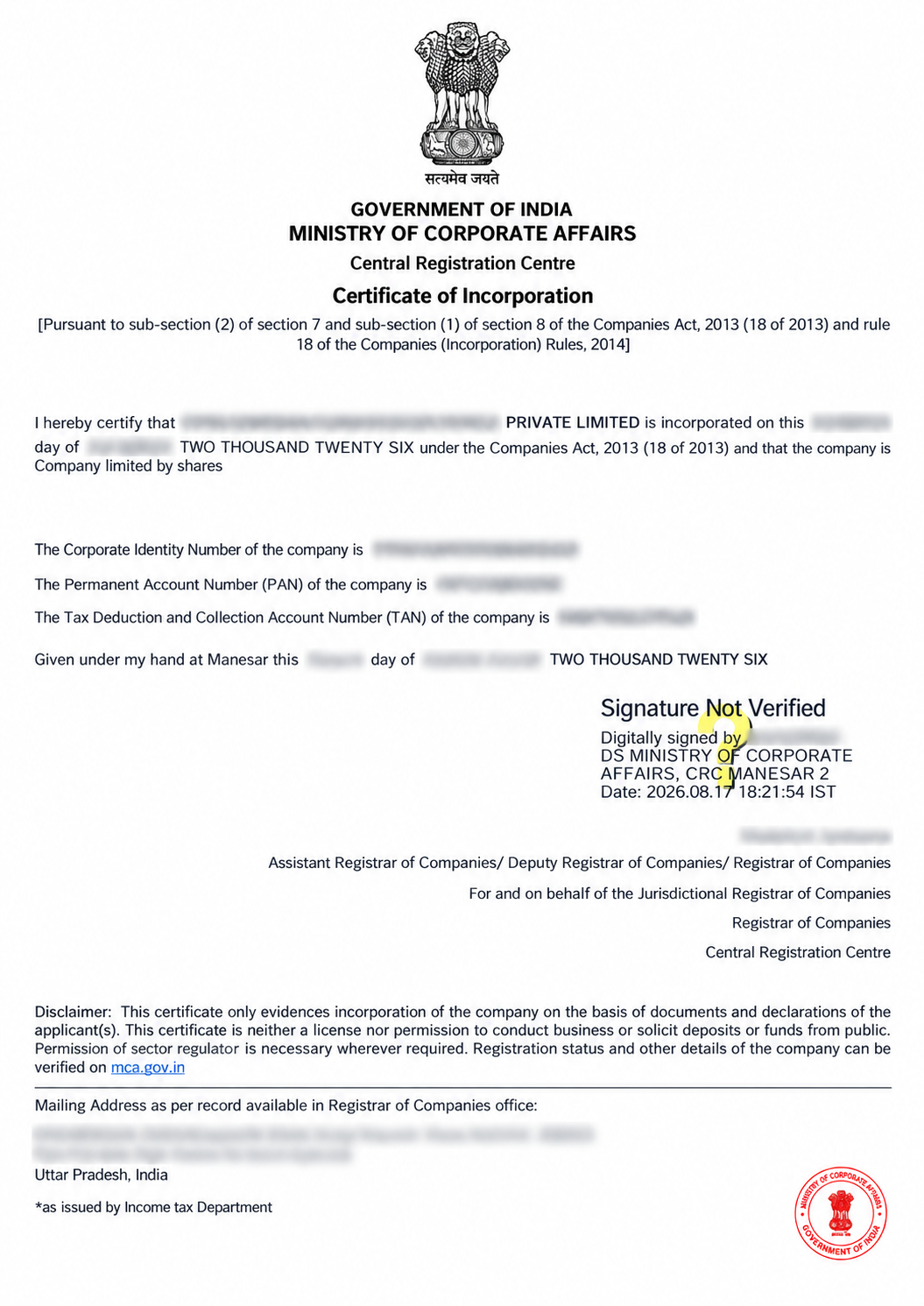
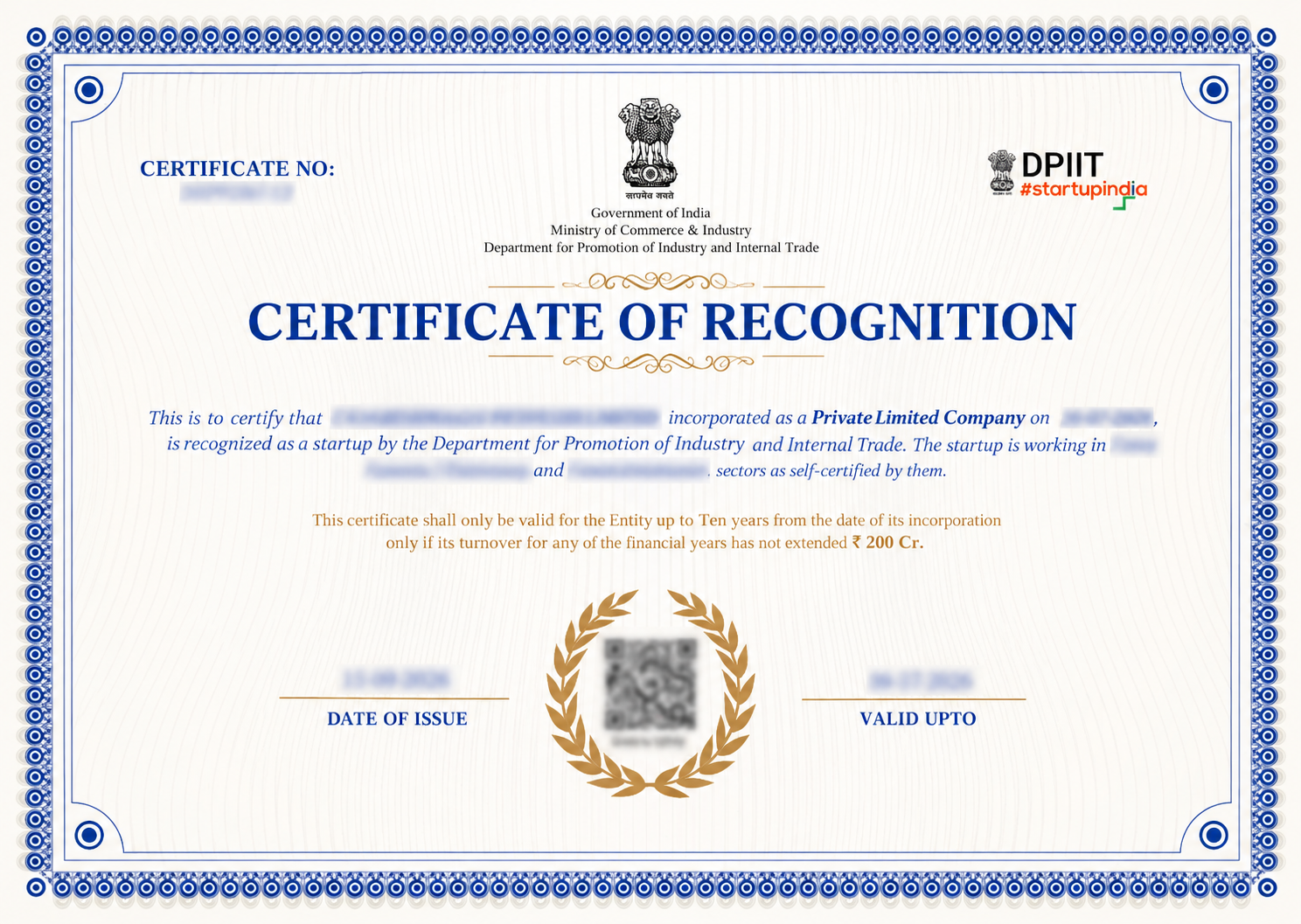
"Explore how Legalstartup has helped businesses reach new heights as their trusted partner."

Thousands of businesses and founders trust LegalStartup.