
Close your private limited company the right way with Legal Startup. A dedicated expert reviews your records, picks the right route between strike off, voluntary winding up and dormant status, clears pending ROC and tax filings, and handles the closure so directors are not left with open liabilities.
Free call & custom quote · Professional fee + government fee
To close a private limited company in India, you apply to the Registrar of Companies to strike off the company's name under Section 248 of the Companies Act, 2013, or you wind up the company voluntarily under the Insolvency and Bankruptcy Code. Simply stopping work or ignoring filings does not close the company, and it can leave directors disqualified and liable.
Last updated: October 2026. Forms, conditions and fees can change and depend on your facts, so we confirm the current position before filing. This page is general information, not legal advice.
A private limited company is a separate legal entity. It continues to exist, with annual filing duties, until its name is removed from the register or it is wound up and dissolved. Stopping business, closing the office or even closing the bank account does not end the company's legal life.
There are three common ways to end it. Strike off removes a defunct company from the register on application to the Registrar. Voluntary winding up uses a liquidator to sell assets, pay debts and distribute what remains, and suits a solvent company that has been operating. Compulsory winding up happens by order of the tribunal and is usually triggered by creditors or the authorities. If you may use the company again, dormant status keeps it on the register with lighter compliance.
Whichever route you choose, it is safer to settle tax, GST, ROC and employee dues first. Directors and members can remain liable after dissolution as the law provides. For official forms and company master data, visit the Ministry of Corporate Affairs portal. To see which filings you still owe, use our compliance calendar, and for clean-up of old records see bookkeeping and accounting.
Important limits and timelines for closing a private limited company.
The right route depends on whether the company has operated and whether it has debts.
For a defunct company with no business and no major dues.
For a solvent company that has been operating.
An alternative if you may revive the company.
Overdue filings and dues cleared first.
Registrations closed in the right order.
When the company cannot pay its creditors.
Not sure which route fits? Share your CIN and recent financial statements and our experts will check it free of charge.
Why founders close the company formally rather than abandon it.
No more ROC and tax filings or late fees for a company you no longer use.
Avoids director disqualification and DIN deactivation from defaults.
Closing tax and GST registrations correctly avoids later notices.
Assets are dealt with and the register shows the company as closed.
You can start a new venture with a clean compliance record.
Closure papers and accounts are organised for any future query.
Complete the process from anywhere in India, no office visit needed.
From eligibility check to the Registrar's notice, here is how online company closure works.
Timelines depend on the route, Registrar processing and how much clean-up is needed. Not to scale.
We review activity, assets, liabilities and filings to decide between strike off, voluntary winding up and dormant status.
Creditors, employees, tax and statutory dues are cleared, contracts are ended and the bank account is closed.
Books are completed, and overdue ROC and income tax returns are filed where they are required.
We draft the board resolution, shareholder consent, indemnity bond and director affidavits for signature.
The strike off application or winding up filings are made on the MCA portal with the required fee.
We track the Registrar's notice and objection period, and cancel GST and close remaining registrations.
Keep these ready to avoid delays. Our expert will confirm the exact list for your route.
The total cost depends on the route you take, how many filings are pending and whether a liquidator is needed. It generally has three parts:
The Registrar's fee for the application, and any late fees for pending filings. The amounts change, so we confirm them before filing.
Our fee depends on the route and the work involved. Call free for a custom quote before you pay anything.
Pending filings, liquidator fees for winding up, notary and stamp charges and tax dues are charged separately.
We share a clear, itemised quote before you begin – no hidden charges. Get your free quote →
Choose the situation that matches your company, or call free for a custom quote.
Your company has pending filings or untidy books to fix before closure.
A defunct company that has not carried on business.
An operating company with assets or debts, or one you may revive later.
Our professional fee is quoted after a free call. Government fees, liquidator fees and any tax dues are separate. Not sure which option fits? Ask for a free eligibility check.
If the company has no future use, closing it formally is safer than leaving it.
Companies that never started business or stopped early.
Companies with no business for two or more financial years.
Partners who have wound up operations and want a clean exit.
Entities that are no longer needed in a group or after a merger.
Companies with years of unfiled returns that need prompt action.
Speak to us quickly to limit late fees before closure.
A quick view of how the main options differ. Ask us which one applies to your company.
| Point | Strike off | Voluntary winding up | Dormant status |
|---|---|---|---|
| Best for | Defunct company with no business | Solvent company that was operating | Company you may revive |
| Governing law | Companies Act, Section 248 | Insolvency and Bankruptcy Code | Companies Act, Section 455 |
| Liquidator needed | No | Yes | No |
| Process | Application to the Registrar | Resolution, liquidator and filings | Application to the Registrar |
| Company continues | No, name is struck off | No, company is dissolved | Yes, with lower compliance |
Settling dues and clearing filings first prevents most closure problems.
Closure ends the filing duties, but a few things remain.
Save the Registrar's notice, filing receipts and the final accounts.
Keep company records for the period the law requires after closure.
Transfer any trademark, domain or property before closure, as they cannot belong to a dissolved company.
Director and member liability can continue after strike off, and the tribunal can revive a company in limited cases.
Need other support for your business? Visit our Legal Startup home page to see our full list of services.
Quick answers on closing a private limited company in India.
A private limited company can be closed by applying to the Registrar of Companies to strike off its name under Section 248 of the Companies Act, 2013, by voluntary winding up under the Insolvency and Bankruptcy Code, or by an order of the tribunal. The right route depends on whether the company has carried on business and whether it has debts.
Strike off is the removal of the company's name from the register of companies by the Registrar, on the company's own application in Form STK-2 or on the Registrar's initiative. After the strike off is notified, the company is dissolved. The liability of its directors and members continues as the law provides.
Generally a company that has not started business within one year of incorporation, or has not carried on business for the previous two financial years and has not applied for dormant status. It must have settled its liabilities, and members holding the required share of paid-up capital must consent. Other conditions apply, so eligibility should be checked first.
Strike off is meant for companies that are defunct and have no significant assets or liabilities, and it is handled by the Registrar. Voluntary winding up is for a solvent company that has been operating, has assets to sell or debts to pay, and it needs a liquidator and a more detailed process.
A company that has no significant accounting transaction can apply to the Registrar for dormant status. It stays on the register with reduced compliance, and can become active again later. It suits owners who may revive the company, while closure is for those who do not plan to.
Incorporation documents and CIN, recent financial statements, a board resolution, the shareholders' resolution or consent, indemnity bond and affidavits from directors, proof of closure of the bank account, tax and GST closure details, and a statement that dues have been paid. The exact list depends on the route.
A strike off typically takes a few months because the Registrar publishes a notice and allows time for objections. Voluntary winding up generally takes longer. The time also depends on how many pending filings and dues must be cleared first, so we estimate it after reviewing your records.
The company stays on the register, late fees keep growing, directors can be disqualified, DINs can be deactivated, and the Registrar can strike off the company on its own, leaving directors exposed. Pending annual returns and tax returns usually need to be cleared before a proper closure.
The GST registration should be cancelled with the final return filed, the final income tax return and TDS returns should be filed, the bank account closed, and employee dues, PF and ESI settled. The PAN of a company is not cancelled in the same way as a registration, so tax clearances are handled before closure.
The cost depends on the route, the number of pending filings, any liquidator and notary charges, and the government fee. We give a clear quote after a free call and a review of your records, before you pay anything.
Ready to close your private limited company, or unsure how? Speak to our company law expert today – the eligibility check and the quote are free.
Tell us what you need and our team will get back to you with the right guidance.
Legalstartup ke certificates, registrations aur recognitions jo hamari credibility dikhate hain.
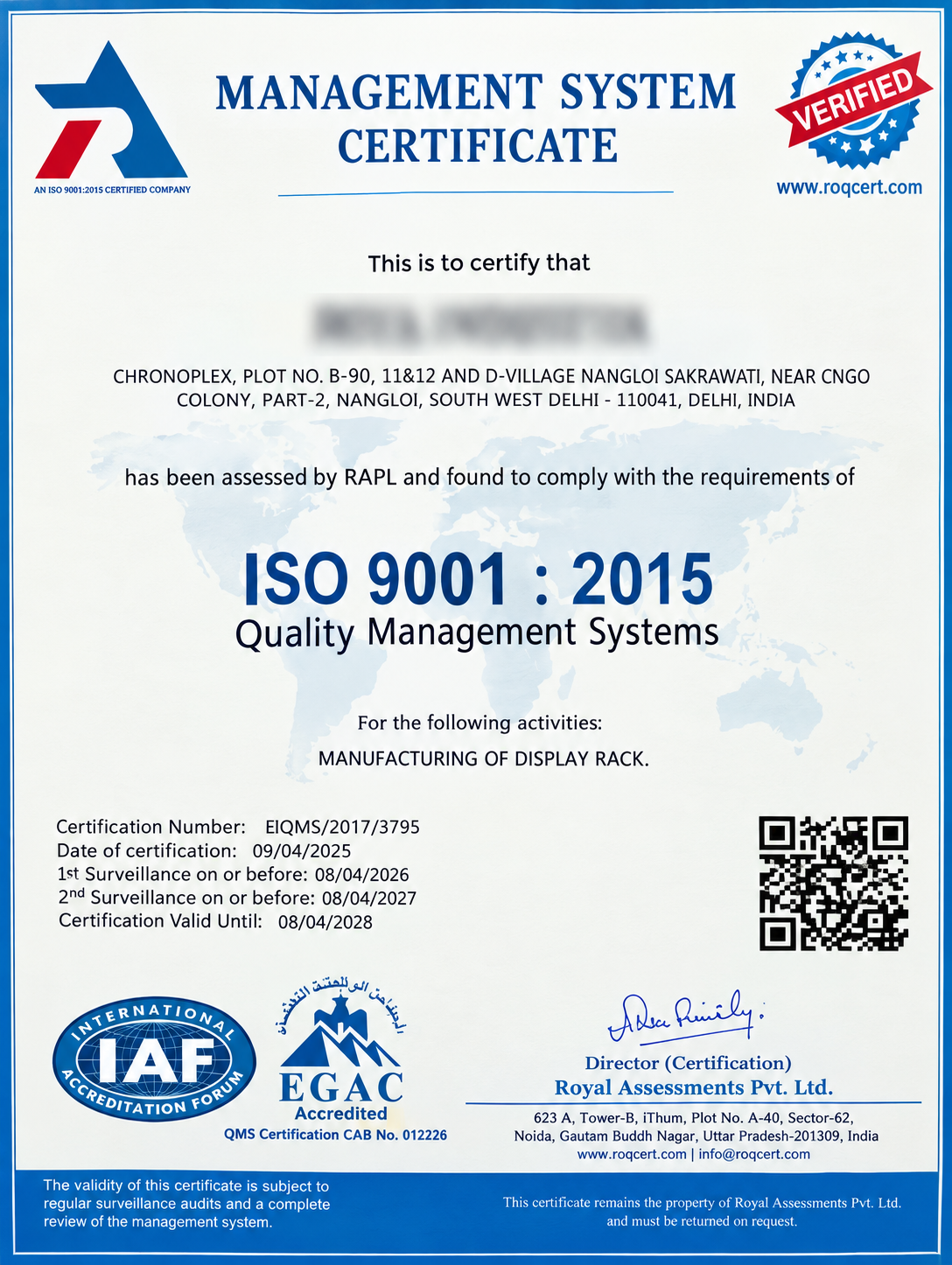
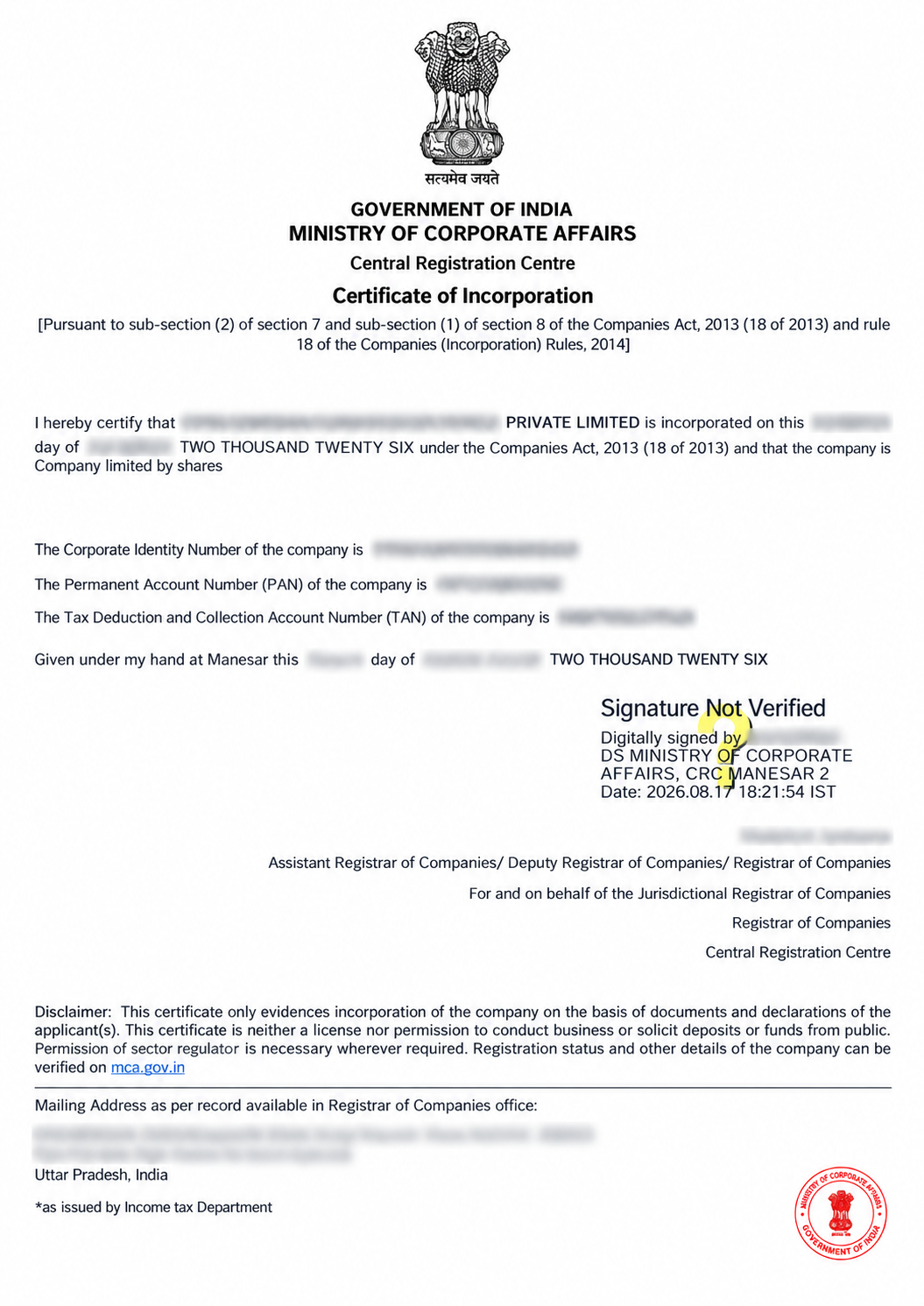
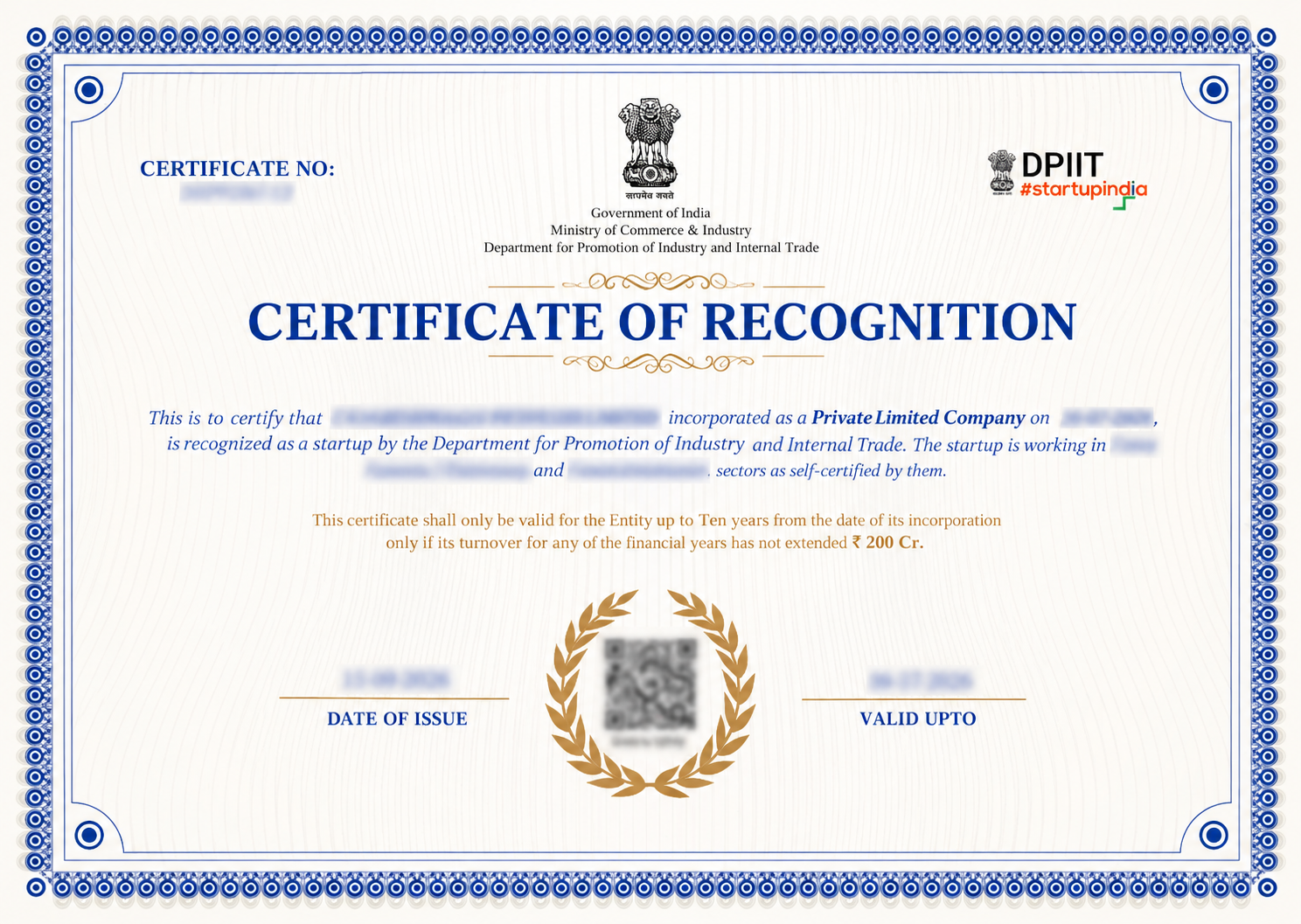
"Explore how Legalstartup has helped businesses reach new heights as their trusted partner."

Thousands of businesses and founders trust LegalStartup.