
Draft or review your franchise agreement with Legal Startup. A dedicated expert helps you set out territory, fees, trademark licence, operating standards, exit terms and dispute resolution in clear, enforceable language that suits your business model.
Free call & custom quote · Professional fee + stamp duty, where applicable
A franchise agreement is a written contract in which a franchisor allows a franchisee to run a business under its brand, trademark and system, in return for fees and subject to quality standards. In India there is no dedicated franchise law, so the agreement itself carries most of the weight, backed by general laws such as the Indian Contract Act, 1872 and the Trade Marks Act, 1999.
Last updated: October 2026. Laws, stamp duty and tax treatment can change and differ by state, so we confirm the current position before the agreement is finalised. This page is general information, not legal advice for your specific deal.
Franchising lets a brand grow through other people's capital and effort. The franchisor provides the brand, the business format and training. The franchisee invests in the outlet, runs it day to day and pays the agreed fees. The franchise agreement is the document that keeps this relationship fair and predictable for both sides.
Since there is no single franchise law in India, the agreement must deal with issues that a statute would otherwise cover. These include what exactly is licensed, what the franchisee must do, how fees are calculated, how the brand is protected, what happens on exit and how disputes will be resolved. A weak or copied template is one of the most common reasons franchise relationships end in dispute.
The franchisor's trademark sits at the centre of the deal, so the brand should ideally be registered before franchising begins. See our trademark registration online service for this. For the text of the law, read the Indian Contract Act, 1872 on India Code, and for competition rules that may affect restrictions on territory and pricing, see the Competition Commission of India. If you are still planning your venture, see our startup planning guide.
The legal background every franchisor and franchisee should know.
The right structure depends on how you plan to grow or invest.
One franchisee operates one outlet.
A master franchisee gets rights over a large territory and can sub-franchise.
A franchisee commits to open several outlets in a set area.
A franchisee runs more than one outlet under one arrangement.
You have received an agreement and want it checked before signing.
An existing agreement needs to be renewed, assigned or ended.
Not sure which structure fits? Describe your plan and our experts will suggest one free of charge.
Why a properly drafted agreement matters for both sides.
Both sides know what is expected, so disputes are less likely.
Trademark use is licensed with quality controls, protecting the brand's value.
Initial fee, royalty and other charges are written down, with a clear base.
Exclusivity and boundaries avoid conflict between outlets.
Termination, notice and handover steps reduce uncertainty on both sides.
A solid agreement supports funding and expansion plans.
Share your business details and review drafts without repeated meetings.
From the first call to a signed agreement, here is how we work.
Timelines depend on the complexity of the deal and how quickly both parties respond. Not to scale.
We learn about the brand, the business format, the proposed territory, the investment and what each side expects.
We check whether the brand is registered and what other IP, such as logos, manuals and software, will be licensed.
Territory, exclusivity, fees, royalty, term, targets and exit terms are set out in a short term sheet.
We prepare the full agreement for franchisors, or a plain-language risk review with suggested changes for franchisees.
Comments from both sides are discussed and the final version is settled, including the dispute resolution clause.
The agreement is stamped as per the state law, signed by both parties, and a copy is kept safely for future reference.
Keep these ready to avoid delays. Our expert will confirm the exact list for your deal.
The cost of a franchise agreement depends on the type of franchise, the number of units, whether you are the franchisor or franchisee, and how much negotiation is needed. It generally has three parts:
Based on drafting or review, complexity and number of rounds. Call free for a custom quote before you pay anything.
Set by the state where the agreement is signed or used. The rates differ and can change, so we confirm them before signing.
Trademark filing, manuals, brand audits and tax advice on franchise fees and royalty are separate.
We share a clear, itemised quote before you begin – no hidden charges. Get your free quote →
Choose the situation that matches your plan, or call free for a custom quote.
You own a brand and want to start franchising.
You have received an agreement and want to know the risks first.
Master franchise, area development or several outlets under one deal.
Our professional fee is quoted per agreement after a free call. Stamp duty is separate and depends on the state. We do not guarantee commercial results or the outcome of any dispute. Not sure which option fits? Ask for a free review.
If a brand is going to be run by someone else, put the terms in writing first.
Turn your business format into a repeatable, protected model.
Set brand, menu, supply and quality standards across outlets.
Salons, schools, gyms, clinics and shops can all use a franchise model.
Understand fees, targets and exit terms before you invest.
Negotiate territory, targets and sub-franchising rights carefully.
Update agreements to cover trademark, tax and dispute terms properly.
A quick view of how franchising differs from similar arrangements. Ask us which fits your plan.
| Model | Brand owner's control | Trademark use | Typical payment | Best for |
|---|---|---|---|---|
| Franchise | High, through operating standards | Licensed with quality control | Initial fee and royalty | Repeatable business formats |
| Distributorship | Moderate, mainly on sales terms | Limited, for resale | Margin on goods bought | Product distribution |
| Trademark or technology licence | Depends on the licence | Licensed for a defined use | Royalty or lump sum | Brand or technology use only |
| Joint venture | Shared, as per ownership | As agreed | Profit share | Shared investment and risk |
Most franchise disputes trace back to unclear drafting.
The agreement works best when both sides follow it in practice.
Store the signed and stamped agreement and its schedules where both sides can access them.
Complete the training and set-up steps promised under the agreement before opening.
Follow the reporting calendar, pay royalty on time and keep the records the agreement requires.
Plan renewal in time, review terms as the business grows, and keep the trademark renewed.
Franchisors should keep the licensed mark in force. See our trademark renewal online service, and our online CA services for GST, royalty accounting and compliance.
Quick answers on franchise agreements in India.
A franchise agreement is a written contract in which the franchisor allows the franchisee to run a business using its brand, trademark, system and know-how, in return for fees and subject to operating standards. It sets out the rights, obligations, territory, term and exit terms of both sides.
India does not have a dedicated franchise statute. Franchise agreements are governed by general laws such as the Indian Contract Act, 1872, the Trade Marks Act, 1999, the Copyright Act, the Competition Act, 2002, the Arbitration and Conciliation Act, 1996, tax laws, and state stamp duty laws, along with industry-specific licences.
Key clauses include the grant of rights, territory and exclusivity, term and renewal, franchise fee, royalty and other payments, trademark and IP licence, operating manual and quality standards, training and support, supply arrangements, reporting and audit, insurance, confidentiality, termination, consequences of exit, indemnity, governing law and dispute resolution.
A franchise gives the right to operate a business using the brand and a complete system, with ongoing control and support. A distributor buys goods and resells them, often without using the brand's full business format. A licence usually grants the right to use a trademark or technology, without a complete operating system.
A franchise agreement should be executed on adequately stamped paper as per the stamp laws of the relevant state, because an insufficiently stamped agreement may face problems when used as evidence. Registration requirements depend on the terms, such as a lease or immovable property rights. We confirm the stamp duty and registration position for your agreement.
There is no general legal requirement in India to issue a franchise disclosure document. However, sharing a clear written disclosure of fees, obligations, support and business information before signing is good practice and reduces the risk of later disputes and misrepresentation claims.
Restrictions during the term of the agreement are generally enforceable. Post-termination non-compete clauses are difficult to enforce in India because of Section 27 of the Indian Contract Act, 1872, which treats agreements in restraint of trade as void. Confidentiality and trademark protections can still apply after exit.
Commonly an initial franchise fee, ongoing royalty or a share of revenue, a marketing or brand fund contribution, and sometimes training or technology fees. GST and other taxes apply as per law. The agreement should clearly define the base on which each fee is calculated.
It is strongly advisable. A registered trademark gives the franchisor a stronger legal right to license the brand and to act against misuse. If the mark is not yet registered, the application should be filed early, and the agreement should clearly license the mark and set quality control rules.
Typically on expiry, by mutual agreement, or by either side for a material breach that is not cured within the notice period, such as non-payment, breach of brand standards or insolvency. The agreement should set out notice periods, what the franchisee must stop using and return, and settlement of dues.
Most franchise agreements provide for arbitration under the Arbitration and Conciliation Act, 1996, with a stated seat, language and number of arbitrators, sometimes after a negotiation or mediation step. Courts may still be approached for urgent interim relief, such as protection of the trademark.
Yes. After a free call, we understand your business model, draft or review the agreement to suit it, explain the key risks in plain language, and guide you on stamping and signing. You receive an itemised quote before you begin.
Planning to franchise or buy a franchise? Speak to our legal expert today – the first consultation and the quote are free.
Tell us what you need and our team will get back to you with the right guidance.
Legalstartup ke certificates, registrations aur recognitions jo hamari credibility dikhate hain.

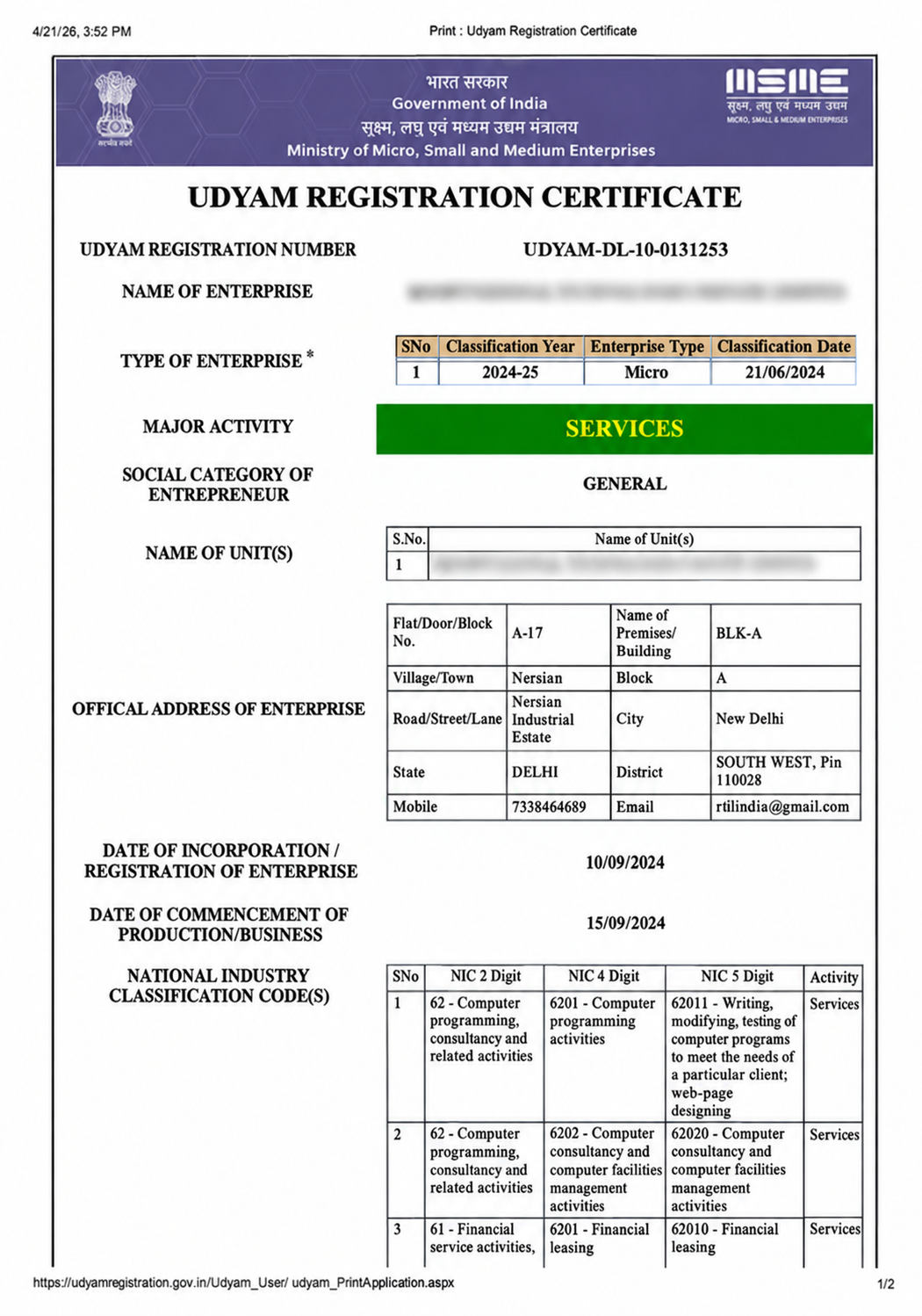
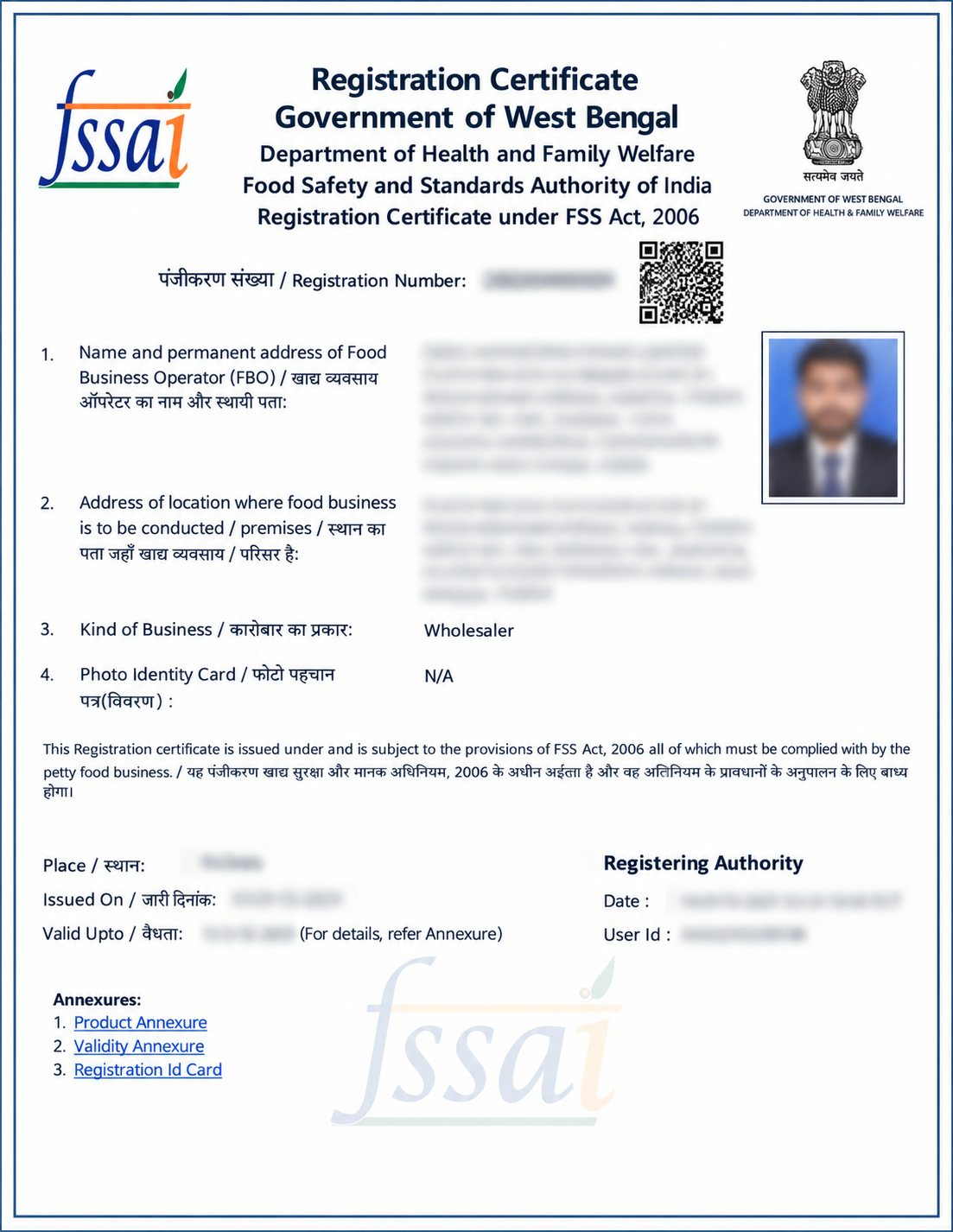
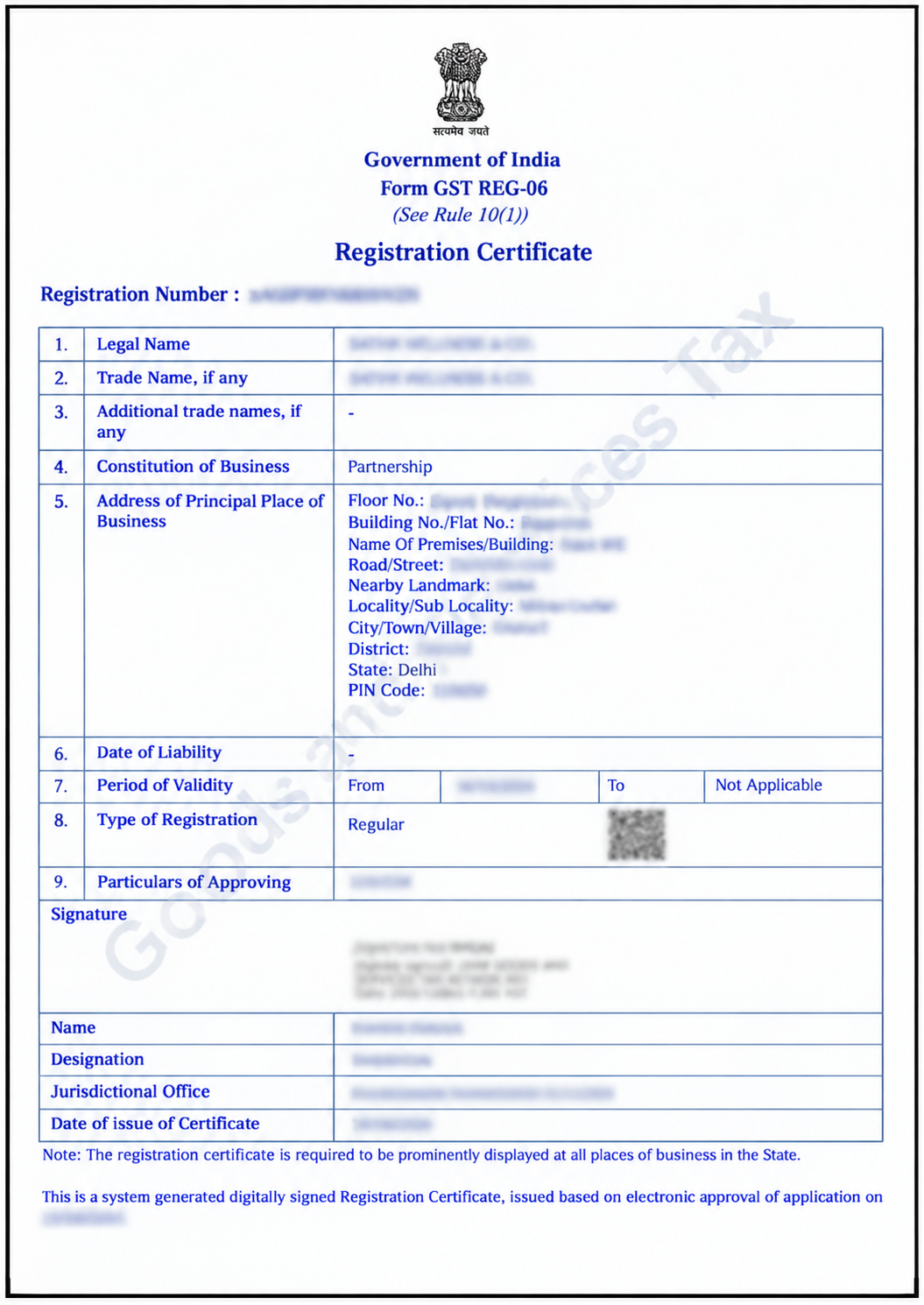

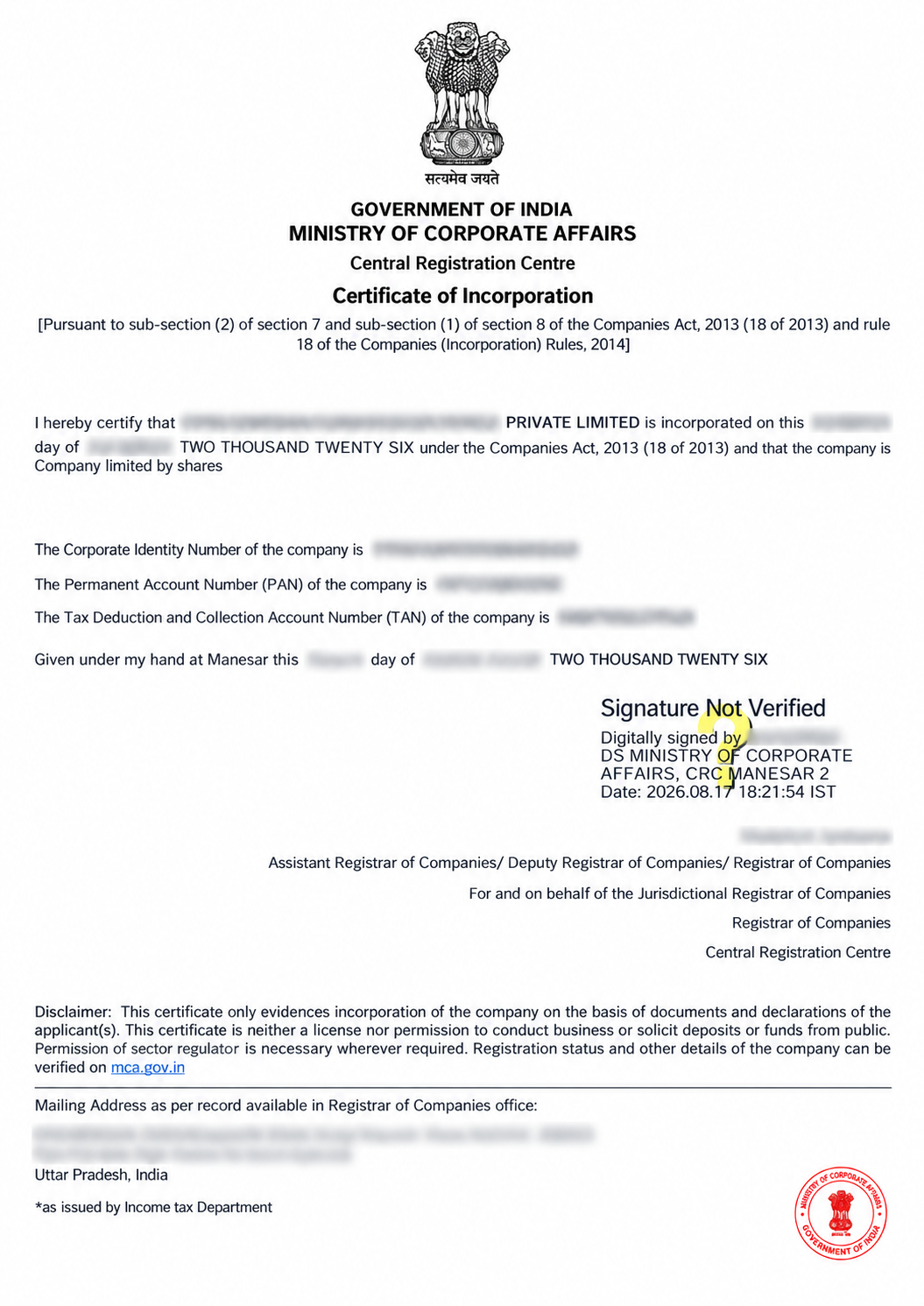
"Explore how Legalstartup has helped businesses reach new heights as their trusted partner."

Thousands of businesses and founders trust LegalStartup.