
Raise the share capital limit of your company with Legal Startup. A dedicated compliance expert checks your Articles, prepares the notice and resolutions, handles stamp duty and files Form SH-7 with the ROC on time.
Free call & custom quote · Professional fee + ROC fee + stamp duty
Increasing authorized capital means raising the maximum share capital a company can issue, under Section 61 of the Companies Act, 2013. It needs a resolution of the members, an altered capital clause in the Memorandum and a filing in Form SH-7 with the Registrar of Companies (ROC).
Last updated: October 2026. Forms, fees, stamp duty and time limits can change, so we confirm the current position before filing.
Authorised capital, also called nominal or registered capital, is the maximum amount of share capital that a company may issue, as stated in the capital clause of its Memorandum of Association. It is divided into shares of a stated value. The amount actually issued to shareholders is the issued capital, and the amount they have paid up is the paid-up capital.
A company can allot shares only within its authorised capital. When a startup raises a funding round, issues bonus or rights shares, converts loans into equity or brings in foreign investment, the existing limit is often not enough, so the authorised capital must be increased first.
The Companies Act, 2013 lets a company limited by shares increase its authorised capital if the Articles permit. The change is then reported to the ROC, and the Memorandum is stamped as per the relevant state law. For forms and filing, visit the Ministry of Corporate Affairs at mca.gov.in. If you are also adding to the board, see our director appointment service.
Important limits and timelines for increasing authorized capital.
The right route depends on what your Articles say and why you need the capital.
The simplest case: only the capital clause changes.
The Articles do not authorise an increase.
You are about to issue more shares than the current limit.
Investors are subscribing to new shares.
Preference or other classes are being introduced.
The resolution was passed but the form was not filed in time.
Not sure how much capital to add or which route applies? Share your plan and our experts will guide you free of charge.
Why companies raise their capital limit before they need it.
Issue new shares to investors without hitting the limit.
A higher limit supports expansion, acquisitions and ESOPs.
Higher capital can strengthen standing with banks and clients.
Shares are issued within the authorised limit, as the law requires.
Convert director loans or reserves into equity smoothly.
Plan the increase ahead of a funding round or closing.
File from anywhere in India through the MCA portal.
From Articles review to updated MCA record, here is how an increase works online.
Timelines depend on notice period, stamping and the ROC's processing. Not to scale.
We check whether the Articles allow an increase and size the new capital to your fundraising or allotment plan.
We draft the notice, agenda and minutes in which the board approves the increase and calls the general meeting.
The notice and explanatory statement are issued, and the members pass the resolution, with shorter notice consent if needed.
The capital clause is altered, and stamp duty is paid on the Memorandum (and Articles, if altered) as per the state.
The form is filed online within 30 days with the attachments, along with MGT-14 where applicable.
We confirm the updated authorised capital on the MCA record and update your registers.
Keep these ready to avoid delays. Our expert will confirm the exact list for your case.
The total cost depends on the amount of the increase, the state in which the company is registered and whether the Articles need alteration. It generally has three parts:
The ROC fee, which depends on the amount of the increase. Late filing adds fees. The schedule can change, so we confirm the current fee before filing.
Paid under state law on the altered Memorandum and Articles. The rate differs from state to state, so we check it for your state.
Our fee depends on the amount of work involved. Call free for a custom quote before you pay anything.
We share a clear, itemised quote before you begin – no hidden charges. Get your free quote →
Choose the case that matches your company, or call free for a custom quote.
Your Articles already allow an increase in capital.
Your Articles must be changed before capital can increase.
You need more capital and want shares allotted to investors.
Our professional fee is quoted after a free call. ROC fee and stamp duty are separate and depend on the amount and the state. Not sure which option fits? Ask for a free review.
If you plan to issue more shares than your current limit, increase it first.
Companies bringing in investors who will subscribe to new shares.
Businesses receiving FDI or NRI investment.
Founders or lenders converting loans into shares.
Businesses capitalising reserves or offering shares to existing members.
Firms that need headroom for employee share options.
Businesses that need higher capital to meet eligibility criteria.
A quick view of how an increase compares with other share capital changes. Ask us which one applies.
| Route | When it applies | Approval | Main filing | Effort |
|---|---|---|---|---|
| Increase authorised capital | Articles permit an increase | Board and ordinary resolution | SH-7 | Low to moderate |
| Alter Articles, then increase | Articles do not permit it | Special resolution, then ordinary resolution | MGT-14, SH-7 | Moderate |
| Sub-division or consolidation of shares | Face value or number of shares changes | Resolution of members | SH-7 | Moderate |
| Reduction of capital | Capital is being cancelled or returned | Special resolution and NCLT confirmation | Tribunal application | Highest |
A plan made ahead of the allotment prevents most problems.
The increase creates room. Here is what usually follows.
Check that the master data shows the new authorised capital.
Issue shares to investors or members, with the board approvals and filings that allotment requires.
Update the register of members and issue certificates within the time allowed.
Update the cap table and keep shareholding records ready for audits and due diligence.
If new investors join the board, see our director appointment service. For a new office address, see change registered office. If your brand also needs protection, see our trademark registration online service. For local support, see our pages for trademark registration in Dwarka and Jaipur.
Quick answers on increasing authorized capital in India.
Authorised capital is the maximum amount of share capital a company is allowed to issue, as stated in its Memorandum of Association. A company cannot allot shares beyond this limit without first increasing it.
Check that the Articles allow an increase, hold a board meeting and a general meeting to pass the resolution, alter the capital clause of the Memorandum, pay stamp duty where applicable and file Form SH-7 with the ROC along with the altered documents.
Form SH-7 is the notice to the Registrar of an alteration of share capital, including an increase in authorised capital. It is filed with the altered Memorandum of Association and other attachments.
Form SH-7 must be filed within 30 days of passing the resolution to increase authorised capital. Late filing attracts additional fees.
The board first approves the proposal and calls a general meeting, where the members pass an ordinary resolution, provided the Articles authorise the increase. If the Articles do not, they must first be altered by a special resolution.
A general meeting requires at least 21 clear days' notice. A meeting can be held on shorter notice if at least 95% of the members entitled to vote consent, which is common in closely held private companies.
The board and shareholder resolutions, the notice of the general meeting with its explanatory statement, the altered Memorandum (and Articles where changed), proof of stamp duty, a list of members where required and a Digital Signature Certificate for the filing.
The cost includes the ROC fee, which depends on the amount of the increase, stamp duty, which varies by state, and our professional fee. The schedules can change, so we confirm the current amounts and share an itemised quote after a free call.
Yes. A company can allot shares only within its authorised capital, so the increase should be completed before a fresh issue, rights issue, bonus issue or conversion of loans into shares that would exceed the limit.
No. An LLP does not have authorised share capital. It has partners' contributions, which can be changed by amending the LLP agreement and filing the prescribed form with the ROC.
Need more capital headroom? Speak to our compliance expert today – the Articles check and the quote are free.
Tell us what you need and our team will get back to you with the right guidance.
Legalstartup ke certificates, registrations aur recognitions jo hamari credibility dikhate hain.
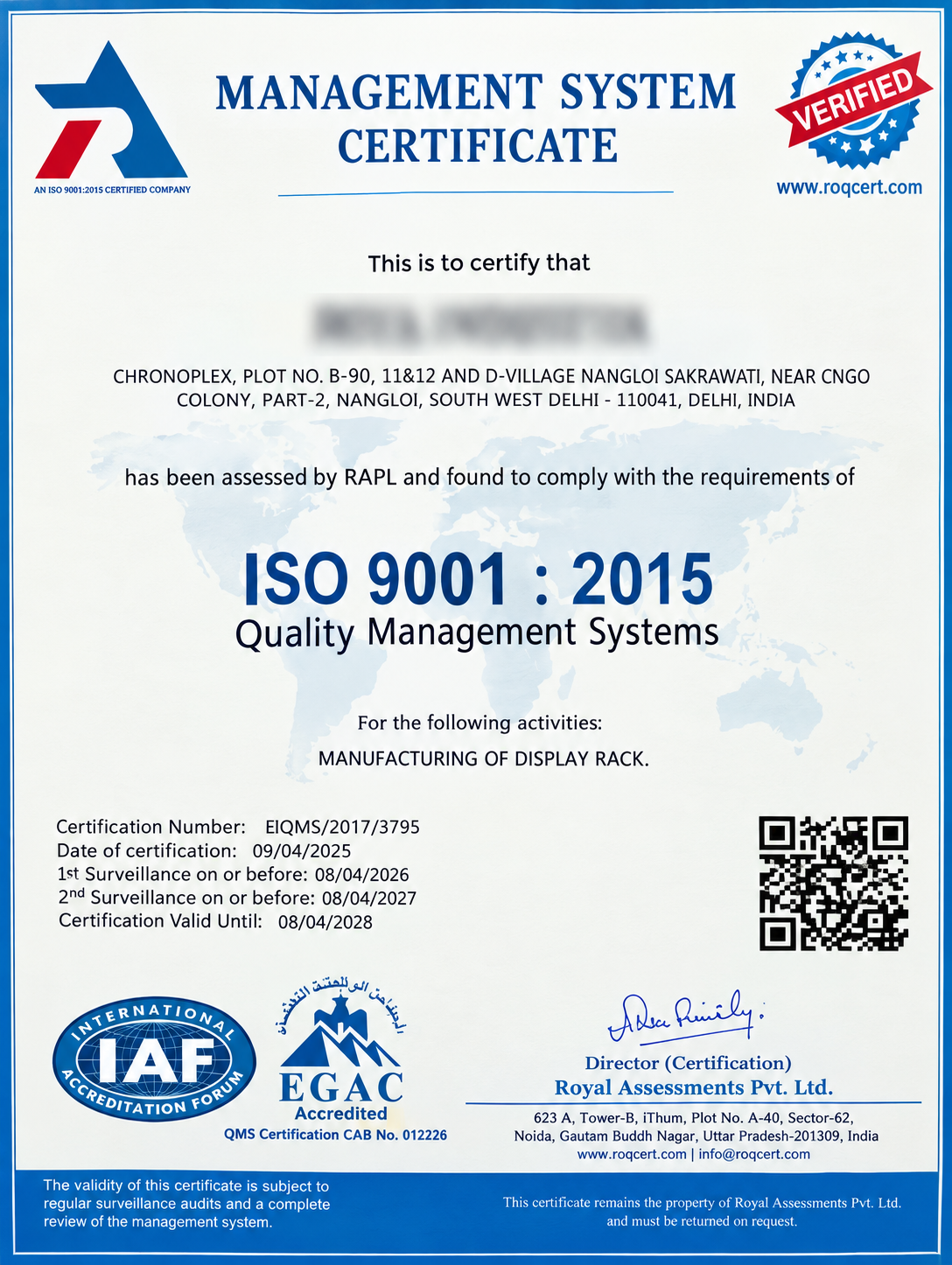
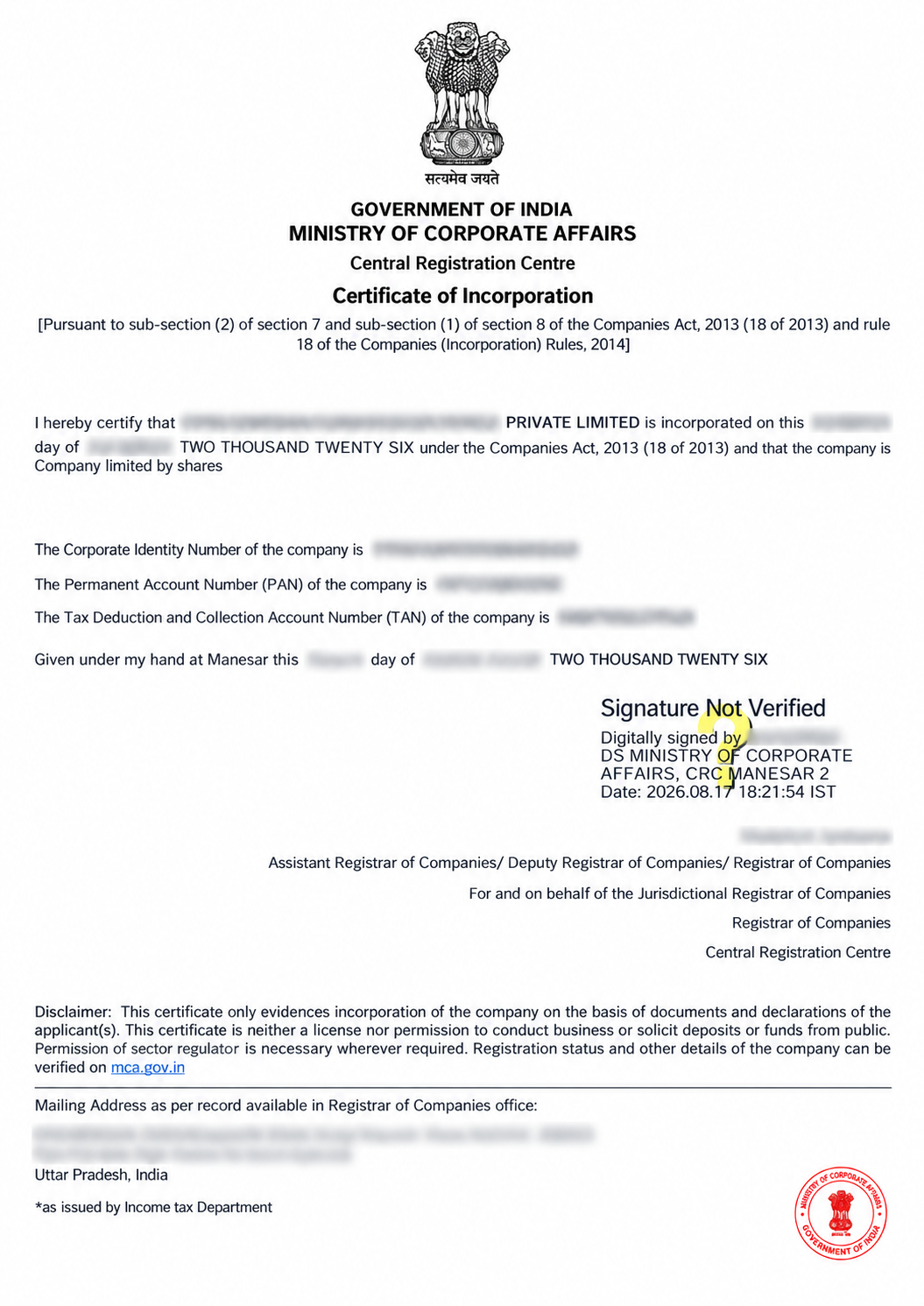
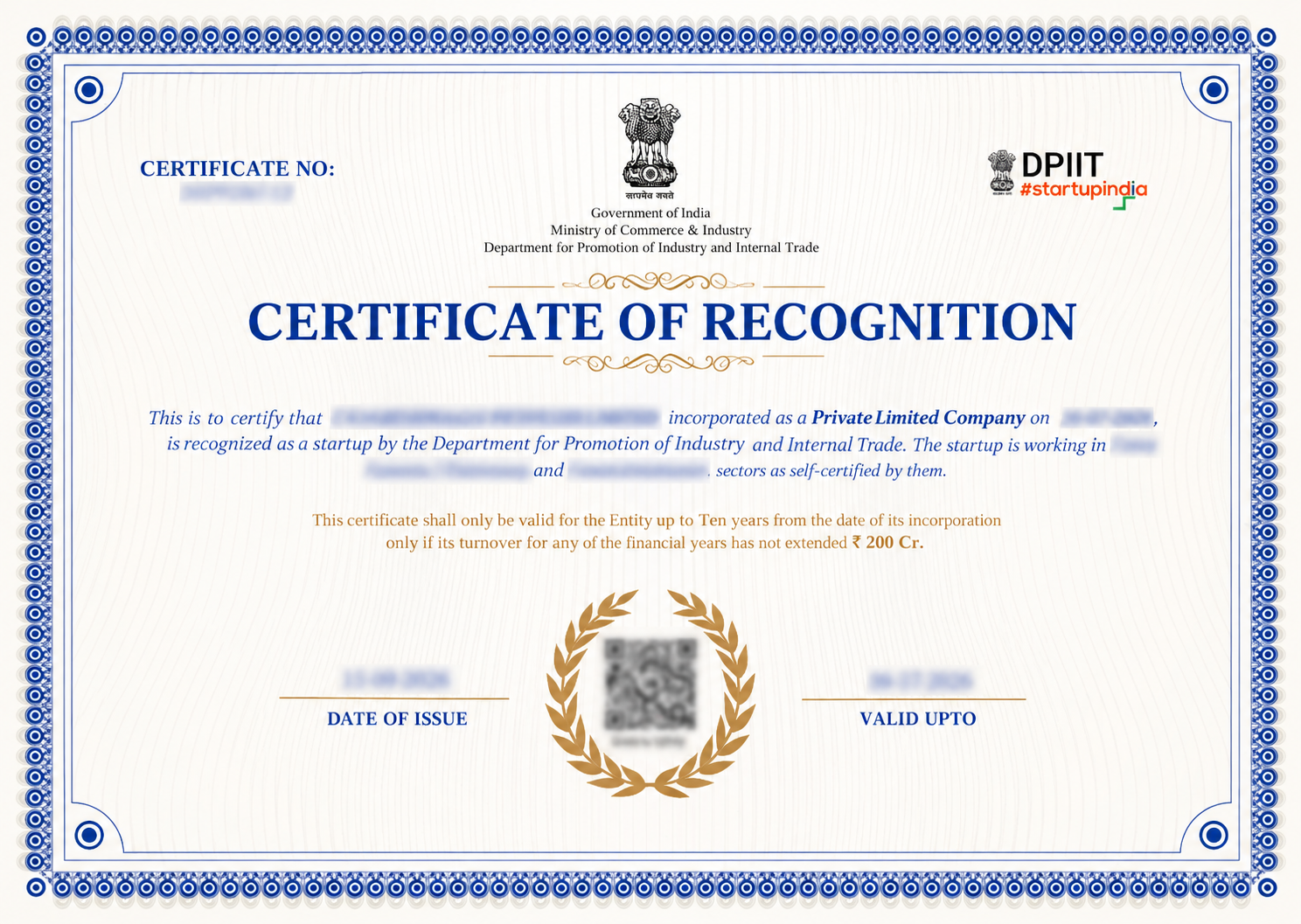
"Explore how Legalstartup has helped businesses reach new heights as their trusted partner."

Thousands of businesses and founders trust LegalStartup.