FSSAI Registration Consultants, Dwarka
FSSAI registration in Dwarka, Delhi
Running a restaurant in Sector 10, a cloud kitchen out of a rented shop in Sector 12, or a home bakery in Sector 7 makes you a food business operator in the eyes of the law, and that means an FSSAI registration or license. From our office at Dwarka Mor, we help food businesses across Dwarka work out which category applies, get the documents in order and file the application on FoSCoS.
The basics
Understanding FSSAI registration
FSSAI Registration is what the Food Safety and Standards Act, 2006 requires of anyone who makes, stores, sells or serves food in India. The Food Safety and Standards Authority of India (FSSAI) is the regulator, and applications are made through its online portal, FoSCoS. People say "food license", "FSSAI license" and "FSSAI certificate" interchangeably, but the department sees two things: a Basic Registration for small operators, and a State or Central License for larger ones. The rules are the same everywhere in India, so a food business in Dwarka follows the same process as one in Pune or Lucknow; what a local consultant adds is help with the paperwork and someone to call when the application raises a question.
What is FSSAI registration?
A registration or license number, issued after your application is reviewed, that shows your food business is on record with the food safety authorities. The 14-digit number has to appear on your premises, bills and packaging. It is granted for a particular business, kind of activity and premises, so a new outlet or a new line of activity can mean a fresh application or a modification.
Who needs it in Dwarka?
Anyone handling food commercially: restaurants, cafés, bakeries, sweet shops, cloud kitchens, tiffin services, caterers, packaged-food sellers, wholesalers, distributors and traders, and home-based sellers who take orders through WhatsApp or Instagram. A very small business is not exempt just because it is small. It simply tends to qualify for the simplest category, Basic Registration.
Basic, State or Central: how the category is decided
FSSAI revised its turnover thresholds from 1 April 2026. Annual turnover up to ₹1.5 crore generally falls under Basic Registration, above ₹1.5 crore and up to ₹50 crore under a State License, and above ₹50 crore under a Central License. Many articles online still quote the old ₹12 lakh and ₹20 crore limits, so be careful with older sources. Turnover is also not the only test. The Kind of Business and, for manufacturers, the production capacity can push you into a higher category, and FoSCoS does the final classification when you enter your details. Do check the current position on the official portal before you file.
Choosing the right category
Which FSSAI registration or license applies to your food business
The table below is a practical starting point, not a final answer. Two businesses of the same type can land in different categories because of turnover, capacity or the exact Kind of Business, so treat each card as a likely route and confirm it on FoSCoS.
Home bakers, tiffin services and pickle or snack makers selling within the Basic turnover limit.
Delivery-only kitchens; the category follows turnover and how many brands run from the same premises.
Up to ₹1.5 crore turnover is generally Basic; above that, a State License is the usual route.
Retail counters and small production units; capacity and turnover both matter here.
Event and bulk-order caterers, depending on annual turnover and the scale of operations.
Decided by the Kind of Business, production capacity and turnover; check the bands on FoSCoS.
Food shops, traders, storage and distribution units, usually decided by turnover.
Importers, businesses above ₹50 crore turnover, and certain premises such as airports and seaports.
A business that makes packaged snacks and also runs a retail outlet or an online store may have more than one activity to declare. We look at the full picture before the application is prepared.
What we handle
FSSAI registration services in Dwarka
One team looks after your application from the first conversation to the certificate, so you are not repeating your business details to a different person at every step.
Basic FSSAI registration
For small food businesses that fall under the registration category: eligibility check, documents and the Form A application on FoSCoS.
Read about FSSAI Registration →State License
For businesses and categories that need a State License, including the supporting plan and declarations where they apply.
See the FSSAI State License →Central License
For importers, large operators and other categories that FSSAI places under central licensing.
See the FSSAI Central License →Eligibility and category check
We go through your Kind of Business, turnover and capacity before filing, so you apply for the right category the first time.
See which category applies →Document preparation
A clear list of what your category needs, and a check of your files before anything is uploaded.
View the document list →Application filing on FoSCoS
Application prepared and submitted online, with the government fee paid as part of the process.
Follow the process →Queries and verification support
Help with replying if the department asks for clarification or arranges verification of your premises.
See what happens after filing →Modification and category change
Updates for a new address, new products or a change in constitution, and guidance when turnover moves you into a higher category.
Read the FAQs →The case for registration
Why food businesses in Dwarka need FSSAI registration
Running a food business without the required registration or license is an offence under the Food Safety and Standards Act, 2006, and the penalties are far larger than the cost of registering.
Your 14-digit FSSAI number has to be shown at the premises and on bills and packaging, which is how customers and inspectors see that you are registered.
Delivery platforms and online marketplaces generally ask for a valid FSSAI number before they list a food business.
Landlords, corporate clients, event organisers and banks may ask for the certificate before dealing with a restaurant, caterer or manufacturer.
FSSAI sits alongside GST, local trade permissions and other approvals; none of them replaces the others. If you also need GST Registration, or help with tax filings through LegalTax, it is easier to sort these together.
If you are building a food brand, protecting the name through Trademark Registration is a separate step that FSSAI does not cover.
As turnover grows, the category changes. Having a registration already in place makes the move up to a State License easier to plan.
The outcomes
Benefits of getting your FSSAI registration in place
Most owners register because they have to. The practical advantages show up later, when a platform, a landlord or a customer asks to see the certificate.
Legal compliance
You operate within the Food Safety and Standards Act.
Fewer penalty risks
Lower exposure to action during inspections.
Customer trust
A visible FSSAI number tells diners and buyers you are registered.
Delivery app access
Needed to list on most food delivery and online platforms.
Business dealings
Smoother vendor onboarding with corporates, hotels and retailers.
Packaged products
The FSSAI number goes on your labels when you sell packed food.
No renewal cycle
Perpetual validity for approvals issued from 1 April 2026; annual fee still applies.
Room to grow
A recorded business is simpler to upgrade or expand later.
Step by step
How the FSSAI application works
The broad sequence is the same for most applicants, but not every application follows it exactly. A Basic Registration is usually lighter than a State or Central License, and some steps below only come up in certain cases.
Understand the food business
What you make or sell, where, in what volume, and through which channels.
Identify the likely category
Match your Kind of Business and turnover to Basic, State or Central.
Check eligibility on FoSCoS
Confirm the category on the portal, since it does the final classification.
Prepare the documents
ID, photograph, premises proof and category-specific papers where applicable.
Prepare the application
Fill in Form A or Form B with the business, premises and food activity details.
Submit and pay the government fee
The application goes in online with the fee that applies to your category.
Application acknowledgment
An application reference is generated and can be tracked on FoSCoS.
Department review
The licensing authority goes through the application and documents.
Clarification or verification, if raised
The department may ask for more information or arrange an inspection of the premises.
Respond to queries
Reply with the requested details or documents so the file can move forward.
Receive registration or license
Issued after the application is processed; approval depends on the department's review.
Display and stay compliant
Show the certificate, print the number on bills and labels, and pay the annual fee on FoSCoS.
Before you start
Documents required for FSSAI registration
The list changes with the type of application and the food business. A home baker applying for Basic Registration will need far less than a manufacturer applying for a State License, so read the items below as "may be required" rather than a fixed checklist.
Straightforward pricing
LegalStartup FSSAI package prices
These are LegalStartup package prices. They are not the statutory government fees, which FSSAI sets and which are paid on FoSCoS (currently ₹100 a year for Basic Registration, usually ₹2,000 to ₹5,000 a year for a State License depending on Kind of Business, and ₹7,500 a year for a Central License). Package pricing includes the applicable government fee and the services covered under the selected LegalStartup package, and there are no hidden charges for those included services. Not sure which package fits? Message us on WhatsApp and we will tell you.
Basic FSSAI Registration
- Suitable for eligible food businesses that need Basic Registration
- Category check, documents and Form A application
- Applicable government fee included in the package
FSSAI State License
- For businesses and categories needing a State License under FSSAI/FoSCoS eligibility
- Documents, Form B application and plan guidance where applicable
- Government fee included; the exact price in this range is confirmed before you pay
FSSAI Central License
- For businesses and categories needing a Central License under FSSAI/FoSCoS eligibility
- Documents, Form B application and category-specific checks
- Applicable government fee included in the package
Timelines
How long does FSSAI registration take?
There is no fixed number of days that applies to every application, and we would be wary of anyone who promises one. A Basic Registration generally moves faster than a State or Central License. Beyond that, the time depends on how complete your documents are, how busy the licensing office is, and whether the department asks questions or arranges verification.
Category check & documents
Confirm Kind of Business and turnover on FoSCoS, and collect the documents your category needs.
Application & fee
Form A or Form B is submitted online with the government fee, and an application reference is generated.
Scrutiny of the application
The licensing authority examines the details and documents you submitted.
Clarification or verification
Additional information may be sought, or the premises may be inspected. Quick replies keep the file moving.
Certificate & ongoing compliance
The registration or license is issued; display it, quote the number on bills and labels, and pay the annual fee.
Total time: varies by category and case. Delays usually come from incomplete documents or unanswered queries, not from the filing itself.
Work from anywhere
Online FSSAI registration in Dwarka
FSSAI applications are made online on FoSCoS, so you do not have to visit a government office to apply. Applying online does not change the review the department carries out, and it does not guarantee approval. We handle the process remotely for food businesses across Dwarka and West Delhi, and you are welcome to visit our office at Dwarka Mor if you would rather sit down and go through the papers. The only part that cannot be done remotely is a physical inspection of the premises, if one is ordered. You can even send your documents on WhatsApp to get started.
Category check and eligibility discussion over a call or WhatsApp.
Documents shared as scans or phone photos, rather than physical copies.
Application filed and fee paid online on FoSCoS.
Status tracking and replies to department queries handled through the same portal.
Learn from others
Common mistakes food businesses in Dwarka make
Choosing a category on turnover alone and ignoring the Kind of Business or production capacity.
Relying on old articles that still quote the ₹12 lakh and ₹20 crore limits.
Applying with a premises address that does not match the rent agreement or ownership papers.
Listing food products or activities incompletely, then adding them later without updating the registration.
Starting operations, or going live on delivery apps, before the registration is in place.
Assuming no renewal means no further obligation; the annual fee is still payable on FoSCoS.
Not updating FoSCoS after an address change, new product line or a rise in turnover that changes the category.
Forgetting to display the certificate and to print the FSSAI number on bills and packaging.
Know the three categories
Basic Registration vs State License vs Central License
From 1 April 2026, turnover up to ₹1.5 crore generally means Basic Registration, above ₹1.5 crore up to ₹50 crore a State License, and above ₹50 crore a Central License. Certain Kinds of Business follow their own criteria regardless of turnover, so use these cards as a guide and confirm on FoSCoS.
Basic Registration
For small and petty food businesses within the registration limit, such as home kitchens, small cafés and local sellers. See our guide to FSSAI Registration.
Govt. fee: ₹100 per yearState License
For larger restaurants, caterers, manufacturers, traders and storage units within one state. Read about the FSSAI State License.
Govt. fee: ₹2,000–₹5,000 per year, by Kind of BusinessCentral License
For importers, businesses above ₹50 crore turnover and other categories under central licensing. Details on the FSSAI Central License page.
Govt. fee: ₹7,500 per yearOur approach
Why choose LegalStartup for FSSAI registration in Dwarka?
Category confirmed before filing
We look at your Kind of Business, turnover and capacity first. Applying for the wrong category is the most common reason applications get delayed or sent back.
Pricing you can read in advance
Basic at ₹1,000, State at ₹7,000–₹8,000 and Central at ₹15,000, with the applicable government fee included and the scope of each package explained before you pay.
Experience with food categories
After more than 10,000 FSSAI applications, we have a fair idea of where files stall: premises papers that do not match, activities left off the form, or the wrong category picked.
Based in Dwarka
Our office is at Dwarka Mor, so you can call, message on WhatsApp or walk in. Most of the work happens online anyway.
Help after the certificate
Address changes, new products or a rise in turnover can all affect your registration. We can help you modify it or move to the right category when that happens.
Questions
Frequently asked questions
FSSAI registration is the permission a food business needs under the Food Safety and Standards Act, 2006 before it makes, stores, sells or serves food. In Dwarka that covers restaurants, cafés, bakeries, sweet shops, cloud kitchens, home-based sellers, caterers, packaged-food sellers and traders. What you receive is a Basic Registration, a State License or a Central License, depending on your business. Our page on FSSAI Registration explains the basics.
From 1 April 2026, turnover up to ₹1.5 crore generally points to Basic Registration, turnover above ₹1.5 crore and up to ₹50 crore to a State License, and turnover above ₹50 crore to a Central License. The Kind of Business can override turnover, though. An importer, for example, needs a Central License whatever the turnover. FoSCoS classifies your business as you enter the details, so we check the category there before filing anything.
Not automatically. A restaurant or café with annual turnover up to ₹1.5 crore generally comes under Basic Registration, and one above ₹1.5 crore and up to ₹50 crore under a FSSAI State License. A State License application may also ask for a Food Safety Management System plan. Some large hotels and outlets at specially classified premises can fall under a Central License instead.
Yes. Cooking at home or running a delivery-only kitchen is still a food business. Most small home and cloud kitchens whose turnover is within the Basic limit register under Basic Registration, while larger operations may need a State License. Delivery platforms usually ask for your FSSAI number before they list you, so it is better to have it ready before you launch.
A Central License is meant for businesses with turnover above ₹50 crore and for categories FSSAI places under central licensing whatever the turnover, such as importers, certain large manufacturers, and food businesses operating at central government premises like airports and seaports. The exact list is shown under Kind of Business on FoSCoS, so confirm it before applying. Details are on our FSSAI Central License page.
It depends on the type of application and the food business. Commonly needed items are a photo ID and passport-size photograph of the applicant, proof of the business premises (ownership papers, or a rent agreement with the owner’s consent), and details of the food products or activity. Where applicable, you may also need a partnership deed, incorporation documents, an authority letter, a Food Safety Management System plan, a list of machinery for manufacturers, or category-specific papers such as an Import Export Code for importers. Not every applicant needs every document.
The government fee is paid on FoSCoS and depends on the category. At the time of writing it is ₹100 per year for Basic Registration, usually ₹2,000 to ₹5,000 per year for a State License depending on the Kind of Business, and ₹7,500 per year for a Central License. Fees can change, so confirm them on foscos.fssai.gov.in. These are statutory fees and are separate from LegalStartup’s package prices.
Our packages are priced at ₹1,000 for Basic Registration, ₹7,000 to ₹8,000 for a State License and ₹15,000 for a Central License. These are LegalStartup package prices and not the statutory government fees. Package pricing includes the applicable government fee and the services covered under the selected package, with no hidden charges for those included services. We confirm what your package covers before you pay.
We first understand your food activity and check the category on FoSCoS, then collect the documents, prepare the application, submit it with the government fee and respond if the department asks for clarification or arranges verification. The certificate is issued after the application is processed. There is no fixed number of days that fits every case, because the time depends on the category, how complete the documents are and whether verification is needed.
Under the 2026 amendment, registrations and Licenses issued on or after 1 April 2026 carry perpetual validity, so there is no periodic renewal application for them. The annual fee still has to be paid on FoSCoS, and your details must stay current. If you hold an older certificate, check its status on FoSCoS or ask us before assuming anything about it.
Yes. The application is made online on FoSCoS, and we handle documents and filing over call, WhatsApp and email. We work with food businesses across Dwarka, Delhi, from Sector 1 to Sector 21, and with nearby areas such as Dwarka Mor, Uttam Nagar, Janakpuri and Najafgarh. If you prefer to talk in person, our office is at Dwarka Mor.
For manufacturers and processors, the category depends on the Kind of Business, production capacity and turnover. A small unit may come under Basic Registration, a larger one under a State License, and some categories under a Central License. Packaged products also need to carry the FSSAI License number on the label. Check the exact capacity bands on FoSCoS, or ask us to do it with you.
Yes. A food business selling through its own website, social media or delivery apps needs its own valid registration or License, and platforms normally ask for the number when you join. Companies that run the platform itself are classified separately as e-commerce food business operators, with their own licensing requirement.
Your category follows your turnover and activity. If you cross a threshold, add a product line, move premises or change the constitution of the business, the registration needs to be modified or the higher category applied for on FoSCoS. Because the thresholds changed in April 2026, a business that already holds a State License but now falls under Basic limits should check what applies to its existing certificate.
Operating without the required registration or License can lead to action under the Food Safety and Standards Act, 2006. For operating without a License, Section 63 provides for imprisonment of up to six months and a fine of up to ₹5 lakh. The authorities can also issue improvement notices after an inspection. Registering before you start is far cheaper than dealing with this later.
Real-world situations
Situations we commonly handle
These are illustrative scenarios based on the kinds of applications we see. They are not client reviews, and the right category for you always depends on your own Kind of Business and turnover.
Trusted by
Businesses that have worked with us





Behind every registration
Meet the LegalStartup team
The people you will speak to when you call or message us about your FSSAI application.
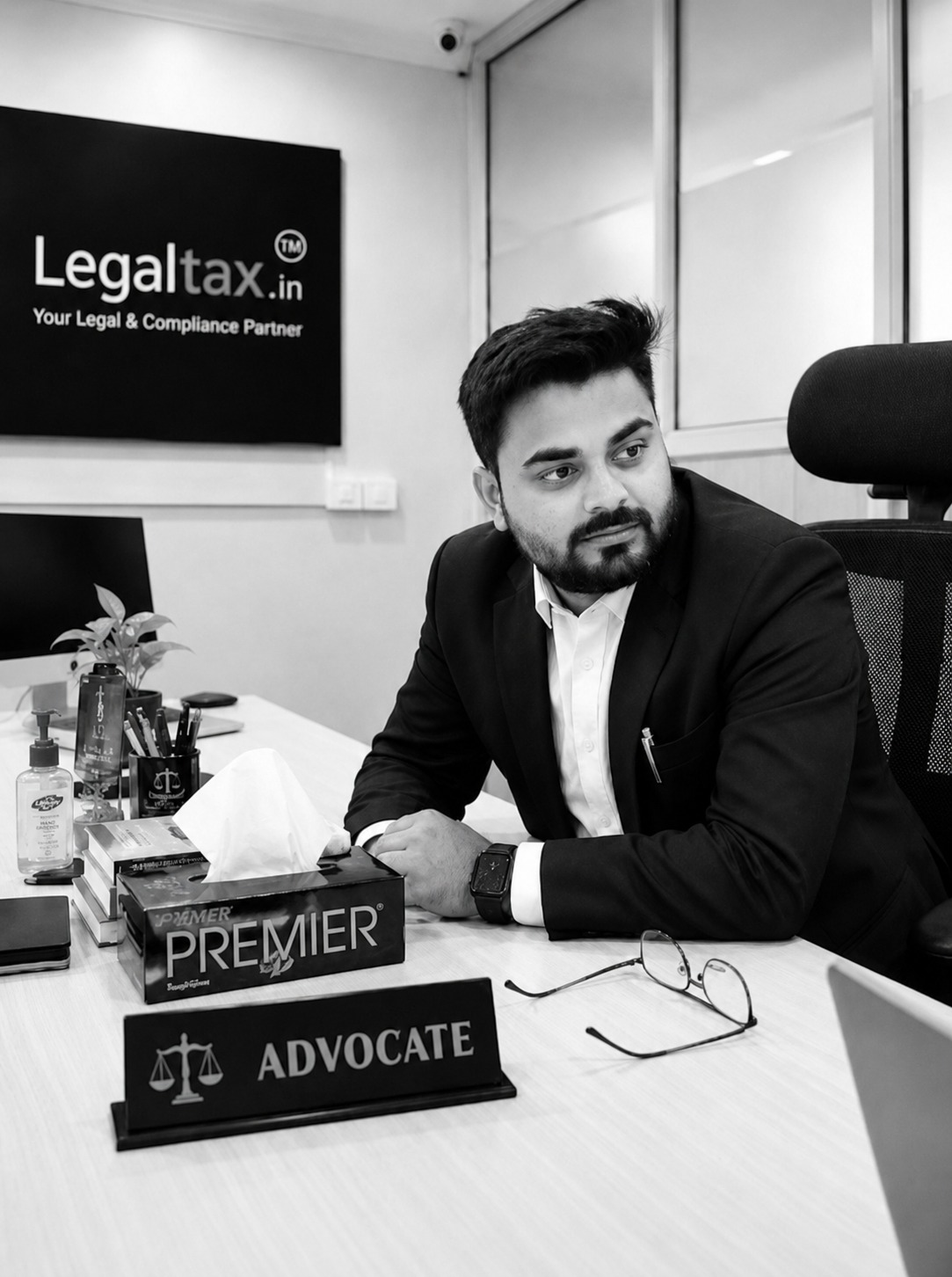
Subhas Chandra Bose
Senior AdvocateLegal and compliance guidance
Manish Kashyap
Senior AdvocateLegal and compliance guidance
Radhika
Documentation SpecialistChecks your ID, premises papers and business documents against what your category needs, so small mismatches are caught before the application is filed.
Ankit Gupta
Client Relations ManagerYour first point of contact. Explains the package, keeps you updated on the application and coordinates replies when the department asks a question.
Varun
Application ExecutivePrepares and submits the Form A or Form B application on FoSCoS, and tracks its status until the registration or license is issued.
Piyush
Compliance ExecutiveHandles category and eligibility checks, and helps with modifications or upgrades when your address, products or turnover change.Service area
FSSAI registration in Dwarka, Sector 1 to Sector 21
Our office is at Dwarka Mor, Delhi 110078, and we help restaurants, cloud kitchens, home food businesses, caterers and manufacturers with FSSAI registration and license applications in every sector of Dwarka, listed below. The application itself is online, so your sector does not change the process.
Disclaimer: This page gives general information about FSSAI registration in Dwarka and is not legal advice. Turnover thresholds, government fees, forms and procedures are set by FSSAI and can change by notification, so please confirm current details on fssai.gov.in and FoSCoS before filing. LegalStartup package prices are service charges and are separate from statutory government fees. Approval and processing time depend on the licensing authority.