Design Registration Consultants, Dwarka
Design registration in Dwarka
Quick answer: Design Registration in Dwarkaprotects the shape, pattern or look of a product under the Designs Act, 2000. It is filed online on Form 1; the government fee is ₹1,000 per design for individuals, startups and small entities (₹4,000 for others). Protection lasts 10 years, extendable by 5. File before you launch or publish the design.
From garment and home-décor makers to packaging, furniture, electronics accessories and D2C sellers in Dwarka, we protect what customers see first — your product's appearance — with a novelty search, correct Locarno class, filing, objection reply and extension.
Written by the LegalStartup IP team · Legally reviewed by Subhas Chandra Bose, Senior Advocate · Last reviewed 28 October 2026
The basics
What design registration in Dwarka actually protects
Design registration protects the features of shape, configuration, pattern, ornament or composition of lines or colours applied to an article by an industrial process, as judged by the eye alone (Section 2(d), Designs Act, 2000). It protects how a product looks — not how it works, and not the brand name on it (that is trademark registration). There is no separate "Dwarka design office": a Dwarka business files online on the IP India portal like any applicant in India (our national design registration guide covers the full process), and what a local consultant adds is a correct novelty search, class choice and representation sheets before the filing date locks in your rights.
What does registration give you?
The exclusive right to apply the registered design to the specified class of articles, and to stop others from applying a design that is identical or an obvious imitation, across India. It lasts 10 years from registration and can be extended once for 5 more years (Section 11).
Who can apply?
Any proprietor of a new or original design: individuals, proprietorships, partnership firms, LLPs and companies. DPIIT-recognised startups and small entities such as Udyam-registered enterprises pay the reduced fee by filing Form 24 along with the application.
The one rule that decides everything: novelty
A design must not have been published or disclosed in India or abroad before the filing date. A catalogue, marketplace listing, social-media post or trade show can destroy novelty, so file first and launch afterwards. If you must show the design to a manufacturer or investor before filing, do it under an NDA.
The exact authority
Which office handles design applications from Dwarka?
Most local pages stay vague here. This is the precise position.
Designs Wing, Kolkata — with a branch office in Dwarka
Designs are registered under the Controller General of Patents, Designs and Trade Marks. The Designs Wing of the Patent Office in Kolkata is the head office for designs, and branch offices at Delhi, Mumbai and Chennai receive applications. The Delhi branch is the Intellectual Property Office, Bouddhik Sampada Bhawan, Plot No. 32, Sector 14, Dwarka, New Delhi – 110078, in the same locality as our office. Filing is electronic through the IP India portal, so your location does not change the fee or timeline.
Enforcement: Delhi High Court
The Registry grants the design; infringement ("piracy") disputes are decided by courts. In Delhi, commercial IP suits are heard by the Delhi High Court's Intellectual Property Division, and suits under the Designs Act cannot be filed below the District Judge level.
Before you file
What can and cannot be registered as a design
New or original: not previously registered or published anywhere in the world (Section 4).
Applied to an article: a bottle shape, furniture profile, lamp body, garment pattern, charger casing, toy, jewellery piece or packaging form.
Judged by the eye: the visual appeal must be visible in the finished article.
Distinguishable: significantly different from known designs or combinations of known designs.
Not registrable: a mere mechanical device or how something works (patent territory), trademarks and property marks, artistic works under the Copyright Act, and anything contrary to public order or morality (Sections 2(d) and 4).
Built for Dwarka's businesses
Locarno classes by Dwarka business type
India uses the Locarno classification (32 classes of articles). Here is how classes map to what Dwarka sellers and makers commonly produce.
Garments, boutique & textile prints — Class 2, 5
Clothing cuts, patterns and printed or woven textile designs from Dwarka boutiques and home-based labels.
Furniture & home décor — Class 6, 7
Chair, table and shelf profiles, décor pieces and household goods with a distinctive shape.
Bottles, jars & packaging — Class 9
Container shapes, caps and pack forms for food, cosmetics and D2C brands selling from Dwarka.
Jewellery & accessories — Class 11
Articles of adornment: jewellery, hair accessories, decorative items.
Electronics & mobile accessories — Class 13, 14
Casings, chargers, stands and gadget bodies whose external shape is the selling point.
Lighting, toys & kitchenware — Class 26, 21, 31
Lamp bodies, toys and games, and appliance shapes sold online and through local markets.
Class numbers are indicative; we confirm the exact Locarno class from your product drawings.
Step by step
How to register a design in Dwarka
Free consultation
We confirm the article, what is new about it and whether it has been shown publicly.
Novelty search
Check against registered designs and public sources before you pay the fee.
Select the Locarno class
Correct class and article title.
Representation sheets
Front, back, top, bottom, side and perspective views, plus a statement of novelty.
File Form 1 (and Form 24)
Filed online; Form 24 claims startup or small-entity status.
Examination
The Designs Wing examines the application and may raise objections.
Reply & hearing
Written reply, and a hearing before the Controller if needed.
Registration & extension
Certificate issued; we track the extension before the 10-year term ends.
Before you start
Documents required for design registration
Straightforward pricing
Choose how you'd like to get started
Total cost = government fee per design + our service fee, confirmed in writing before we file.
Free Consultation
- 20-minute call with an IP advisor
- Quick novelty check
- Class and cost estimate
Design Filing
- Novelty search and class selection
- Representation sheets and Form 1 filing
- For individuals, startups and small entities
Filing + Examination Support
- Everything in Design Filing
- Objection reply and hearing
- Recommended for crowded product categories
Official fee, Designs Rules 2001 (as amended 2021)
Government design filing fee in India
| Applicant category | Fee per design (e-filing) |
|---|---|
| Natural person / DPIIT startup / small entity | ₹1,000 |
| Other than the above (large entity) | ₹4,000 |
Government charges only. Claiming small-entity or startup status wrongly can make the filing ineffective and put the registration at risk, so we verify your category first. Fees can change; we confirm the current schedule before filing.
Timelines
How long does design registration take?
Design applications are examined automatically, with no separate request for examination, and there is no opposition stage before registration. A clean application is commonly registered in around 3 to 6 months; this is an estimate, not a guarantee.
Search & filing
Novelty check, drawings and Form 1 filed.
Examination
Examination report issued if objections arise.
Reply & hearing
Defects must be corrected within the period allowed (six months from the application date).
Certificate
Registered design notified in the journal.
Don't confuse them
Design registration vs trademark vs patent
| Design | Trademark | Patent | |
|---|---|---|---|
| Protects | Look and shape of an article | Brand name, logo, tagline | How an invention works |
| Law | Designs Act, 2000 | Trade Marks Act, 1999 | Patents Act, 1970 |
| Term | 10 years + 5, then ends | 10 years, renewable indefinitely | 20 years |
| Pre-grant opposition | None | Post-publication opposition | Pre- and post-grant |
One product often needs more than one: the shape under a design, the name under trademark registration in Dwarka (run a trademark search first), how it works under a provisional patent application, and its artwork or content under copyright.
Learn from others
Common mistakes Dwarka businesses make
Launching or listing the product on a marketplace before filing, or sharing samples with a manufacturer without an NDA, which can destroy novelty.
Filing a logo or brand name as a design, when it belongs under trademark law.
Submitting unclear or incomplete views, leading to objections.
Claiming small-entity or startup status without eligibility.
Forgetting the extension, after which the design lapses at 10 years (restoration is possible only within one year).
If someone copies you
What a registered design lets you do
Under Section 22, copying a registered design without consent is "piracy". The proprietor can recover up to ₹25,000 per contravention, capped at ₹50,000 for one design, as a contract debt, or sue in court for an injunction and damages. The Designs Act has no criminal penalty. Anyone interested can petition to cancel a registered design under Section 19, for example on grounds of prior publication, which is why a clean novelty search matters. If your design is already being copied, our IP dispute team can advise, and a legal notice is often the first step.
Our approach
Why choose LegalStartup for design registration in Dwarka?
One dedicated consultant
The same person takes you from novelty search to certificate.
Reviewed by a Senior Advocate
Every application and objection reply is reviewed before filing.
Search before you file
We flag novelty risks so you don't pay for a design likely to be refused.
Fees stated upfront
Government fee and our fee confirmed in writing before filing.
Local to Dwarka
Our office is at Dwarka More; filing and consultations also work fully online. Read about our firm or contact us.
Extension tracking
We track the 10-year date so your design does not lapse.
Questions
Frequently Asked Questions About Design Registration in Dwarka
To register a design in India, conduct a novelty search, identify the appropriate Locarno classification, prepare design representations and file Form 1 with IP India. Filing should generally take place before public disclosure to preserve novelty. The application is examined by the Designs Office.
The government application fee is ₹1,000 per design for an eligible individual, startup or small entity, and ₹4,000 for other applicants under the applicable fee schedule. Professional fees are additional. The final cost depends on applicant eligibility and the services required.
Design registration can protect the visual features of an article, including its shape, configuration, pattern, ornamentation or composition of lines and colours. The design must be new or original and meet the Designs Act, 2000 requirements. Purely functional features are not protected as designs.
No, design registration is not mandatory. However, registration provides statutory protection for eligible visual designs and helps the proprietor take legal action against piracy. Without registration under the Designs Act, 2000, the specific statutory remedies for registered design piracy are generally unavailable.
The timeline depends on examination, application accuracy, objections and the Designs Office's workload. Some applications may be processed within a few months, but no fixed registration period is guaranteed. Responding promptly to examination objections can help avoid unnecessary delays.
Design registration initially lasts for 10 years from the applicable registration date. Under Section 11 of the Designs Act, 2000, protection can be extended once for another five years by completing the prescribed renewal process, giving a maximum protection period of 15 years.
Common requirements include applicant details, the name of the article, its Locarno class, clear representations showing the design from relevant views and a signed application. Power of attorney, priority documents or evidence of applicant-category eligibility may also be required, depending on the case.
Yes. Individuals, eligible startups, small entities and other businesses can apply for design registration if their designs meet the legal requirements. Eligible applicants may qualify for a reduced government fee. Supporting documents may be needed to establish eligibility for the applicable fee category.
Publicly disclosing or selling a product before filing can affect design novelty and eligibility for registration. The law provides limited exceptions in specific circumstances, but these should not be assumed to apply automatically. It is generally safer to file before launching or displaying the design publicly.
Software code and business names are not registrable as designs in themselves. Brand names and logos may qualify for trademark protection, while eligible artistic works may receive copyright protection. A visual feature applied to an article must independently satisfy the design registration requirements.
Yes. Under Section 19 of the Designs Act, 2000, an interested person may apply for cancellation on specified grounds, including prior registration, prior publication, lack of novelty or a design that is not registrable under the Act. The decision depends on the evidence and applicable law.
If someone copies your registered design, preserve evidence such as product photographs, listings and sales records. Consult an intellectual property lawyer to assess infringement and available remedies, including an injunction and damages where appropriate. The legal strategy depends on the facts and applicable law.
Yes. Applicants in Dwarka, Delhi, Gurugram and other Indian locations can generally file design applications electronically through the official IP India portal. The process can often be handled remotely, although an objection, hearing or specific procedural requirement may require additional action.
No. Paying the government fee does not guarantee design registration. The Designs Office examines the application for legal compliance, including novelty and registrability. Objections, incomplete documents or other legal issues may delay or prevent registration, even after the application fee has been paid.
Legal sources
Sources and disclaimer
This page is based on the Designs Act, 2000, the Designs Rules, 2001 as amended by the Designs (Amendment) Rules, 2021, and information published by the Office of the Controller General of Patents, Designs and Trade Marks (ipindia.gov.in). Last reviewed 28 October 2026 by Subhas Chandra Bose, Senior Advocate. Fees and procedures can change; we confirm current rules before filing. This page is general information, not legal advice for your specific design.
Behind every registration
Meet the IP team
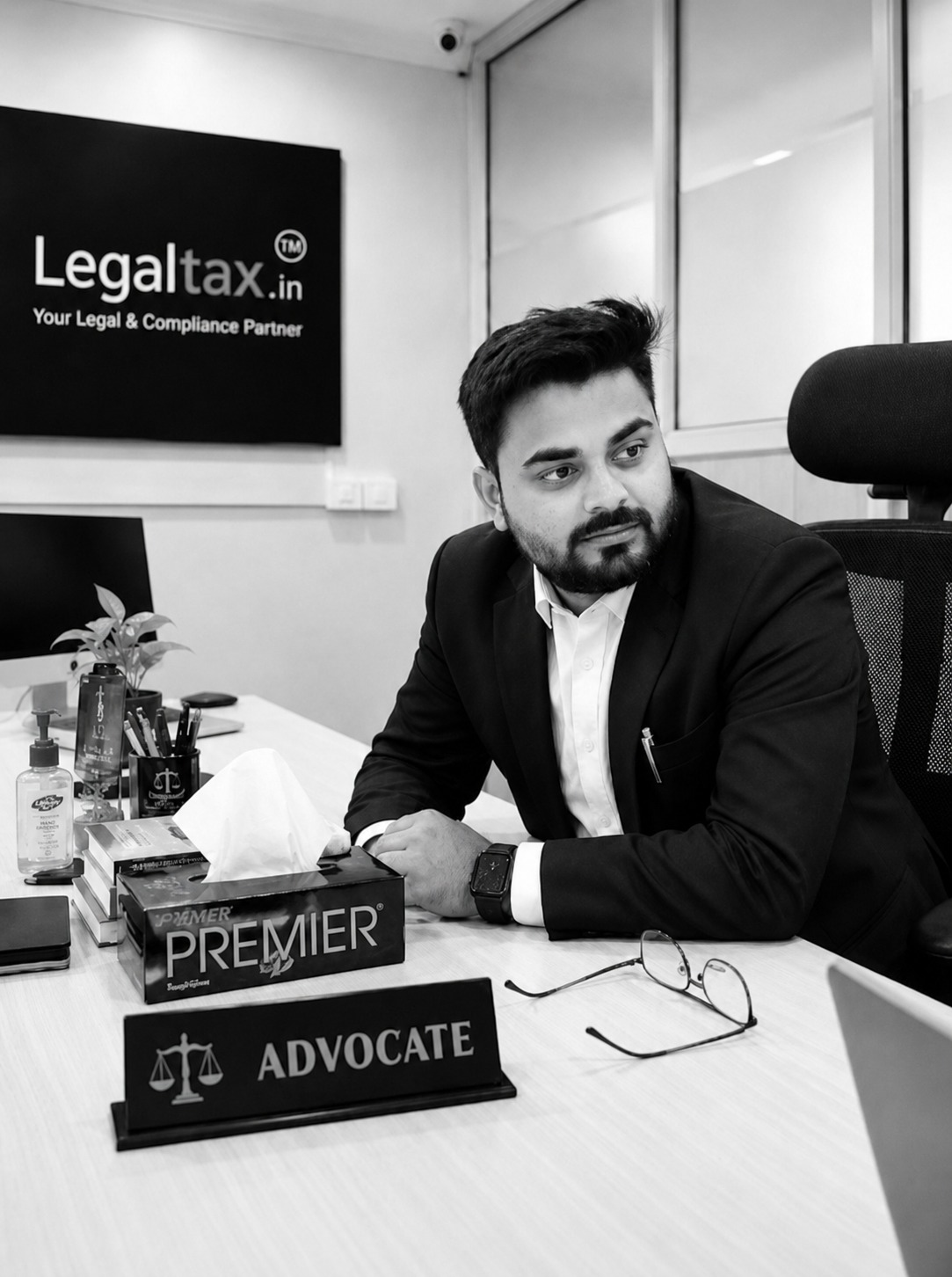
Subhas Chandra Bose
Senior Advocate — IP Law, reviews every design filing
Manish Kashyap
Senior Advocate
Radhika
Documentation Specialist
Ankit Gupta
Client Relations ManagerService area